Our objective is to explore musical, historical crafts in educational, societal, pedagogical and curatorial settings. We seek to reconfigure how historical music may be understood by and communicated to a present-day audience and improve, develop and discover new methodological approaches to how the music can be studied in a broad context as part of a European cultural heritage. Central to our work are interdisciplinary approaches to artistic practise, theory, history, social- and cultural interactions, education and pedagogy.
This group is part of the interdisciplinary research-platform Art in Context. The group members are engaged in academic research as well as in artistic research
RHiMCE was prior to February 2022 named REMP: Reconfiguring Early Modern Performance. Following their first anthology, the members chose to both broaden and specify different aspects of its scope to better represent their current activities leading to a new, modified group name.
Anno: 2023
We undertake to:
- Explore the interaction between historical music (Early Music, Classical Music, Romantic music, etc.), performer and audience focusing on communication. We look particularly at the realisation and performance of historical music and its relation to historical evidence, but with a special interest in how various meanings, functions and interactions are perceived and communicated to present audiences with varying degrees of previous knowledge. We do so through the lenses of presentism in historicism, and historicism in presenting.
- Improve, develop and discover new interdisciplinary methodological approaches to how we study classical music. By strengthening the interdisciplinary bonds between artistic research and -practise as well as more traditional academic research practices, we seek to generate methodologies governing the practising performer and the perceiving audience as well as the scholar.
- Identify and present strategies and perspectives that can contribute to generating new audiences and performers nationally and internationally. By developing a better understanding of historical music and -crafts’ communication strategies, designs and social function, we argue that we can better customise performances which evoke interest according to the premises set by today’s music markets. This stretches beyond superficial concepts such as playing baroque music in a bar or having renaissance nightclub DJs, but rather focuses on establishing communication strategies, self-expressive acts and mediation opportunities in close relation to the music itself. We further believe that the knowledge we produce can have a positive effect on (formal and informal) music education in general by introducing perspectives currently under-represented in the related educational and pedagogical debate.
- To better understand how early music as a cultural heritage and legacy is sustained and maintained in today’s society and in what way it may be part of our future.
Anthologies
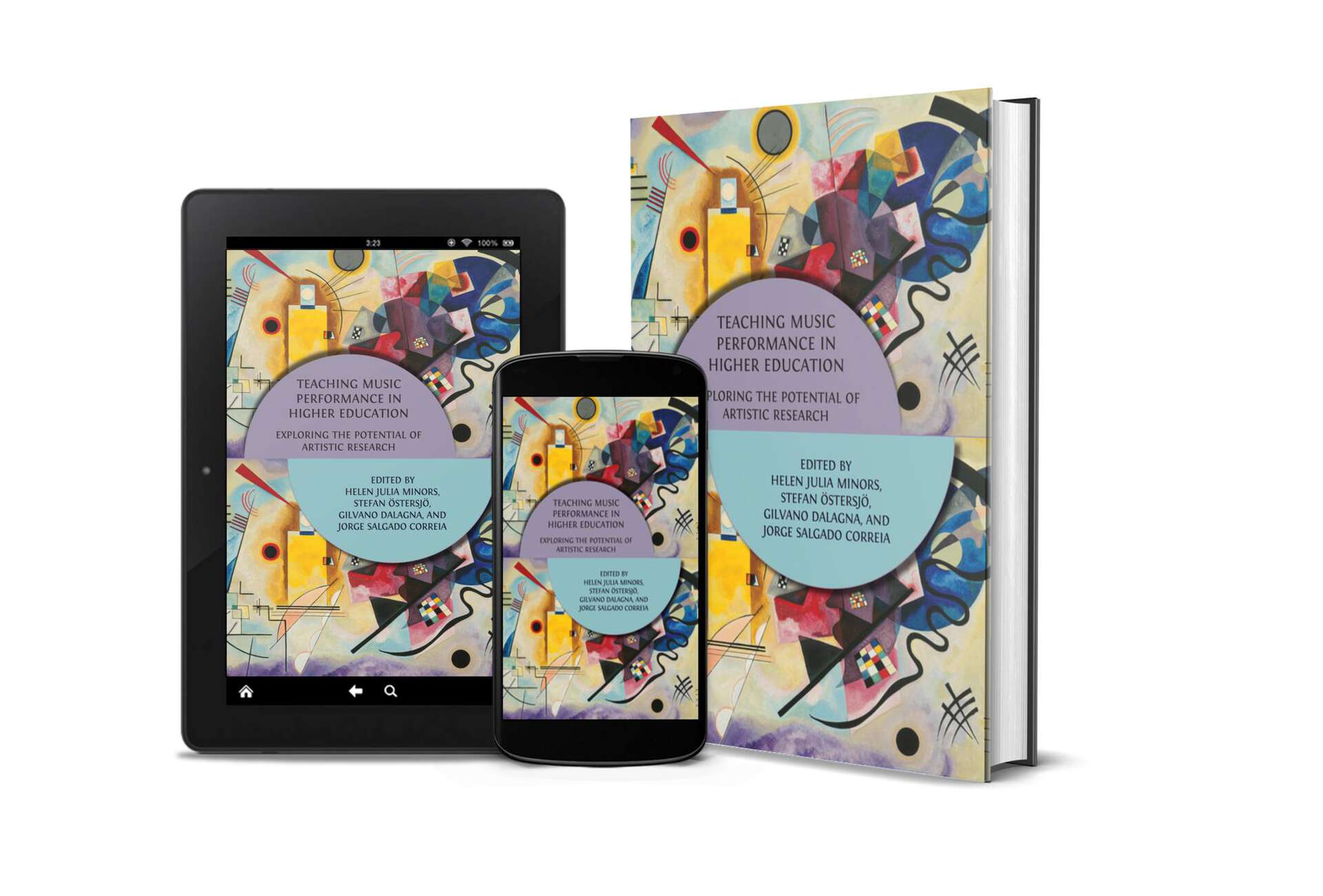
Teaching Music Performance in Higher Education
Exploring the Potential of Artistic Research
Eds. Minor, H. J.; Östersjö, S.; Dalagna, G. & Correia, J. S.
Open Book Publishers
Publication date: 2024.
REACT (Rethinking Music Performance in Higher Education)
Higher Music Performance Education, as taught and learned in universities and conservatoires in Europe, is undergoing transformation. Since the nineteenth century, the master-apprentice pedagogical model has dominated, creating a learning environment that emphasises the development of technical skills rather than critical and creative faculties. This book contributes to the renewal of this field by being the first to address the potential of artistic research in developing student-centred approaches and greater student autonomy. This potential is demonstrated in chapters illustrating artistic research projects that are embedded within higher music education courses across Europe, with examples ranging from instrumental tuition and ensemble work to the development of professional employability skills and inclusive practices.
Bringing together diverse and experienced voices working within Higher Music Education but often also as professional performers, this edited collection pairs critical reflection with artistic insight to present new approaches to curricula for teaching interpretation and performance. It calls for greater collaboration between Higher Education and professional music institutions to create closer bonds with music industries and, thereby, improve students’ career opportunities. Teaching Music Performance in Higher Education will appeal to scholars, performers, teachers, but also students whose interests centre on innovative practices in conservatoires and music departments.
Contents
Introduction (pp. 1–8)
Helen Julia Minors, Stefan Östersjö, Gilvano Dalagna, Jorge Salgado Correia
Introduction to Part I: Artistic Research in Higher Music Education (pp. 9–12)
Stefan Östersjö
A Swedish Perspective on Artistic Research Practices in First and Second Cycle Education in Music (pp. 13–46)
Stefan Östersjö, Carl Holmgren, Åsa Unander-Scharin
Experimentation as a Learning Method: A Case Study Exploring Affordances of a Musical Instrument (pp. 47–86)
Fausto Lessa F. Pizzol
Finding Voice: Developing Student Autonomy from Imitation to Performer Agency (pp. 87–106)
Mikael Bäckman
Teaching Musical Performance from an Artistic Research-Based Approach: Reporting on a Pedagogical Intervention in Portugal (pp. 107–132)
Gilvano Dalagna, Jorge Salgado Correia, Clarissa Foletto, Ioulia Papageorgi
Introduction to Part II: Novel Approaches to Teaching Interpretation and Performance (pp. 133–134)
Gilvano Dalagna
Artistic Practice as Embodied Learning: Reconnecting Pedagogy, Improvisation, and Composition (pp. 135–164)
Robert Sholl
Working Together Well: Amplifying Group Agency and Motivation in Higher Music Education (pp. 165–180)
Jacob Thompson-Bell
Score-Based Learning and Improvisation in Classical Music Performance
(pp. 181–194)
Mariam Kharatyan
Intercultural Musicking: Reflection in, on, and for Situated Klezmer Ensemble Performance (pp. 195–220)
Richard Fay, Daniel J. Mawson, Nahielly Palacios
Introduction to Part III: Challenges and Opportunities of Music Performance Education in Society (pp. 221–224)
Helen Julia Minors
The Musical Object in Deep Learning (pp. 225–250)
Odd Torleiv Furnes
Rethinking Music Performance Education through the Lens of Today’s Society (pp. 251–270)
Randi Margrethe Eidsaa, Mariam Kharatyan
Experience, Understanding and Intercultural Competence: The Ethno Programme
(pp. 271–286)
Sarah-Jane Gibson
Employability Skills within an Inclusive Undergraduate and Postgraduate Performance Curriculum in the UK (pp. 287–306)
Helen Julia Minors
Conclusion: Probing, Positioning, (Re)Acting (pp. 307–314)
Helen Julia Minors, Stefan Östersjö
____________________________
Education as Impulse to Social Inclusion (Volume also available in full in Polish "Edukacja jako impuls do społecznej inkluzji")
Eds. Murawska, E.; Rykowski, M.; Baum, E.; Schau, J.E. & Rolfhamre, R.
For Ignacy Jan Paderewski Academy of Music
Publication date: 2023.
__________________
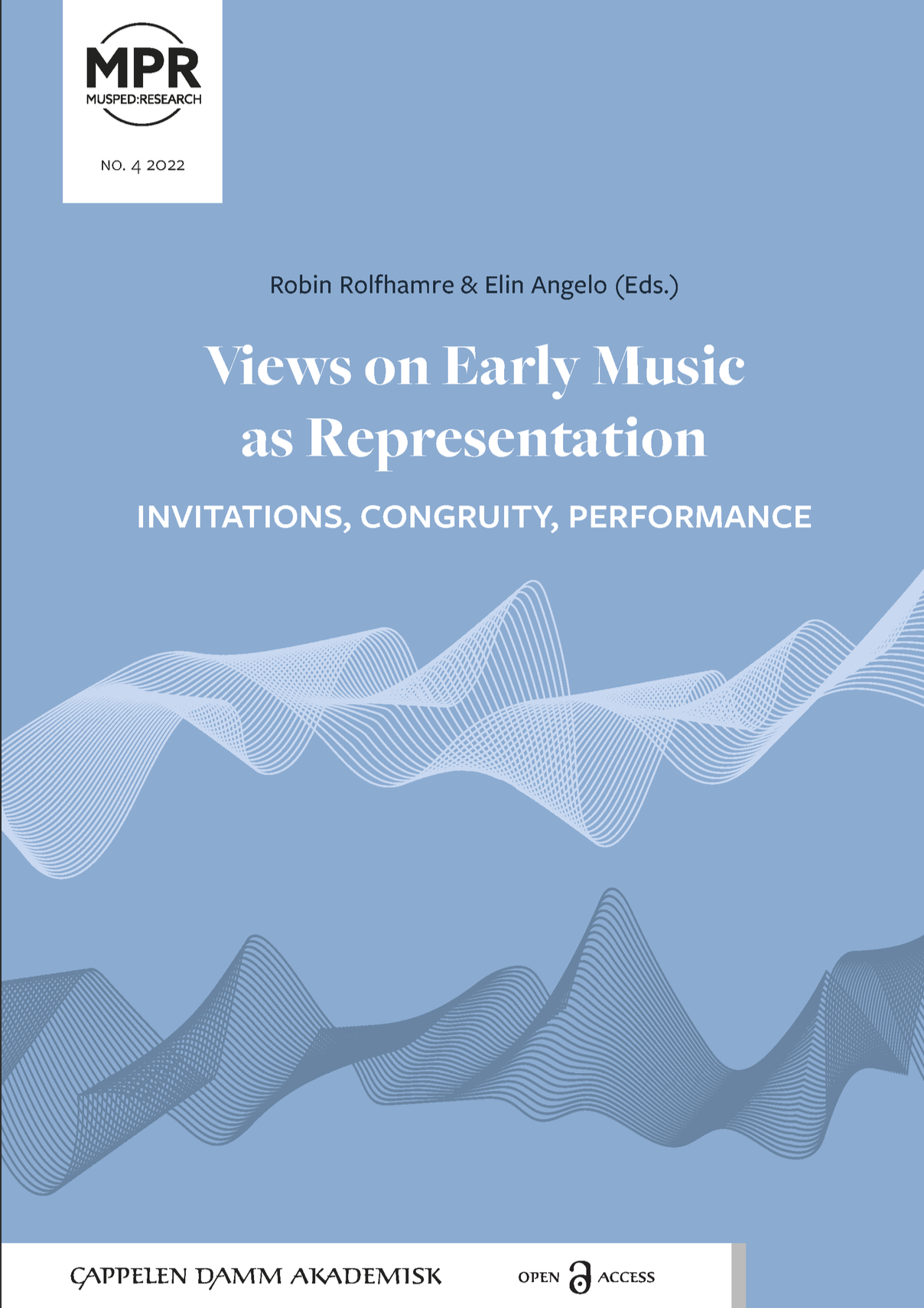
Views on Early Music as Representation—Invitations, Congruity, Performance (Research anthology, download here)
Eds. Rolfhamre, R. & Angelo, E.
For Cappelen Damm Akademisk/NOASP
Publication date: 2022.
Abstract:
Early music performance in its broadest capacity presents a compelling case of being something present representing, presenting, enacting, re-enacting, living and re-living, concretising and fantasising a historical past. It is both what it is and something entirely other. Inspiring countless efforts to come to terms with its nature, one way of approaching the act of conveying or doing history is through pedagogy. Pedagogy, here, is multifaceted as it is placed and displaced in learning, acting, mediating, communicating, perceiving, conveying and persuading historically remote, cultural practices. As such, the anthology will include both explicitly pedagogical chapters and more implicit approaches situated within pedagogical settings. The driving force behind the project is: when maintaining and sustaining a certain European cultural heritage, how do we do so as artists an pedagogues and to what effect? To cast a fresh gaze on traditional Early music performance studies, the authors of this volume argue for the pedagogical potential of such a project. Not only as something functioning as an artefact used within an educational setting, but as something being primarily pedagogical also in its formation and re-formation. The way Early music is construed and portrayed just to fulfil the official boundary of its terminology, is also a pedagogical act performed in multiple ways. It is not a question of regarding Early music scholarship and artistry as binary presentism vs historicism, but rather as historicism in presentism and presentism in historicism. It is precisely what this volume is all about and to which it seeks to contribute. The anthology gathers a collection of chapters highlighting spectatorship, experience, theory, rhetoric, philosophy, representation, performance, performativity, literature, visual arts, pedagogy, education, pragmatism and also new-materialism. It treats music that is readily categorised as Early music, and music that is bordering to, or even becoming, something else entirely, but with evident roots in the Early music repertoire.
Chapters:
Chapter 1 "Introduction: Making History Through Music Performance and Education by Robin Rolfhamre and Elin Angelo
Chapter 2 "Performative Musicology and HIP as Rhetoric and Pedagogy for the Past in Present and Future" by Robin Rolfhamre
Chapter 3 "Contextual In-Depth Knowledge as a Liberating Force in Artistic and Pedagogical Communication of Early Modern Material" by Inga Marie Nesmann-Aas
Chapter 4 "Hearing Early Modern Music Through the Contemporary by Daniel Henry Øvrebø
Chapter 5 "Rolf Lislevand in Conversation with Randi Margrethe Eidsaa and Daniel Henry Øvrebø" by Daniel Henry Øvrebø, Randi Margrethe Eidsaa and Rolf Lislevand
Chapter 6 "Early Music in an Interdisciplinary Artistic Production: The Project Pluvinel’s Academy" by Randi Margrethe Eidsaa
Chapter 7 "Re-Enacting Beat Art: An Aesthetic and Pedagogical Approach to Re-Living History" by Frida Forsgren
Chapter 8 "Rhetorically Performative Early Music: YouTube Videos as Statements" by Robin Rolfhamre and Daniel H. Øvrebø
Chapter 9 "From Researcher/Performer to Artistic Researcher: Looking Back at the Past in Search of New Possibilities" by Jorge Salgado Correia | About the Authors
Papers, articles and artistic work in selection
Eidsaa, Randi Margrethe & Kharatyan, Mariam (2024).
Rethinking Music Performance Education Through the Lens of Today’s Society, Teaching Music Performance in Higher Education: Exploring the Potential of Artistic Research. Open Book Publishers. ISSN 9781805112730. s. 251–270. doi: 10.11647/OBP.0398.13
Kharatyan, Mariam (2024).
Score-Based Learning and Improvisation in Classical Music Performance, Teaching Music Performance in Higher Education: Exploring the Potential of Artistic Research. Open Book Publishers. ISSN 9781805112730. p. 181–194. doi: 10.11647/OBP.0398.09
Artistic Research Based Learning: Toolkit. ISBN 9789727899203. 27 p. UA Editora.
Kharatyan, Mariam; Eidsaa, Randi Margrethe; Holmgren, Carl; Minors, Helen Julia; Östersjö, Stefan; López-Íñiguez, Guadalupe; Kanno, Mieko; Westerlund, Heidi; Constantinou, Nicolas; Stavrou, Natassa Economidou; Papageorgi, Ioulia; Foletto, Clarissa; Dalagna, Gilvano & Correia, Jorge Salgado (2024).
Collaborations
Associated projects or collaborations with
- CreaTeME (Creative Use of Technologies in Music Education)
- REACT+ (EU-funded)
- Edu-Action 2022–2023 (EU-funded)
- UiA | ConserVRtory (Internal funding)
- European University Alliance FORTHEM (ERASMUS+)
- Edward Said National Conservatory of Music, Palestine. Erasmus Global Mobility Exchange (ERASMUS+)
- Yerevan Komitas State Conservatory (YKSC), Armenia. Erasmus Global Mobility Exchange (ERASMUS+)
- Kvalifiseringstjenesten: Voksenopplæring og Flyktningetjeneste (Grimstad Municipality)
- KILDEN Performing Arts Centre
- KUNSTSILO
News
Rethinking Classical Music Education
Teachers and students at UiA have collaborated with European colleagues to highlight new ways of teaching classical music performance. Some of the findings have been published in a new collection of articles.
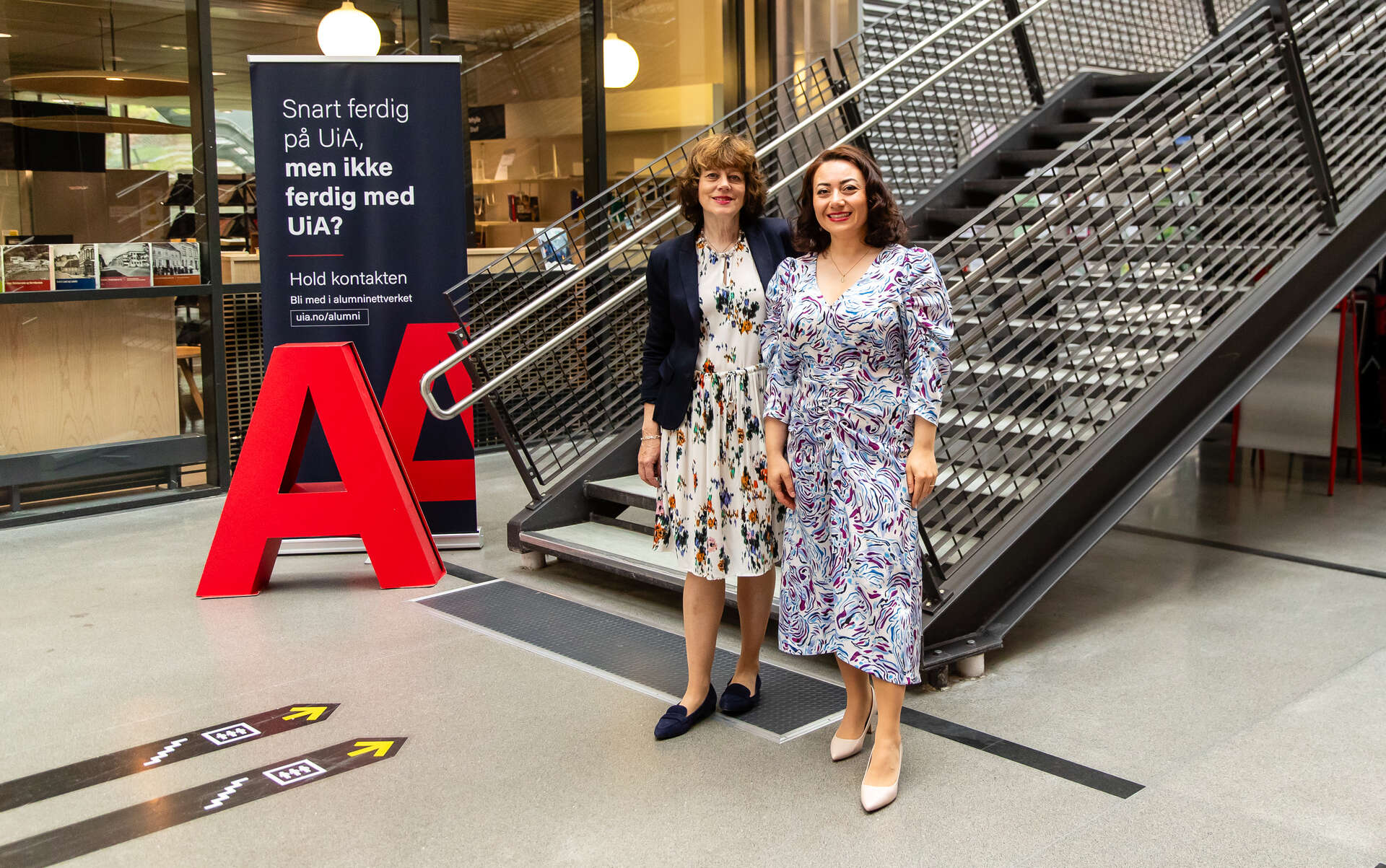
REACT - Rethinking Music Performance in European Higher Education
REACT – Rethinking Music Performance in European Higher Education Institutions is a Strategic Partnership funded by ERASMUS+ and consisted of an international team of musicians and researchers from Norway, Finland, Sweden, Cyprus, and Portugal who worked together throughout three years. By mobilizing an international cooperative network, the REACT team has aimed to develop new approaches to the teaching and learning of music performance in Higher Music Education. The strategic partnership has collaboratively explored the rich potential of artistic research, and the implementation of artistic research in pedagogical processes in HMEIs (Higher Music Education Institutions), furthermore proposing new approaches to lifelong learning and student-centered pedagogical practice.
The main results and outputs of the REACT project are the "Stakeholders Requirement Report", "Toolkit for Teachers and Students", "The Virtual Academy of Music Performance" and the book "Teaching Music Performance in Higher Education - Exploring the Potential of Artistic Research". In outputs the new ARBL (Artistic Research Based Learning) model is developed by the REACT team and presented through articles, explanatory short texts, and videos, offering the students, teachers, and a wide range of practitioners new perspectives, and new ideas for their pedagogical and performative practices.
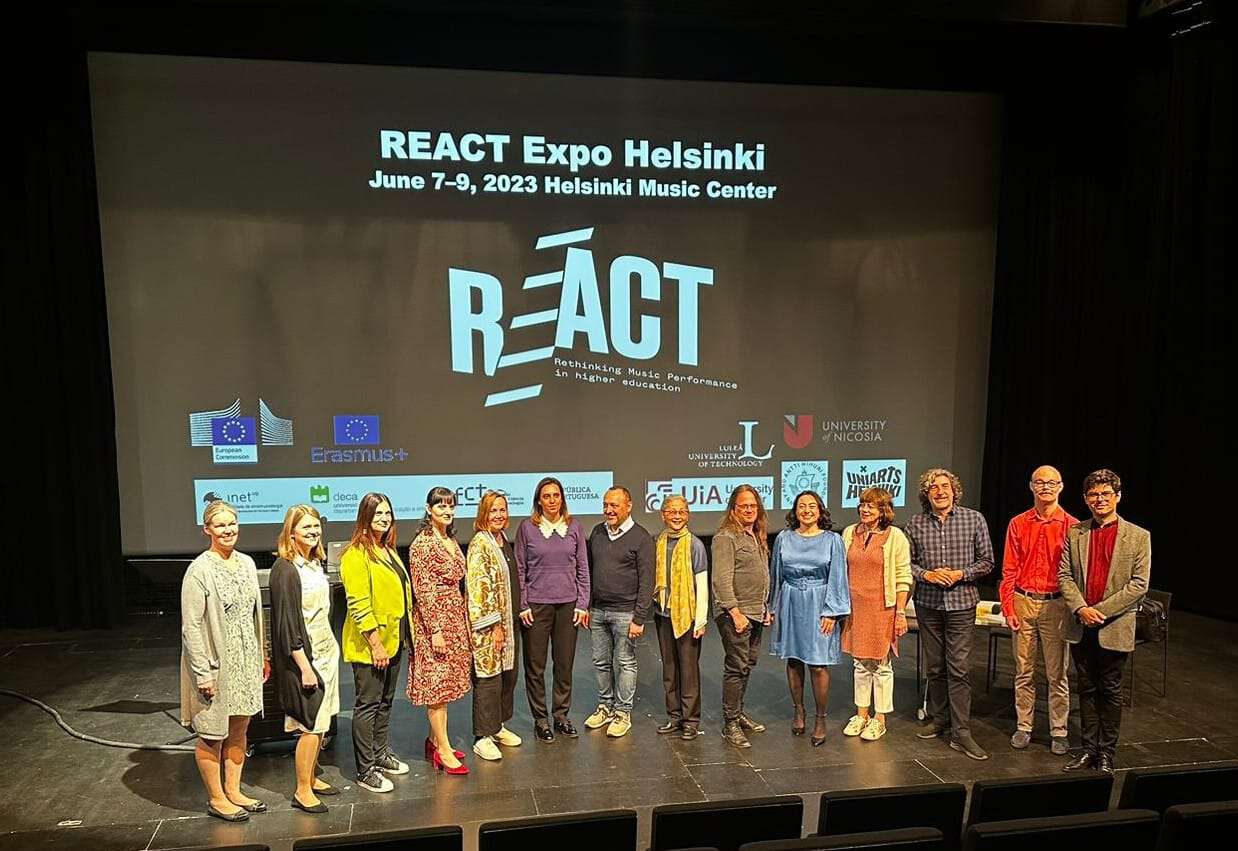
The team has developed a student-centered perspective on the teaching and learning of music performance grounded in artistic research practices, which we hope many of our colleagues at the Faculty of Fine Arts and particularly at the Department of Classical Music and Music Education will find beneficial. We hope that our main instrument teachers and music practitioners at the Department will actively use the REACT AR-BL model in their projects and in day-to-day teaching processes with students. The model's core values and perspectives of Contextualizing, Exploring, and Sharing are presented in three spheres, and the notion of artistic research-based learning at the center, as a representation of how the student's individual wishes, intentions, possibilities, and challenges must be at the heart of the matter. The model is guiding and offering both the teachers/practitioners and students a map drawn and grounded on recent international research, carefully shaped in such a way that will help the students find their artistic voice as musicians and active members of today's society, and assist in anchoring their artistic and musical intentions, ambitions, and creative visions into an action.
Concert, Workshops and Seminar with Visitors from Palestine
Through the interdisciplinary project Sound of History, organized by the research group Reconfiguring Historical Musical Crafts Education (RHiMUCE), the faculty received Palestinian guests from the Edward Said National Conservatory of Music (ESNCM) - the Palestine conservatory and the University of Würtzburg.
The guest lecturers were Tamer Al-Sahouri and Yassar Sadat both from ESNCM, and Loab Hammoud, who currently holds a postdoc position at the Institute of Music Research, University of Würzburg. The Palestinian guests visited UiA for two reasons; both as contact persons for the faculty's Erasmus+ project Global Mobility and as contributors to the RHiMUCE project Sound of History. Conflict, Concern and Compassion through Music.
Fifteen students took part in the workshop events and both students and staff participated in lectures and the symposia. The group also presented a 60 minutes performance in Grimstad Cultural Hall's new recital room Pan.
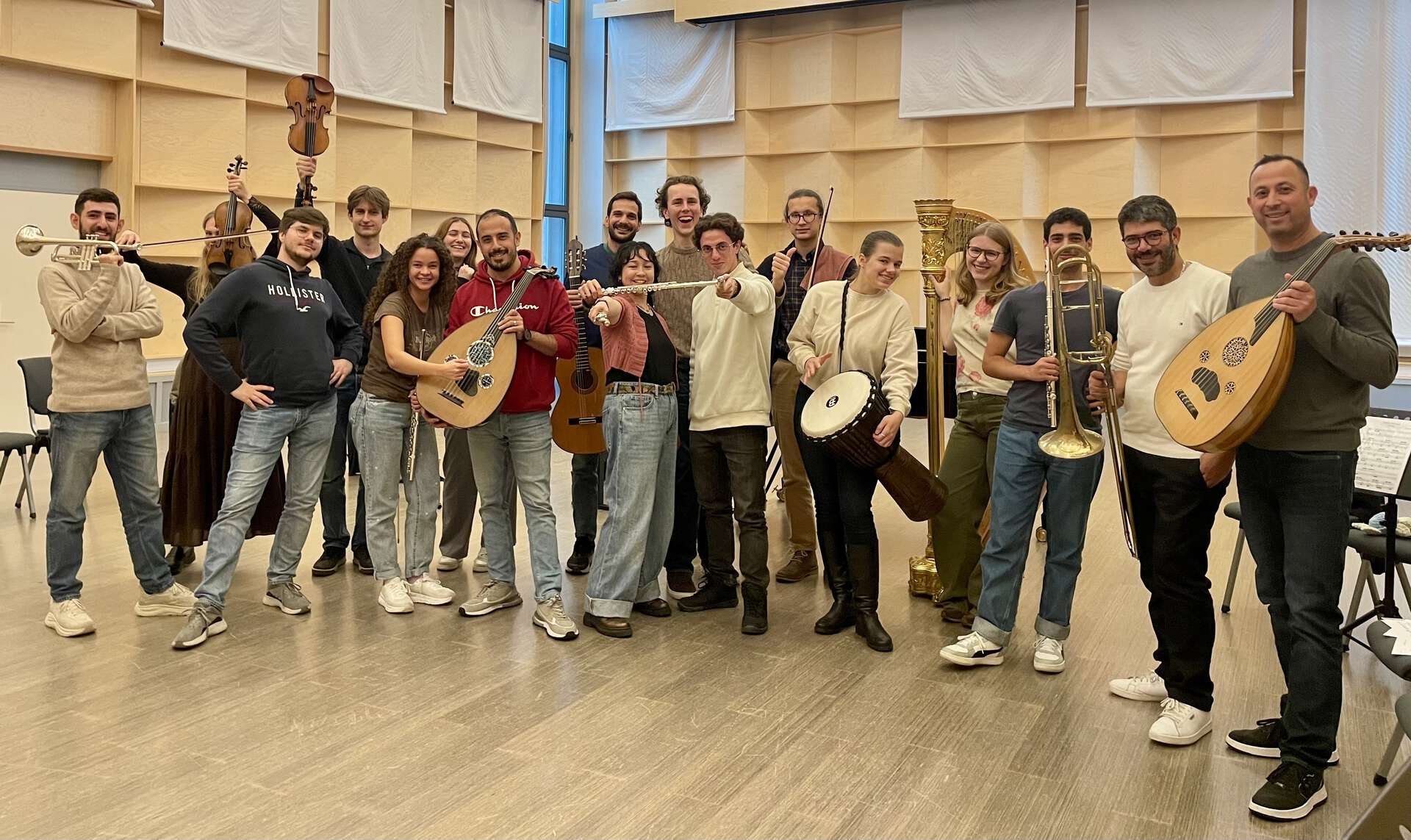
Bachelor's and master's students participated in a workshop in October 2025 to explore Arabic music together with the guest lecturers and musicians on the Arabic string instrument oud; that is Tamer Al-Sahouri on the left in the picture and Loab Hammoud on the right. Second from the right is the third guest teacher, Yassar Sadat.
Norwegian-Armenian music collaboration yields results
UiA's Department of Classical Music and Music Education has established close ties and strong professional contacts with the Yerevan Music Academy.
The Department of Classical Music and Music Education at the University of Agder has been collaborating with the Yerevan Komitas State Conservatory (YKSC) through the quota program since 2011. Thanks to this continued collaboration, an application for an Erasmus+ Global mobility project was approved in 2022. The first two Armenian students arrived at the Faculty of Fine Arts in the spring of 2023. So far, four students have come to the faculty from YKSC, and three new students will arrive in the spring of 2024.
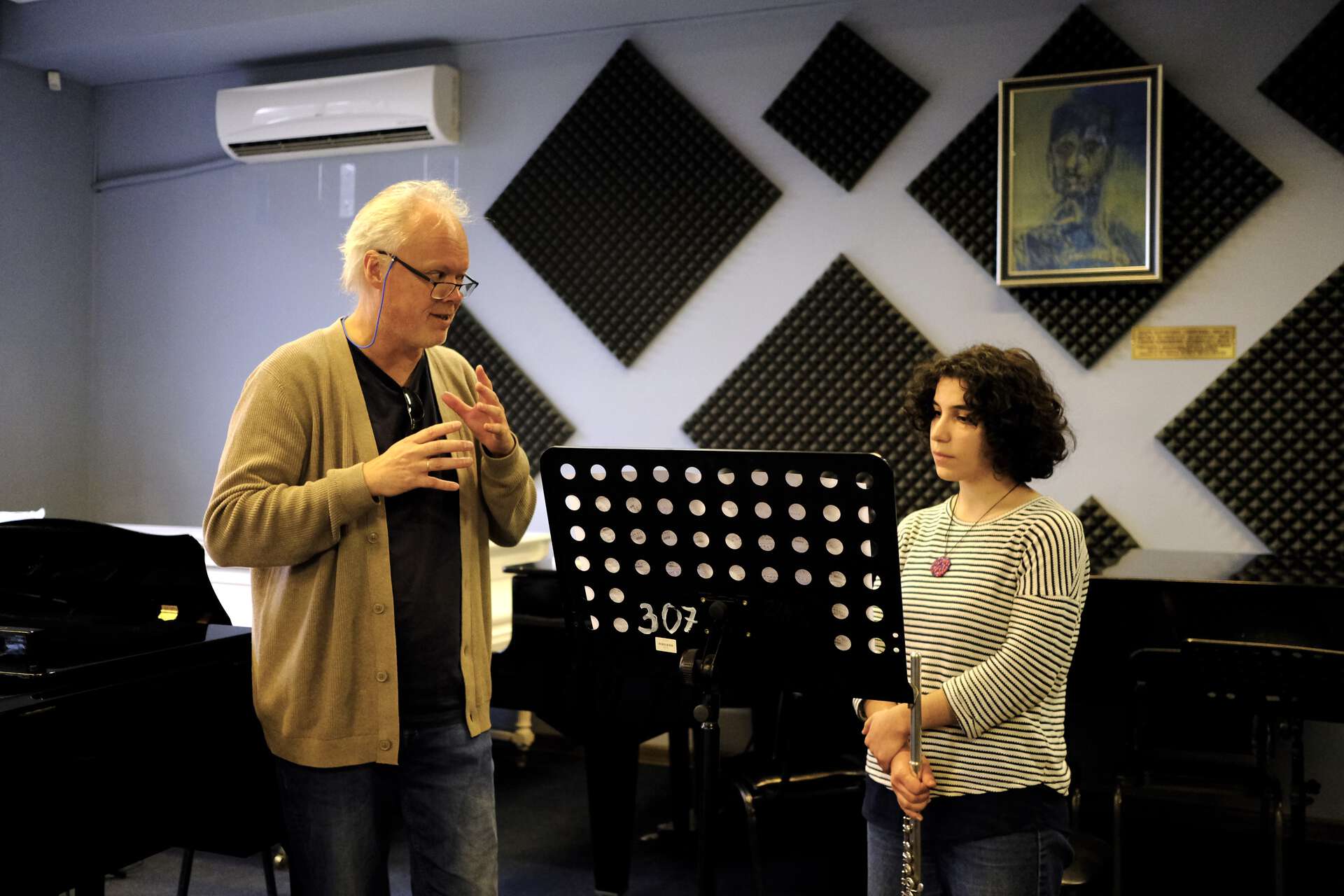
A successful visit
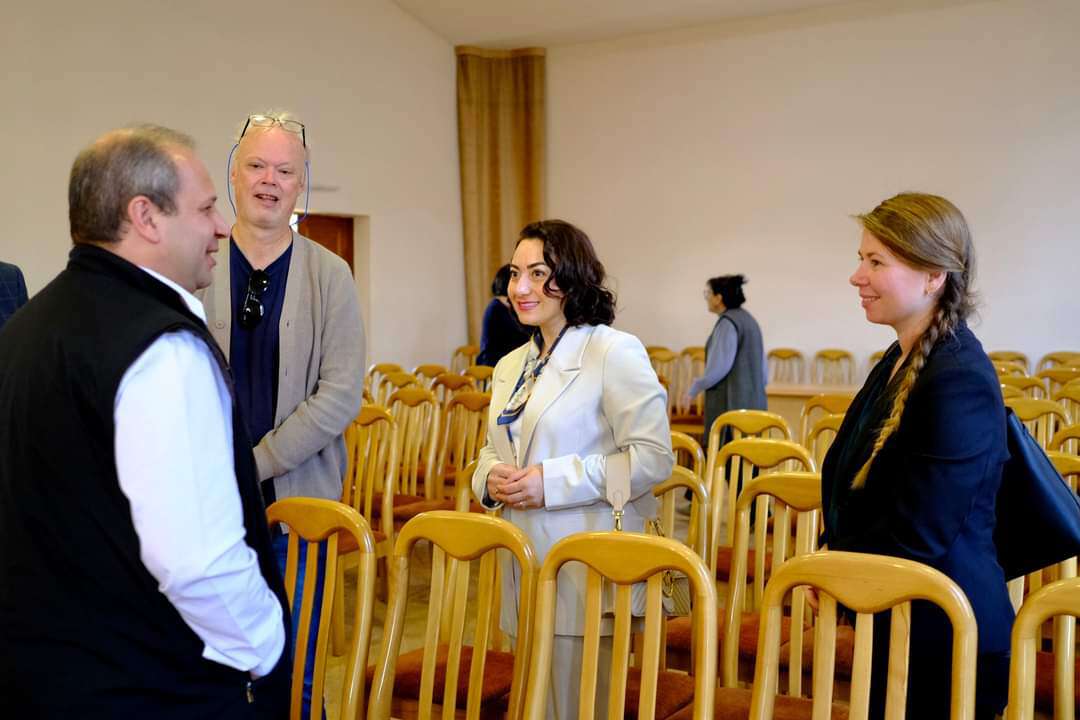
In addition to student mobility, contact and visits between the partners' scientific and administrative staff are an important part of the project. Three representatives from the Faculty of Fine Arts traveled to Armenia in the fall of 2023 to meet with their Armenian partners. The visit included guest lectures and meetings about ongoing projects and further opportunities for collaboration in research and education.
During their visit to Yerevan, Associate Professor Jørn Eivind Schau and Associate Professor Mariam Kharatyan held master classes and workshops for flute and piano students. They also taught chamber music and worked with various groups. Meetings, discussions, and interviews took place regarding current and future artistic projects between the two institutions.
The PRISM research group warmly welcomes Kristina Osmundsen Vårlid
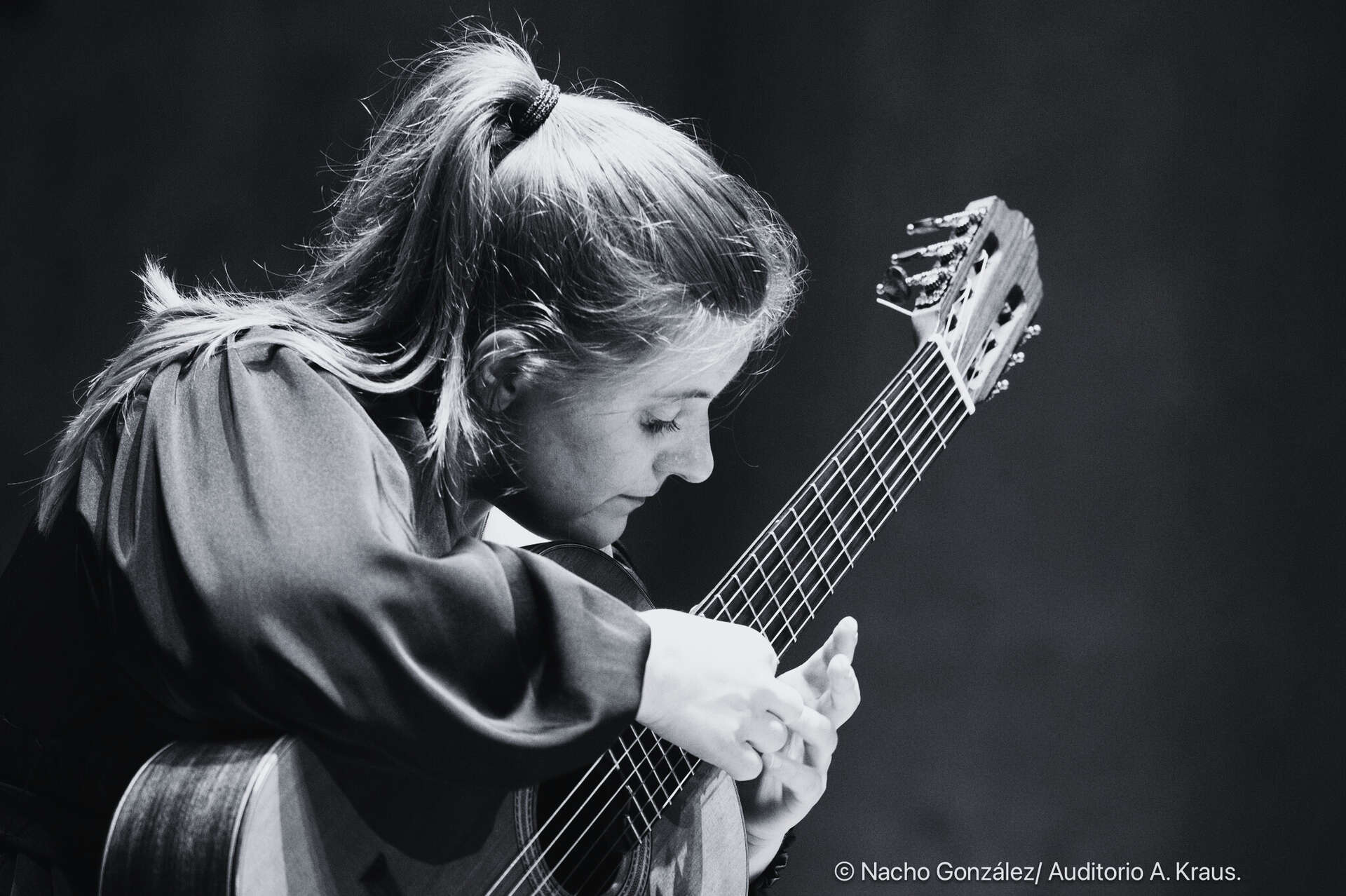
Kristina Vårlid is a classical guitarist and doctoral candidate in artistic research in classical music at the Department of Classical Music and Music Education, Faculty of Fine Arts, University of Agder, Norway, with her project “Real-Time Intonation Potential in Classical Guitar Performance.”
From 2025, she is pursuing her doctorate at the UiA while contributing to the academic and artistic community through teaching and research. Her project challenges established conventions within classical guitar performance and opens new perspectives on the instrument’s expressive potential:
Real-Time Intonation Potential in Classical Guitar Performance
Imagine hearing a singer stripped from the possibility of using intonation as an expressive and lyrical tool. Or, imagine a string quartet playing in equal temperament. Even though these scenarios are close to unthinkable, it is the current practice on the classical guitar.
My artistic research project investigates the potential of real-time intonation as a means of enhancing melodic and harmonic expression within classical guitar performance. While the instrument is traditionally bound by the constraints of approximate equal temperament and fixed frets, I will explore whether left-hand techniques can enable more nuanced pitch control during performance. Could it be that this would allow for greater possibilities within melodic and harmonic expression, resembling the freedom of string players?
Through this inquiry, Kristina contributes to international artistic research discourse by examining intonation not merely as a technical parameter, but as a central expressive dimension in performance practice. Her work addresses fundamental questions of tuning systems, embodied technique, and interpretative agency within classical guitar performance.
Associated Research Fellows
PhD Candidates
- Kristina Osmundsen Vårlid (MMus; BMus), 2025–. Title: “Real-Time Intonation Potential in Classical Guitar Performance”. (PhD), Faculty of Fine Arts. Supervisor: Mariam Kharatyan (2025-2026), co-supervisor: Robin Rolfhamre.
- Inga Marie Nesmann (MMus; MA), 2017–2020. Title: ”Reconfiguring Dido”. (PhD), Faculty of Fine Arts. Supervisor: Robin Rolfhamre, co-supervisor: Roy Eriksen.
- Daniel Henry Øvrebø (MMus), 2017–2020. Title: ”Performative Arts-Based Audience Research: Investigating Audience Experiences with High Modernist Solo Works for Flute”. (PhD), Faculty of Fine Arts. Supervisor: Robin Rolfhamre, co-supervisor: Arnulf Christian Mattes and Elin Angelo.