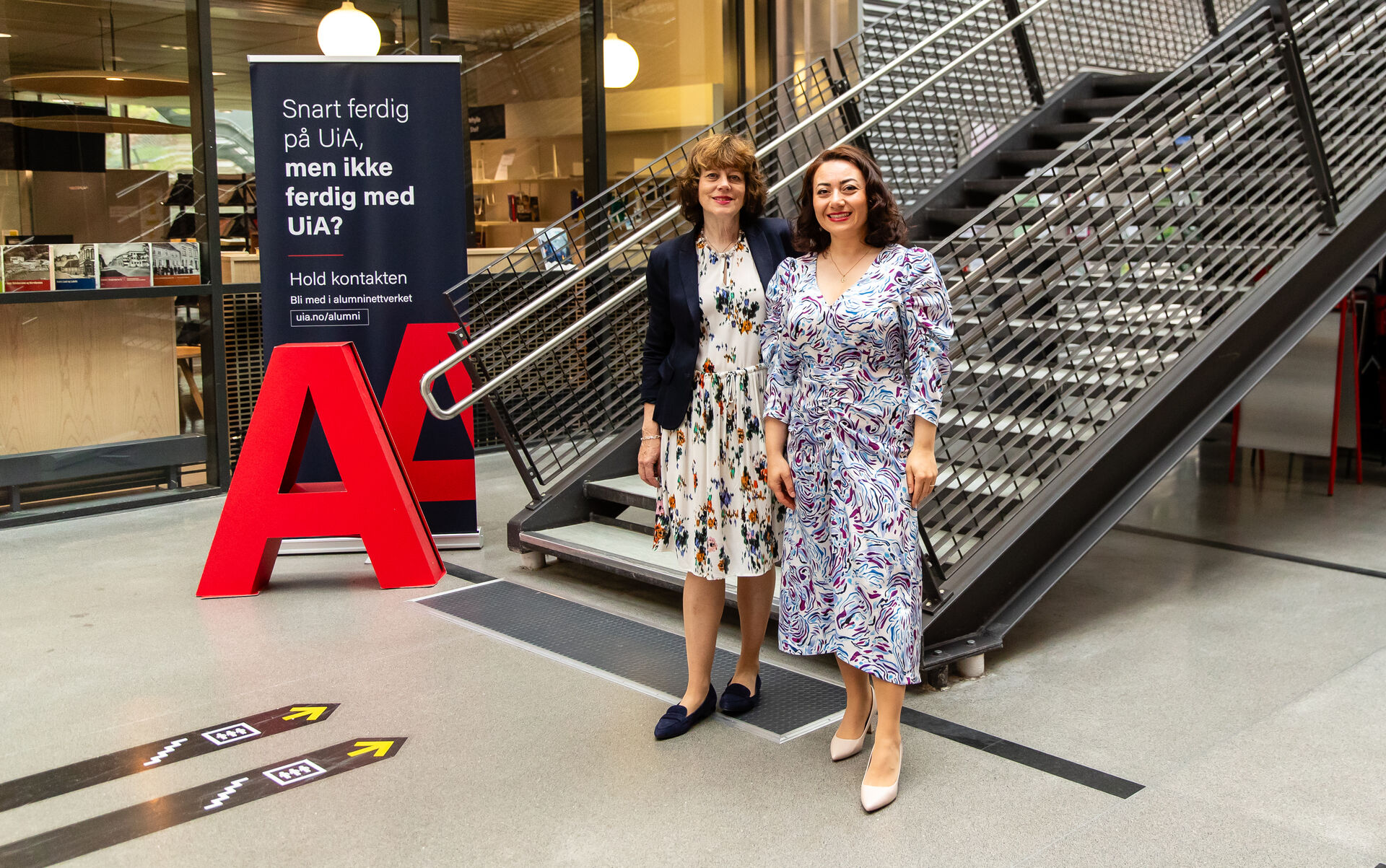
- It has been a privilege to be part of such a professionally relevant and extensive international collaboration as REACT, says Professor Randi Margrethe Eidsaa.
- This is an example of a collaboration that clearly benefits the students and the academic community, says Associate Professor Mariam Kharatyan.
Both teachers work at UiA's Department of Classical Music and Music Education. The department has been one of five partners in the European collaboration project REACT: Rethinking Music Performing in Higher Education, led by the University of Aveiro in Portugal.
A project that suited UiA well
Eidsaa says that participation in the REACT project has been valuable for UiA for several reasons. Among other things, international research projects and reports have shown that classical music education in Europe has been deficient in preparing music students for the job market.
UiA’s Department of Classical Music and Music Education wanted to take these signals seriously. Therefore, new disciplines and work methods were included as a follow-up to the study plan revisions in 2015 and 2018. Teachers and students set out to test and try out new methods, gathering useful experiences about different ways of learning and working.
Associate Professor Jørn Schau was among the teachers who played an important role in this work. He took the initiative for an international project with Professor and Flutist Jorge Salgado Correia from Portugal. This was the beginning of the exciting collaboration between UiA and the University of Aveiro in Portugal.
- As a result, it became clear that the department should be one of five partner institutions in the application for project funding for REACT in 2020, says Eidsaa.
Have written two chapters in new book
During the project period, Kharatyan and Eidsaa collaborated on writing the chapter Rethinking Music Performance Education through the Lens of Today’s Society. Eidsaa and Kharatyan present findings from fourteen interviews with students and others associated with music education in Oslo and Kristiansand. They also analyze student reflections from an improvisation project and a creative ensemble project conducted in collaboration with the Department of Classical Music and Music Education and the UiA Natural History Museum and Botanical Garden.
- The chapter refers to recent approaches to performance music education and emphasizes that students must also acquire knowledge about music and society in order to function in their future job. Therefore, study programs must include community-based approaches, music and health perspectives, improvisation, creative working methods and interdisciplinary approaches.
Kharatyan has also written the chapter Score-Based Learning and Improvisation in Classical Music Performance. Here, she describes how bachelor's and master's students were included in the artistic project Armenian Crossroads. She says:
- One of my main goals was to contribute to the students' creative thinking through improvisation so that they could expand their musical horizons, find new ways of music interpretation, and creative expression forms.
The chapters are included in the collection of articles Teaching Music Performance in Higher Education. The book was published in 2024 and is one of the main results from the REACT project, in addition to the "Stakeholders Requirement Report," "Toolkit for Teachers and Students," and "The Virtual Academy of Music Performance."
.jpg)
Benefitting the entire classical music department
Kharatyan and Eidsaa explain that the idea behind the REACT project aligned well with various initiatives that the department already had in place following the study plan revisions.
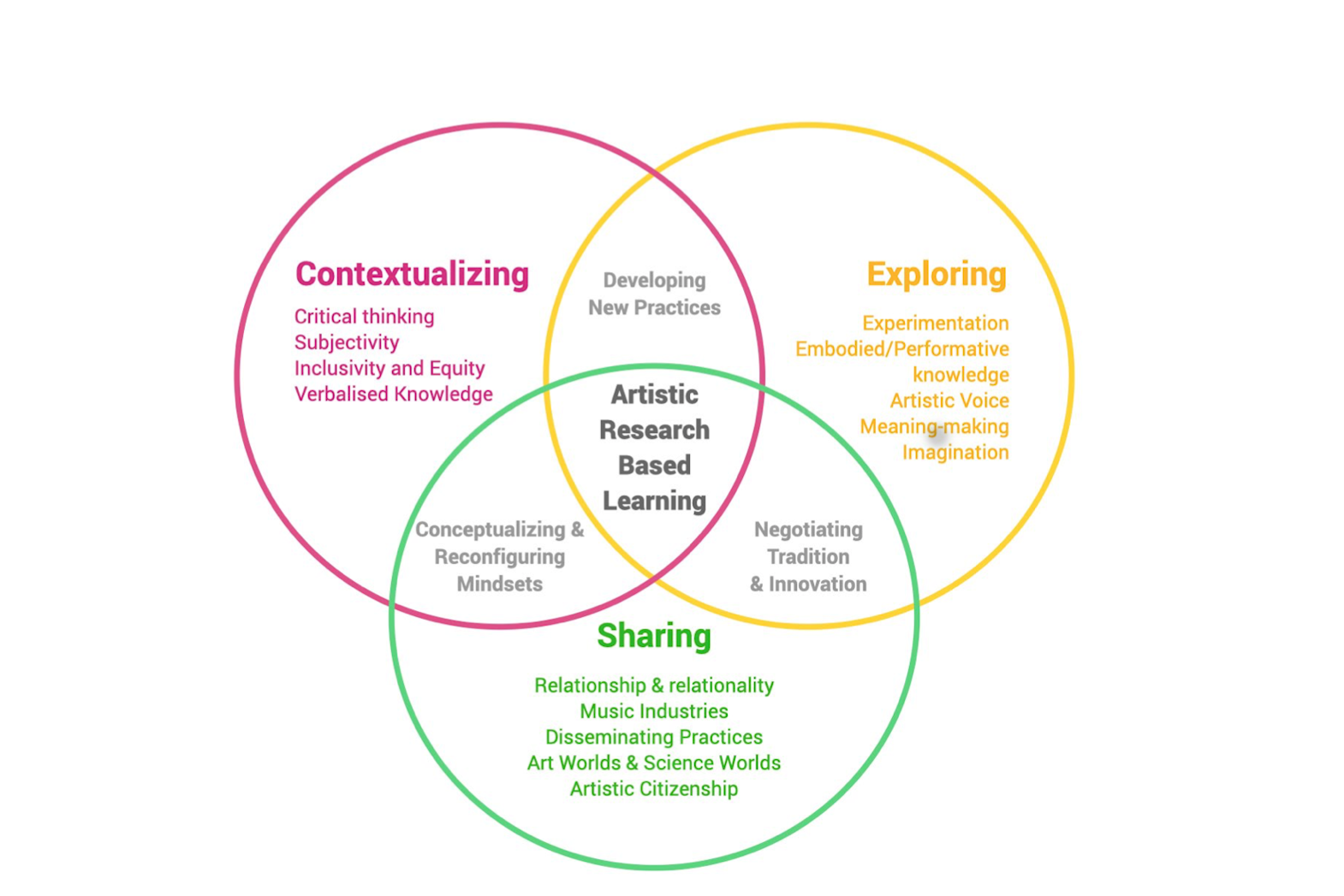
- Central themes were that students should be encouraged to think critically and independently in developing their own artistic voice, says Eidsaa.
This way of thinking contrasts with the traditional master-apprentice principle that has characterized music conservatories in Europe. The intention of the REACT group has been to create material that can increase artistic and societal understanding for both academic communities and students.
In this way, teaching at the bachelor's and master's levels can also develop students' skills in project development, musical leadership, creative work methods, ensemble collaboration, and societal understanding.
Now, Eidsaa and Kharatyan look back on an interesting and rewarding REACT collaboration with five countries in Europe:
- We hope that teachers and musicians at the department will use the REACT Artistic Research-Based Learning model in their projects and daily teaching.