
That is something marketing professor Ellen Katrine Nyhus says. She serves as the subject matter expert and fact-checker for the personal finance section of the newly launched Lille norske leksikon (Little Norwegian Encyclopedia), introduced last year as an offshoot of the more renowned Store norske leksikon (Great Norwegian Encyclopedia).
The new, smaller encyclopedia targets young people (and others) who seek simpler, yet professionally sound and verified articles on various topics, including personal finance. Currently, there are 2600 articles in the little encyclopedia, with many more expected throughout the year.
Content responsibility
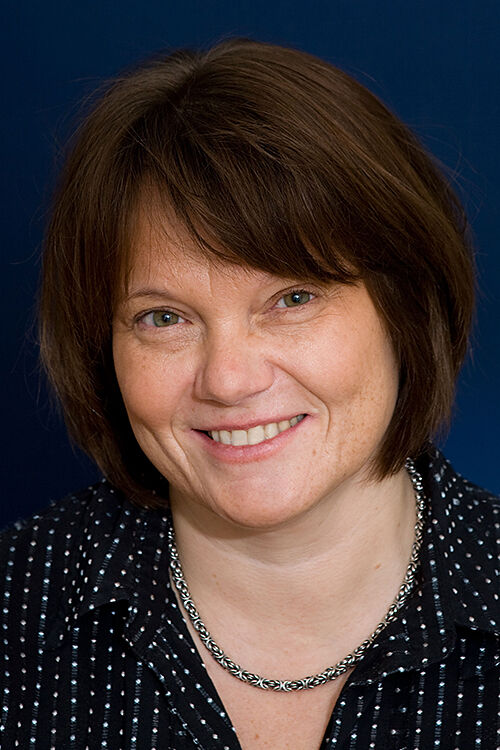
As a subject matter expert and fact-checker, Nyhus's task is to ensure that both accuracy and simplicity are achieved in the articles published on economic topics. She has verified articles on credit cards, holiday pay, loans and wealth.
"Writing in a simple manner while maintaining accuracy is challenging. Economics and legislation related to personal finance can be detailed and complex, often involving professional jargon that can be difficult to understand. Finding simple ways to explain this has been enjoyable," says Nyhus.
She explains that she is motivated by young people's interest in learning more about economic topics when reading the articles she has reviewed in Lille norske leksikon.
"I'm generally focused on ensuring that children and young people learn more about economics, and my role as a content reviewer is a great way to achieve that."
"Kids should learn more about personal finance in school"
Nyhus believes that children, and especially teenagers, can and should learn more about money, saving and personal finance than what is currently provided, particularly in schools.
"It's not necessary to wait until kids are old enough to do percentage calculations before they learn about personal finance," Nyhus says.
She explains the advantages of starting early, noting that by age four, children start to learn and understand the basics of sharing and trading, which are key aspects of economics.
As children grow, the focus can broaden. This includes learning about interest rates, compound interest, loans, savings and pensions, as well as more abstract personal finance concepts like bitcoin, blockchains and other digital financial trends.
"It's about the mindset"
"For me, it's mainly about raising awareness among young people about the impact of their personal financial decisions and spending. This includes understanding how these choices affect their lives both now and in the future. Take pensions, for example. The difference between a good and a poor pension savings plan is huge. Awareness of this should begin when people are young, because when they are older, it's often too late."
Learning personal finance at home
Nyhus notes that young people's financial mindset is primarily shaped at home by parents and guardians.
"We see this often. In homes where personal finance is talked about, kids develop more knowledge and interest in it than they do elsewhere. This is great for those families, but it's unfortunate for society because it tends to perpetuate inequalities that we might not want. That's why I believe schools should focus more on teaching personal finance," she says.
31 experts from UiA
Ellen Katrine Nyhus is one of 31 professors and academics at the University of Agder (UiA) who hold academic responsibility and contribute as topic experts and writers for Store norske leksikon. Together, at the start of 2025, they manage 51 subject areas and have written 2474 articles. These articles were read 1,704,969 times in 2024, which is a 3% increase from the previous year, according to the encyclopedia.
In 2024, the 15 most-read articles written by topic experts at UiA were:
(Please note: The links below lead to articles in Store norske leksikon, and all content is in Norwegian.)
- Renaissance - read 47,360 times; topic expert: Camilla Mørk
- Christopher Columbus - read 40,217 times; topic expert: Carl Fredrik Feddersen
- EU (European Union) - read 37,239 times; topic expert: Jarle Trondal
- Baroque - read 32,371 times; topic expert: Camilla Mørk
- Germany - read 26,733 times; topic expert: Ole Letnes
- Dialects in Norway - read 24,971 times; topic expert: Martin Skjekkeland
- Norwegian history from 1815 to 1905 - read 23,397 times; topic expert: Knut Dørum
- The dissolution of the union in 1905 - read 22,717 times; topic expert: Knut Dørum
- Jewish Clause (in the Norwegian Constitution of 1814) - read 21,991 times; topic expert: Knut Dørum
- Modernism - read 19,962 times; topic expert: Camilla Mørk
- Norwegian history - read 19,178 times; topic expert: Knut Dørum
- Kon-Tiki - read 18,437 times; topic expert: Carl Fredrik Feddersen
- Hedgehog - read 16,971 times; topic expert: Beate Strøm Johansen
- Isaac Newton - read 16,666 times; topic expert: Reinhard Siegmund-Schultze
- Phenomenology - read 15,725 times; topic expert: Thomas Netland
OVERVIEW OF STORE (AND LILLE) NORSKE LEKSIKON
- Store norske leksikon (SNL) is a free online encyclopedia that is written and vetted by experts. Lille norske leksikon (LNL) is part of SNL and was launched in September 2024.
- SNL is published by the Great Norwegian Encyclopedia Association, which includes universities, university colleges and other nonprofit organisations as members.
- SNL attracts up to 3.5 million unique visitors each month, with up to 600,000 articles read daily. The articles are updated by 1200 subject matter experts.
- As Norway's largest platform for research dissemination, SNL welcomes inquiries from individuals interested in becoming subject matter experts or contributing authors for both SNL and LNL.