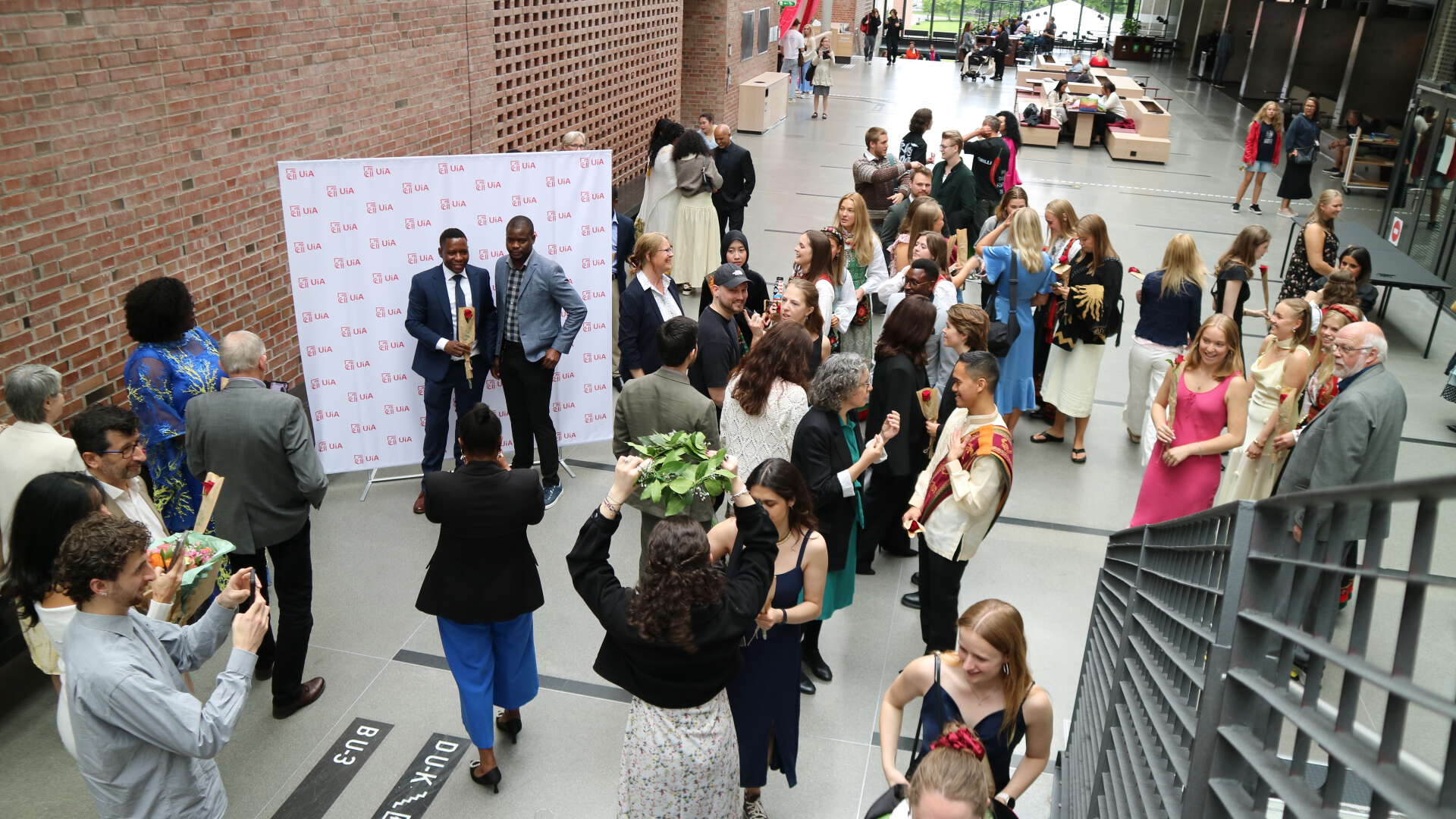
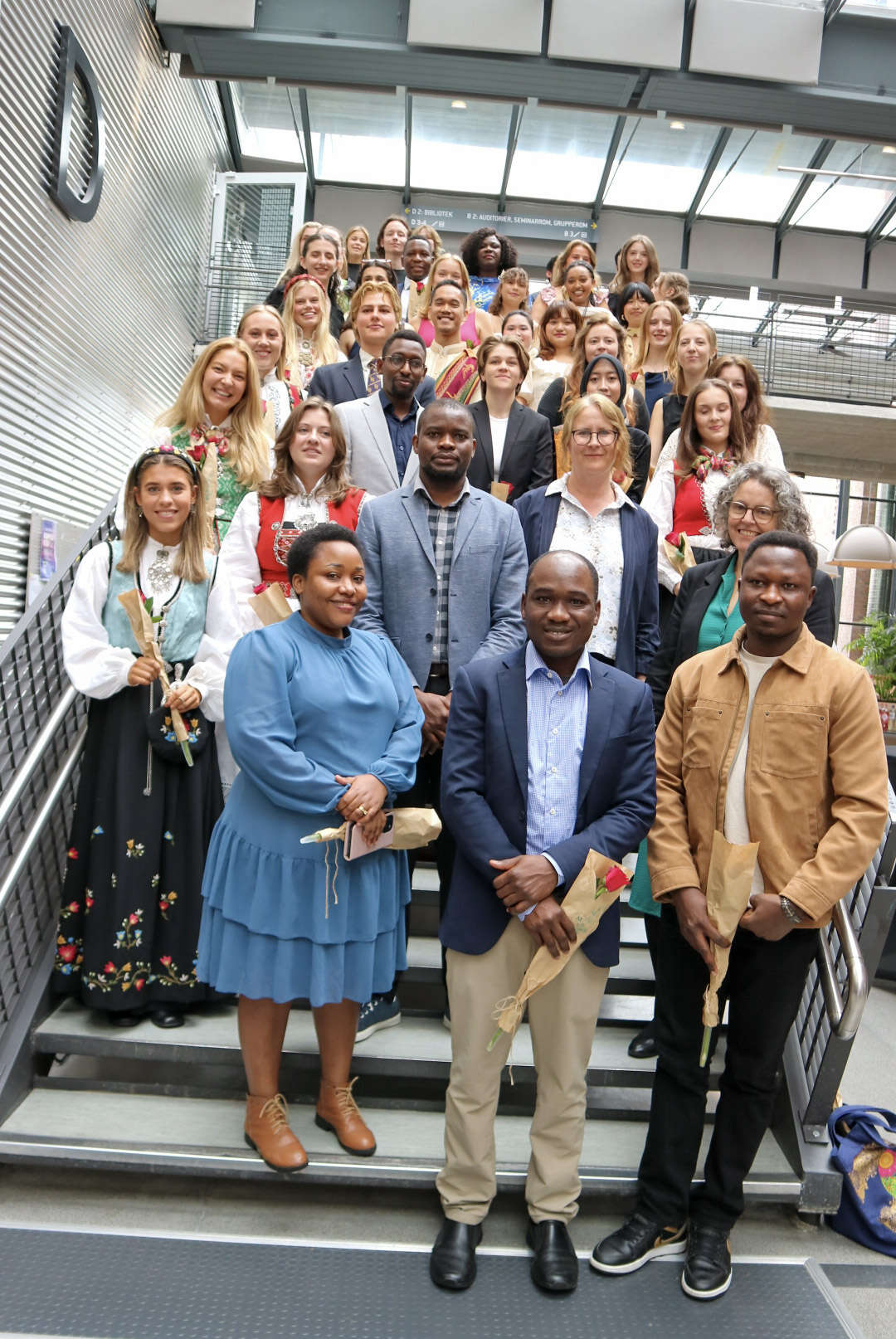
This spring, around 60 students have accomplished a degree in Bachelor of Global Development Studies or Master in Global Development, Crisis and Change.
A proud group of graduates gathered to celebrate and say goodbye to classmates who had been both friends and colleagues for the past two or three years. Many had brought family and friends along to mark the occasion. Both programme leaders and students looked back and reflected on what they had learned together.
A celebration of co-creation
Head of Department Arnhild Leer-Helgesen highlighted the students’ own contributions:
– Today we really see the result of the collective work that you students and we as staff have been part of – what we at the university call co-creation of knowledge. We have learned a lot from you as students, and we want to express our gratitude for that, she said.
The Bachelor in Global Development Studies and the Master in Global Development, Crisis and Change both focus on how to build a more just and sustainable society. Both programmes are highly international: all teaching is in English, and the student group consists of roughly 50% international and 50% Norwegian students.
International experience
Cross-cultural communication and cooperation are central to both programmes, and in today's world, the need for solutions that cross borders is clear.
Leer-Helgesen hopes the programmes have given the students exactly this insight.
– The way forward towards a better world requires knowledge and cooperation that cross borders – not only national borders, but also borders between cultures, groups and individuals. In our programmes, you have experienced – willingly or not – crossing borders. The knowledge and solutions needed for the future must be based on a diversity of perspectives, and on dialogue that includes the world far beyond Europe, she said.
Not just about a job
Programme leader Eric Kimathi, of the Bachelor in Global Development Studies, shared the words of one of his own former professors as a farewell to the graduates:
– I know that you are all thinking about jobs, but as you think about jobs, go and find a place where you can contribute, and not just a place to earn money. If you can contribute, you will not only find work, but many opportunities will come your way.
A good foundation for their careers ahead
Some students are heading into jobs, while others are continuing on to further studies. Bachelor’s student Hazael de la Torre Quiroz came from Mexico to study in Kristiansand three years ago – and is now preparing to start a master’s degree in Oslo.
– The bachelor’s programme gave me skills in intercultural communication through group work, taught me to look at issues from multiple perspectives, and gave me experience working with minority and disadvantaged communities through our field course. For me, the most valuable outcome has been a solid foundation in the social sciences, which let me choose freely between many different master’s programmes, Hazael says.
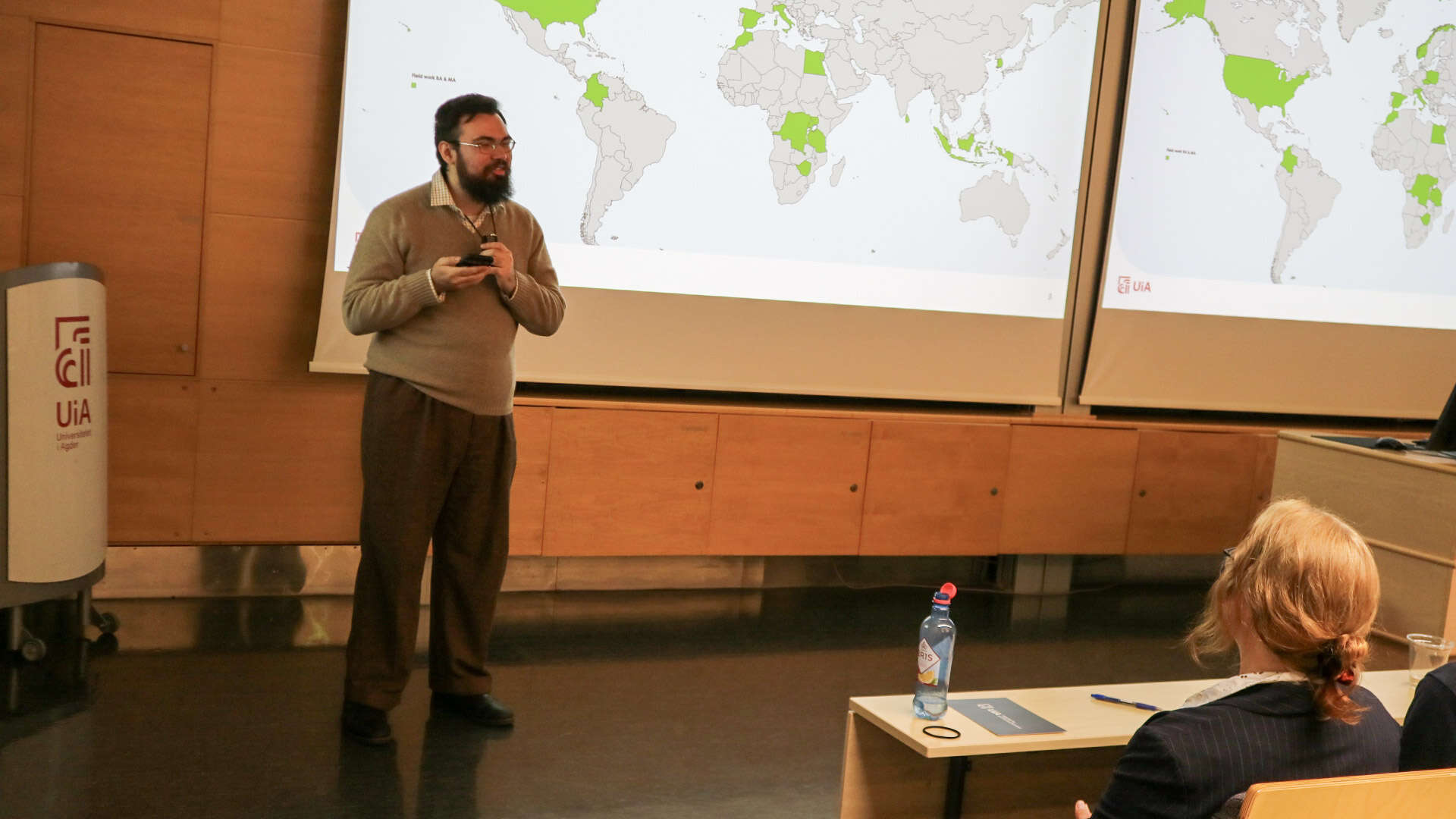
When asked what he’ll remember most from the programme, he doesn’t hesitate: the field course in Norway.
– It was a great learning experience: going to Oslo, meeting people from different institutions, discussing topics of interest with my classmates, and carrying out a small group research project by interviewing refugees. I really enjoyed it, he says.
Staying in touch with former students
Former students go on to work across many different sectors. Some work in international organisations or politics, others in municipalities – often on questions of integration and inclusion – and some continue into a career in academia.
Meet four of them below:
Helene – Norwegian Environment Agency
Robby Ntonde – NAV Kongsvinger
Edlynne – Kvinesdal asylum reception centre
Ole-Martin – Agder Police District
All former UiA students are part of the university’s alumni network – a way for the university to stay in touch with graduates and invite them back to guest lecture or collaborate in other ways in the years ahead.
The Department of Global Development and Planning wishes all this year’s graduates the very best of luck in their further studies and careers – and in their continued work for a better society.