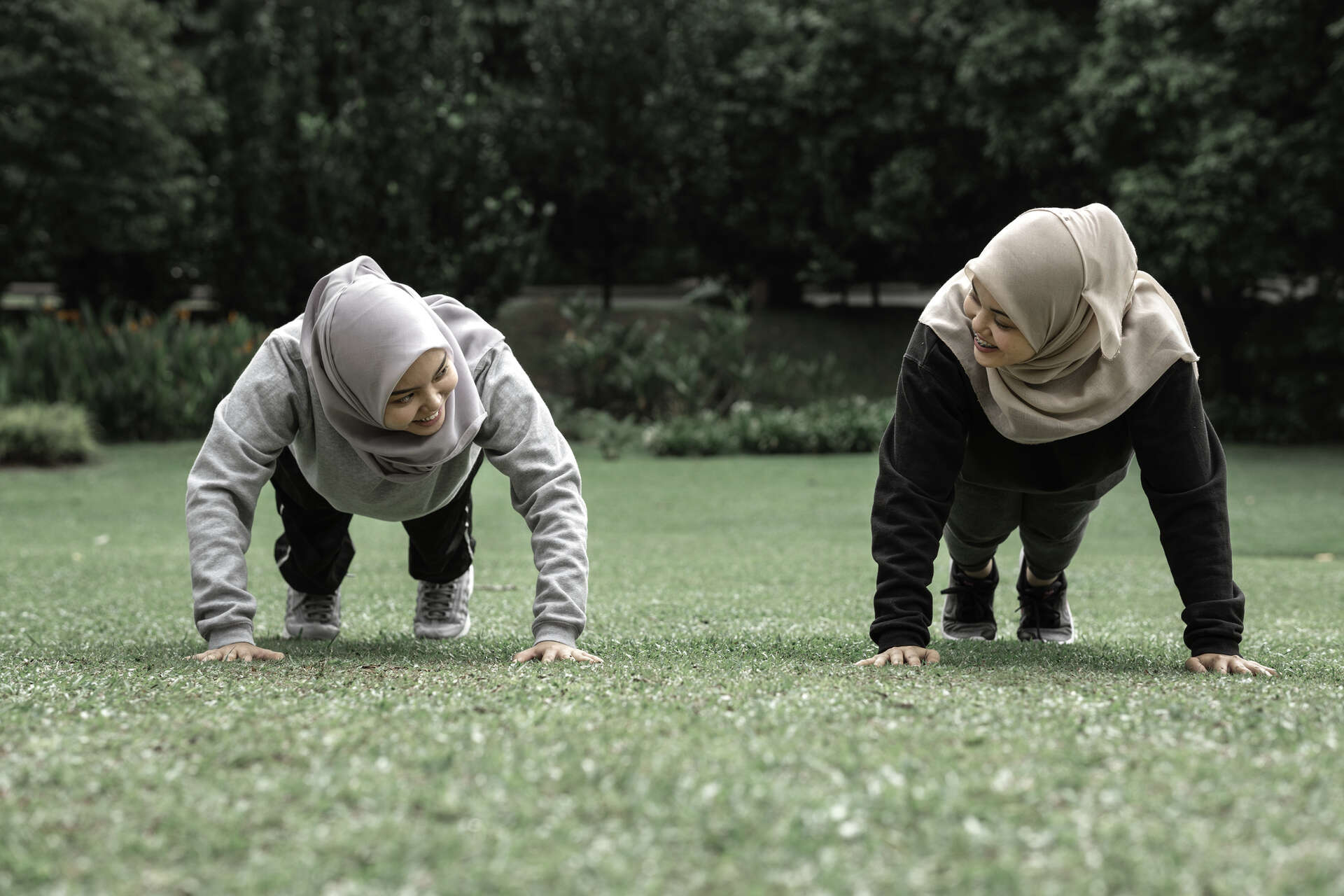
“If we want physical education to become a more inclusive subject for everyone, we need to question the familiar ways of teaching,” says researcher Erik Aasland at the University of Agder.
In a new article published in Sport, Education and Society, Aasland and his colleagues analyse interviews with five PE teachers working in upper secondary schools. The researchers focused in particular on how the teachers, often unconsciously, treated white Norwegian body culture as a natural standard.
A self reinforcing cycle
Although the study involved only a small number of teachers, Aasland believes the findings will be recognisable to many.
“These girls are seen as a problem by the teachers: they wear the wrong clothes, they lack experience with sport and exercise, and they are passive in class. The teachers do not mean any harm, but they contribute to reproducing a form of structural discrimination,” he explains.
“Other research also confirms that these are familiar assumptions and stereotypes,” he adds..
“Us and them”
All the teachers described challenges related particularly to the clothing worn by Muslim girls in physical education lessons. Long dresses were described as impractical for participation, for example because the fabric could get caught in the pedal of an exercise bike.
Clothing was also an issue during outdoor activities. One teacher said the girls often arrived for hikes wearing the same clothes they had worn at school, without suitable footwear or extra gear.
“We saw very clearly how the teachers spoke in terms of ‘us’ and ‘them’. ‘Our’ way of doing things is the correct one, while ‘they’ are not used to being physically active. One teacher said, ‘They’re not used to going for walks the way we do in Norway’, as if everyone in Norway shares the same experiences of outdoor life,” Aasland says.
“Passive and inexperienced”
The teachers also described girls with minority backgrounds as lacking basic knowledge and skills in sport, which they felt affected the rest of the class negatively during ball games.
“By contrast, boys with minority backgrounds were described as almost too active, while white Norwegian girls were portrayed as having grown up with sport and therefore being more experienced,” Aasland says.
“Girls with minority backgrounds were also described as passive, uninterested and a little shy. Teachers said they contributed little to group tasks, and that it was difficult for the Norwegian, white pupils to get them involved.”
Favouring some over others
Diversity and inclusion are part of the curriculum in teacher education. Aasland believes the problem arises when the physical education curriculum meets long standing traditions and the mindset of “this is how we’ve always done it”.
“Traditional ball games and high intensity training dominate physical education lessons. Faced with this kind of teaching, girls with minority backgrounds are perceived as pupils who do not fit into ‘our subject’,” he says. “This form of teaching, however, favours slim, well trained bodies and those who are good at ball games.”
Aasland hopes the article will spark discussion both in teacher education programmes and in schools.
Research shows, in fact, that physical education can be organised in ways that make the subject meaningful for girls with minority backgrounds.
“Designing teaching so that these pupils also have positive experiences is important if physical education is to help everyone develop a physically active lifestyle based on their own abilities,” Aasland says.
Referance:
Teachers’ constructions of female Students of Color as ‘the other’ in physical education