The Research Council of Norway has approved a grant application of five million kroner to advance and commercialize patented technology developed at the University of Agder (UiA).
The system, called Eagle, allows machines to "see" and interpret their surroundings in a precise and cost-effective manner.

"This is UiA's first verification application. To also have it succeed is great for the university," says Thomas Aamodt, innovation adviser at UiA and project manager for the verification project.
A verification project's objective is to test and mature research-based technology to make it ready for commercial use.
An efficient eagle eye
Atle Aalerud is the lead inventor behind the technology. He is a senior researcher at NORCE and holds a doctorate from UiA. He explains that the idea emerged from a specific need.
"When I worked in the robotics lab at UiA, we struggled to get sensors to effectively map the surroundings. The LiDAR systems available on the market could not see both high and wide in a specific direction with sufficient resolution," he says.
LiDAR technology uses laser light to measure distances and create detailed 3D maps of the surroundings.
This is LiDAR
- LiDAR (Light Detection and Ranging) uses laser light to measure distances and create 3D maps of surroundings
- The technology works by sending out laser pulses that reflect back when they hit objects
- By measuring the time it takes for the light to return, the system calculates exact distances
- When this is done rapidly and in multiple directions, a "point cloud" forms, giving a precise three-dimensional representation of the surroundings
- LiDAR sensors are used in self-driving cars, mapping, archaeology and industrial automation
- The advantage of LiDAR is its high precision and ability to function under various lighting conditions, even in darkness
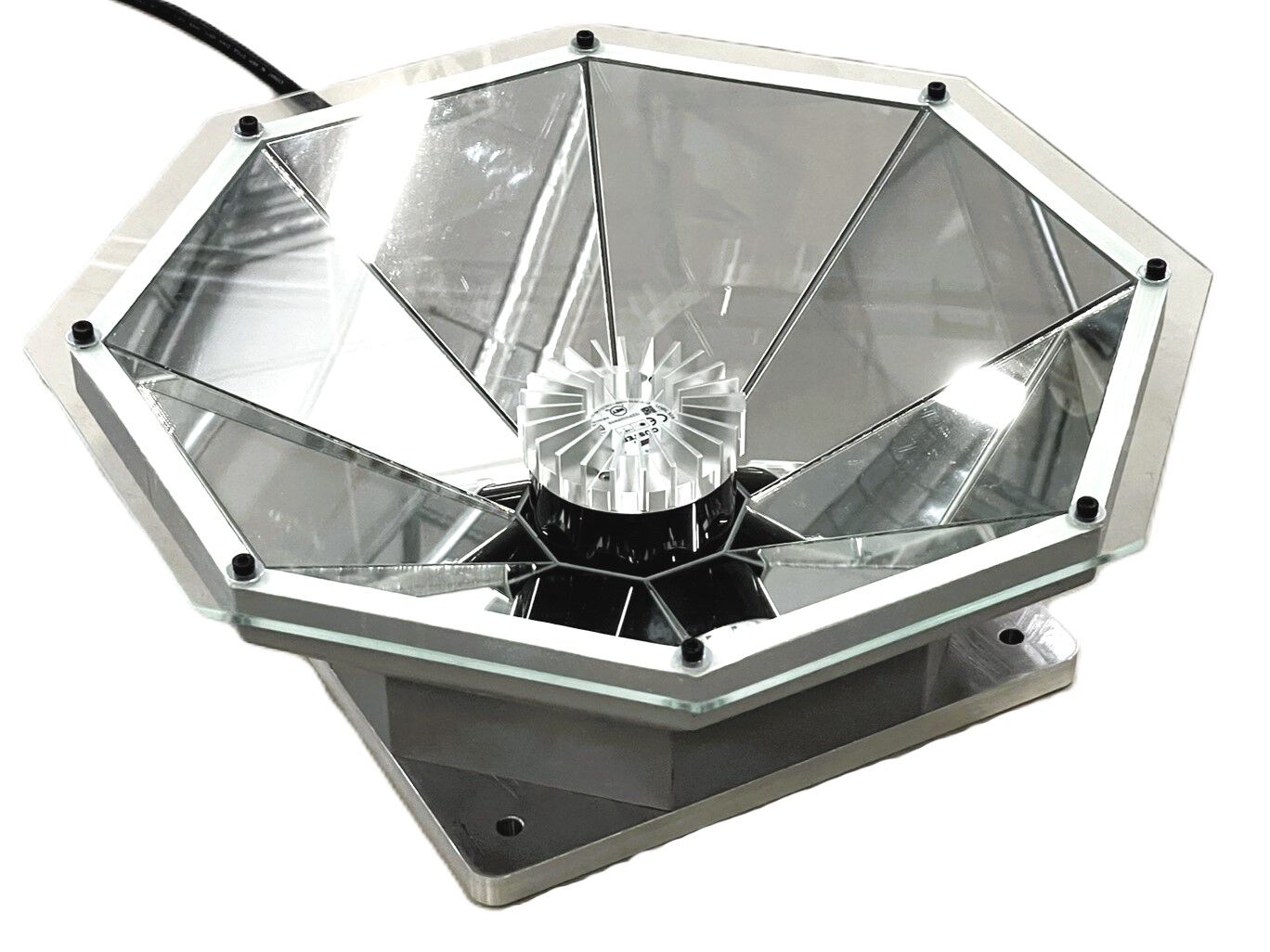
- 3DFix technology uses mirrors to direct the laser lights from a spinning LiDAR to where needed, allowing the sensor to focus precisely on the area of interest
"It is terribly inefficient to position a rotating LiDAR on the edge of the wall and aim it downwards. You end up wasting at least three-quarters of the data on the wall, and you're paying a fortune for that data," Aalerud says.
3DFix is a system that uses mirrors to direct laser light precisely where needed, enabling the sensor to focus on the area of interest. One of the goals in the verification project is to supplement the 3DFix technology with software. The combined system is called Eagle.
In the verification project, NORCE will be responsible for the technical development of hardware and software.
Replacing humans in dangerous situations
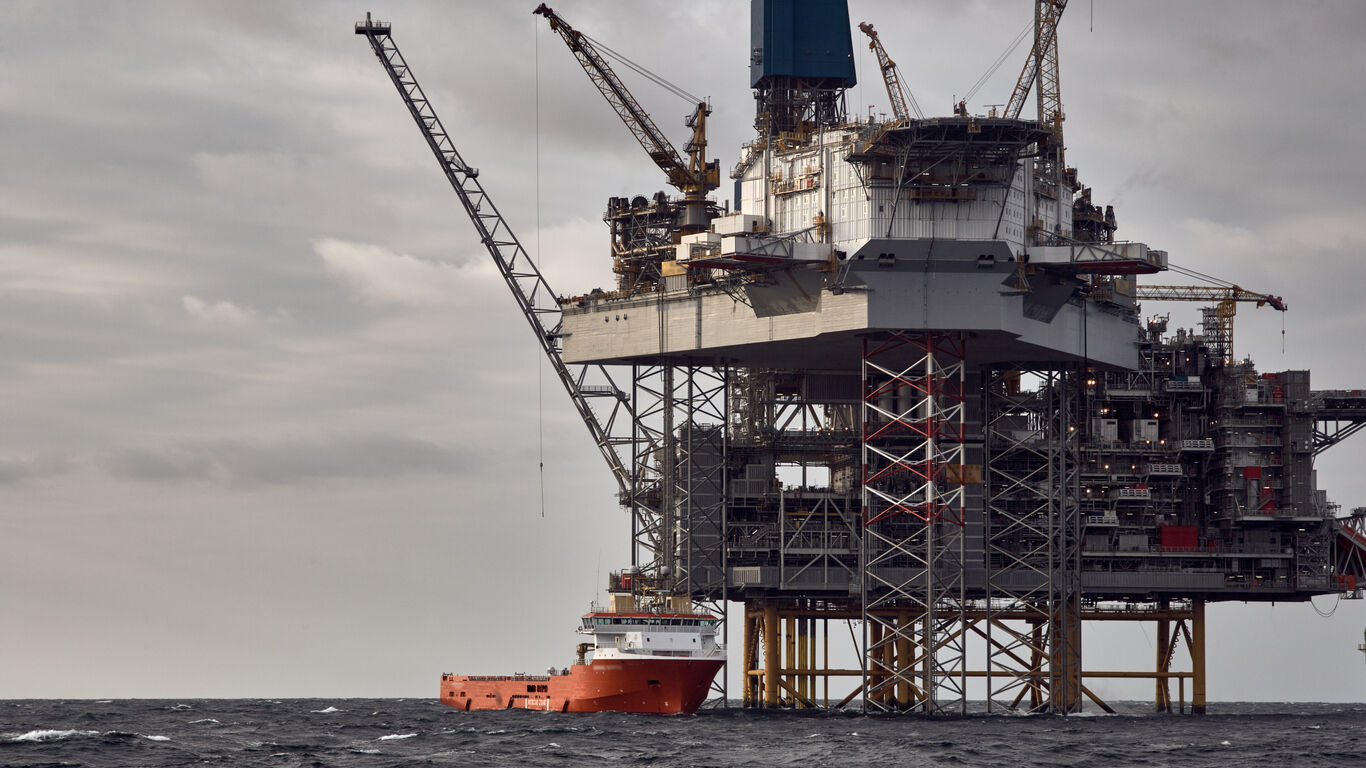
Currently, people monitor the interactions between heavy machinery and workers on oil platforms. This can lead to accidents due to misunderstandings or communication failures.
The Eagle system aims to give machines the ability to interpret surroundings accurately in real time.
"We want a machine vision system that monitors the entire work environment – keeping track of all machines, all people, the safe distances between them and having the ability to intervene and stop machines if they get too close to workers," Aalerud explains.

Multiple applications
The technology also has other applications. One example is offshore cargo handling.
"It takes an incredibly skilled crane operator to handle cargo from supply ships in rough seas. With a LiDAR system, you can calculate the ship's movements and find the best time to pick up or put down cargo," Aalerud explains.
This can prevent dangerous situations, such as when cargo is lifted unevenly, creating a pendulum effect that can be life-threatening for crew members on the ship.
While the project is primarily aimed at the oil and gas industry, it also aims to show that 3DFix technology can be valuable for other areas of application.
"In our proposal, we show how the technology can contribute to making offshore wind development more efficient," Aamodt adds.
Pioneering work for UiA

For UiA, the project represents an important step in the work to commercialize research.
Vice-Rector for External Relations and Innovation, Gøril Hannås, says that the university aims to improve at innovation for the public good and the commercialization of research results.
"This is an important step in the right direction, which will hopefully inspire more researchers to test their ideas. The project is an important milestone for UiA, which shows the importance of long-term efforts to strengthen expertise and a culture of innovation at the university," she says.
Seeking business partners
Now that the verification application has been approved, work begins to find industry partners for a reference group.
"It is very important for me to find representatives from the industry who can help us steer in the right direction, so that we end up with a product that is actually sought after in their companies," says Atle Aalerud.
He invites interested companies to get in touch if they wish to be part of the reference group.
The plan is to kick off the project in June and continue over a three-year period until summer 2028. By then, the goal is to have a product ready for sale and a network of companies ready to adopt the solution.