
There has been a rapid development in external research funding at the University of Agder.
In the previous EU framework programme for research, Horizon 2020, only 6.6 per cent of applications from UiA were approved, the lowest among Norwegian universities.
In the new framework programme, Horizon Europe, which began in 2021, the success rate has so far exceeded 20 per cent. This places us ahead of several other Norwegian universities that UiA traditionally compares itself with.
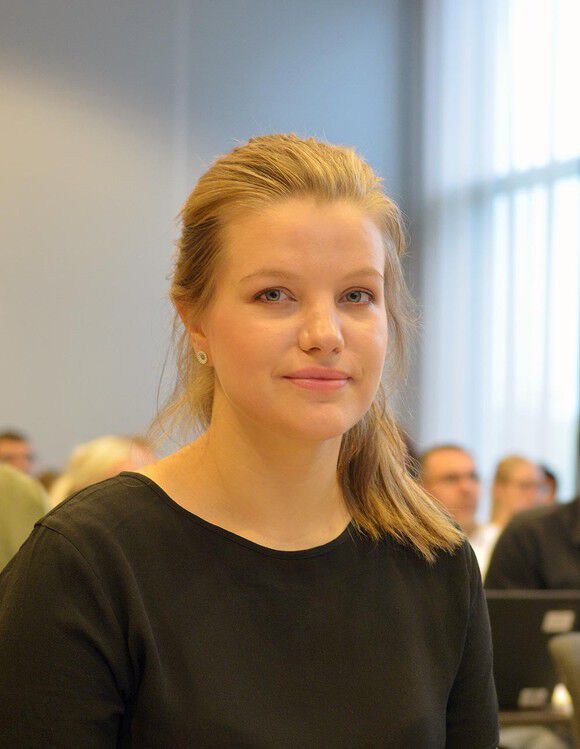
“We are submitting more applications than before, but we have worked to improve the quality of the applications we submit. The average quality has increased,” says Christine Svarstad.
She coordinates the four EU advisers at UiA’s Division of Research and Innovation. They work closely with the support staff at the faculties.
More experience
Svarstad highlights several reasons why UiA is experiencing greater success with EU applications.
One of the most important, she believes, is that as an institution, we have gained more experience and expertise in writing applications for the EU framework programme. This applies not only to academic staff, but also to research advisers within the support services.
“In addition, the management makes arrangements to prioritise such applications by offering financial support, courses and access to consultancy services. The culture for applying for external funding is clearly changing,” she says.
Svarstad also emphasises the importance of presenting UiA as an attractive partner for potential consortia. Succeeding in internationally funded research is key part of this effort.
“We work closely with researchers to advise them on important forums to attend in Europe, such as conferences or fairs on topics like battery technology, offshore wind or artificial intelligence,” says Svarstad.
“Many people think EU funding is harder to get than funding from the Research Council, but that’s not necessarily the case. We also find that the EU is more transparent in how they evaluate applications,” she says.
Strong partnerships

“We are very pleased to be increasing the success rate of our EU applications. This is the result of a deliberate effort to build competence within the organisation and effectively share experiences across our networks,” says Pro-Rector Hans Kjetil Lysgård.
UiA participates in research networks such as FORTHEM and benefits from experience sharing with other universities and research institutes like NORCE.
Lysgård singles out the KOMPFORSK project as significant for increasing competence among staff and researchers. This project is led by NORCE, with UiA and Agder County Council as partners. The aim has precisely been to increase the success rate of EU applications.
EU funding often complements the calls from the Research Council, making it easier for UiA researchers to secure funding for their research. Additionally, EU grants offer their own advantages.
“EU funds are prestigious both for the institution and the individual researcher. They provide our research with visibility, impact and reach. Competing on an international platform means you are contributing to high-quality research with societal benefits,” says Lysgård.