
At the beginning of the 2000s, there was a sense of expectation in the music industry. Bands could suddenly be discovered online, major record companies were expected to disappear while new ones emerged. The industry was supposed to be democratised, and the range of genres was expected to grow.
“Many of these things never materialise. Perhaps even the opposite happened,” says Daniel Nordgård.
He is a Professor of Music Industry and Digitalisation at the University of Agder, and also the director of the Creative Use of Technology in Music Education Centre (CreaTeME), a Norwegian Centre for Excellence in Education.

“The most significant impact of digitalisation is that roles within the music industry have become far more fluid. Many of these responsibilities now fall to the artist, who today must manage a whole range of specialised tasks that were not expected of them twenty years ago. This demands a different kind of training,” he adds.
Runs her own business
“My job is about creating, finishing, and performing music. In addition to the creative work, there are lots of other things I do, like running my own business, bookkeeping, sending emails, reading contracts, managing social media, video editing, and so on.”
So says Silje Montsko Blandkjenn, known by her stage name Silke. She has a bachelor’s degree in rhythmic music from the University of Agder and is well acquainted with the reality Nordgård describes.

“After many years of hard work, the opportunities have stated to come. It’s about following the chances you are given – one thing leads to another, and suddenly you find yourself in a studio in Tokyo.”
Blandkjenn has already written and produced music for, among others, the Eurovision Song Contest finals in both Norway and other countries.
Not your typical entrepreneurs
Music students at UiA receive a thorough introduction to entrepreneurship. But in the arts, the business mindset differs somewhat from that taught at the Business School.
“Particularly in music, there are fundamental differences that mean you cannot teach students classical entrepreneurship. These are not entrepreneurs, but people who view the entrepreneurial aspect of the job as a necessary evil.”
For a traditional start up, the aim is to find a niche, secure funding, build a market, and hopefully turn a profit. And if the business doesn’t break even, you close it down and try something else.
“The challenge in art and music is that these are people who accept living with losses for the foreseeable future. If they end up in the red, they simply take on an extra job,” says Nordgård.
One of the main differences is that musicians, in many ways, are selling themselves. And if there aren’t many buyers, that’s just how it is.
“If you were to apply classical entrepreneurship theory, you’d have to abandon your identity and reappear a year later with a different genre and a different name. The things we take for granted for other entrepreneurs simply don’t work in the arts,” he says.
Camp for songwriters

The market has also shifted for those who do not necessarily want to perform on stage themselves. Assistant Professor Liucija Fosseli is pursuing a PhD on songwriters working towards the Asian market.
“It has become more difficult to make money from music, but the Asian market is large and still buys physical products. If you’re fortunate enough to break into it, it can be very exciting,” she says.
In the past, industry festivals such as By:Larm and the American South by Southwest were key arenas for artists hoping to showcase their work and perhaps land a record deal. Today, international songwriting camps have emerged as an alternative for those aiming to establish themselves as songwriters.
“K-pop artists rarely write their own songs. There is a clear divide between the stars on one side and the songwriters on the other. It’s common to meet A&R agents – that is, talent scouts – and other industry professionals at these camps,” she explains.
Pitched to Sony
In October, four UiA students travelled to the International Writers Camp in the Netherlands to create lyrics and songs in collaboration with songwriters from across Europe.
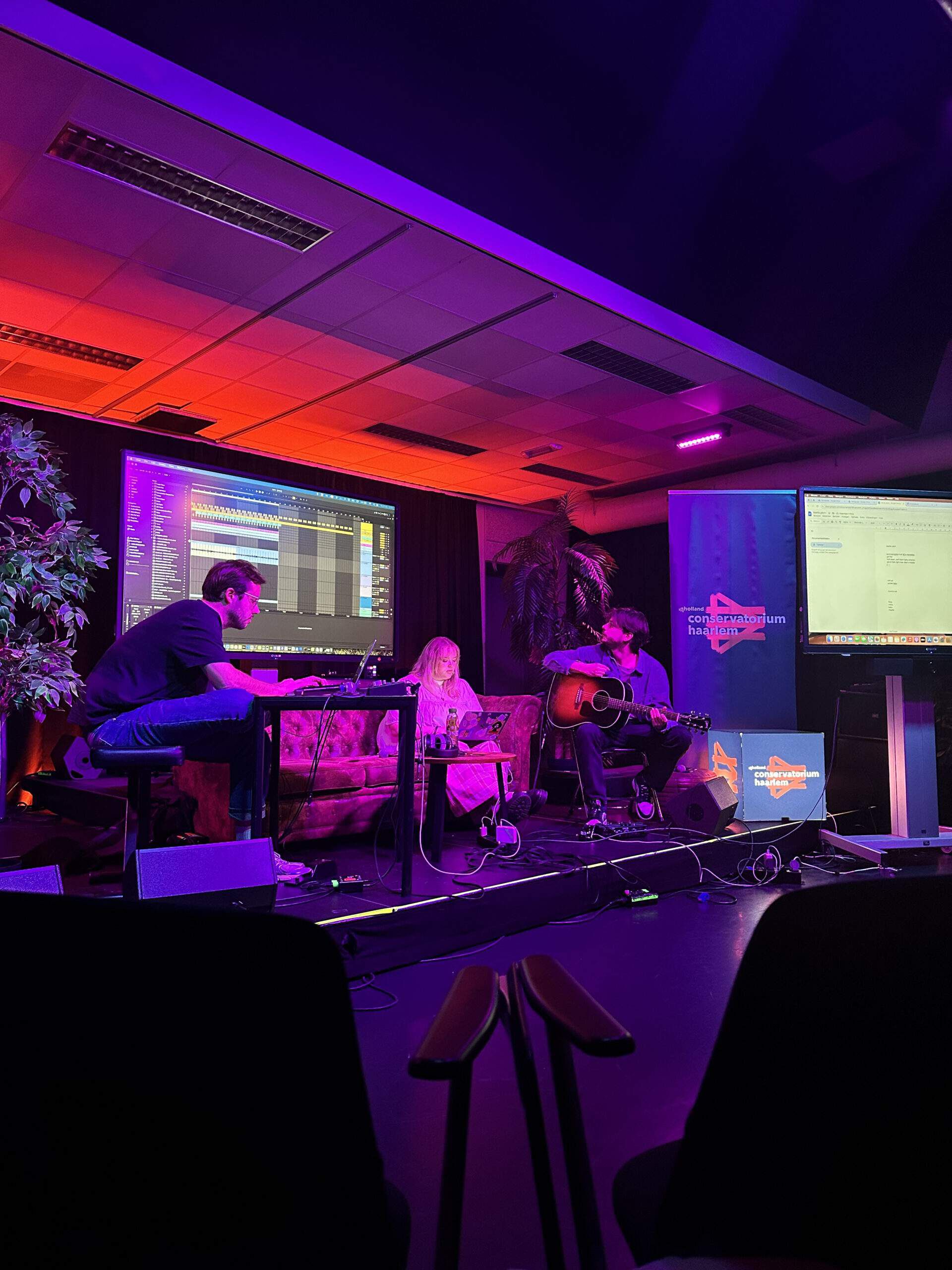
“We were given a list of artists and bands to choose from, all within a more commercial and dance-oriented style. My group quickly started working on a pitch for Swedish House Mafia,” says Erika Reiersen.
On the final day, the result was pitched directly to representatives from Sony and CTM.
“It was very interesting to get feedback on the style and the lyrics themselves, not just on possible improvements. The focus was more on whether the lyrics and expression suited the artist or band,” says Reiersen.
More opportunities
Liucija Fosseli explains that almost all students in the department run their own business. The same is true for the teachers.
“That musicians have to create their own workplace is a major shift. The most important thing we can teach them is to understand the industry they are entering, to learn to take initiative, to persevere, and not be afraid to take risks. At the same time, they need to learn the basics about revenue streams, rights, and so on,” she says.
Nordgård is optimistic about what lies ahead for musicians.
“We are entering a period full of opportunities. The music industry is expanding both economically and geographically. If you play your cards right and position yourself well, and if we can equip students to sustain a long term career in the industry over time, I believe there’s an incredible amount of exciting things you can do today that weren’t possible fifteen years ago.”
Reference:
Daniel Nordgård & Liucija Fosseli: “The skills to pay the bills: new digital skills in a digital and global music market” in Digital Globalization of Creative Industries.