Three out of four accidents in the history of the Norwegian Air Ambulance have been caused by collisions with high-voltage power lines. The air ambulance relies on up-to-date maps showing all man-made obstacles over 15 metres, but many newly built structures are still not reported.
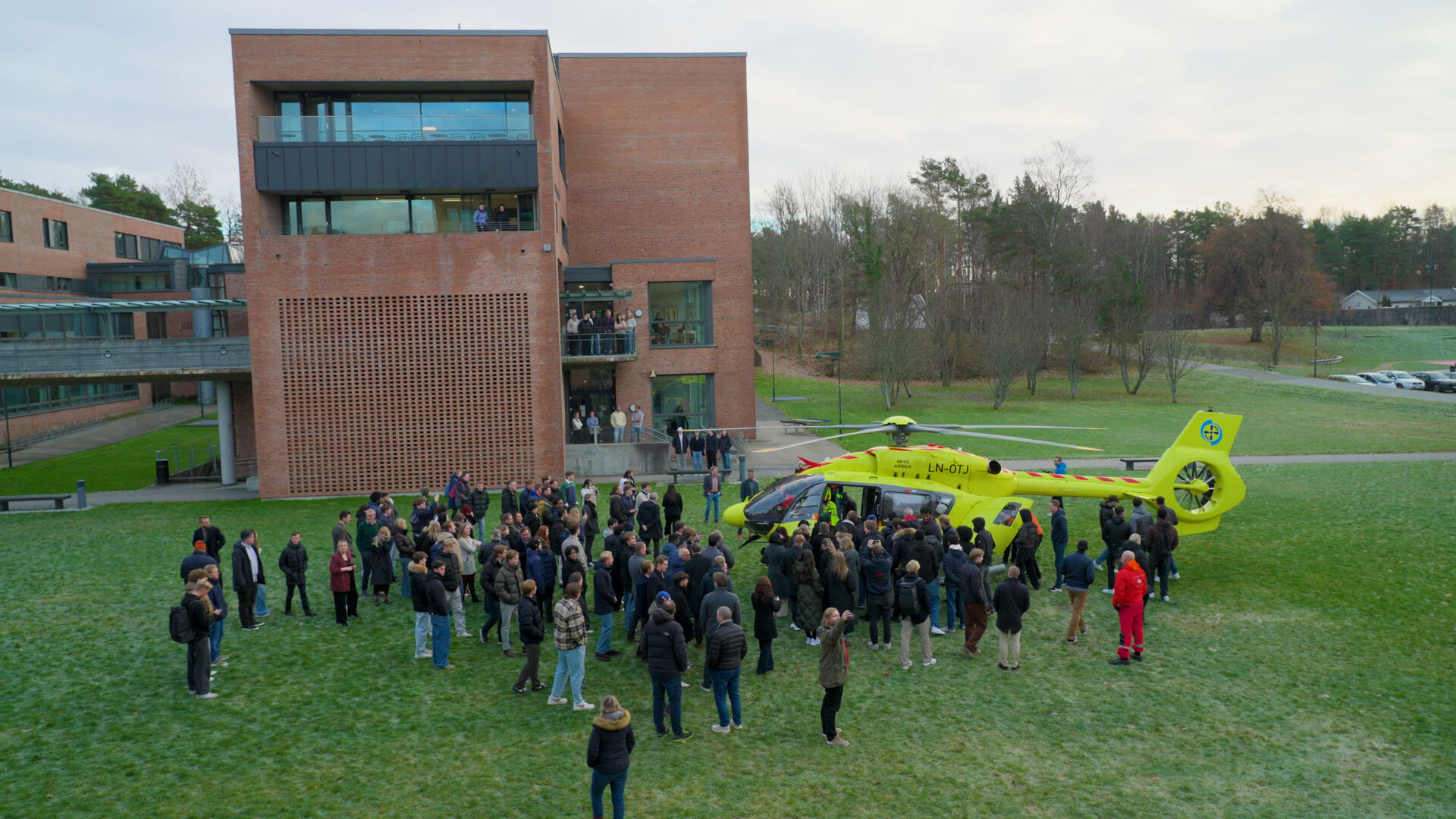
Bachelor students in IT and Information Systems have been working on creating effective solutions that allow pilots to mark aerial obstacles they encounter during flights. This was highlighted at a gathering on 26 November, when a helicopter from the Norwegian Air Ambulance visited on the occasion.
“For helicopter pilots, there is a lot to consider. They may encounter turbulence while flying, and they have to operate instruments while wearing gloves. The technology needs to be easy for them to use, allowing them to mark obstacles while still controlling the helicopter. It’s an exciting challenge for our students,” says Sofie Wass, course coordinator and Associate Professor of Information Systems at UiA.
Watch the video of the helicopter landing on campus:
“Needs to be solved in the right way”
120 students have been working in groups to develop solutions, involving programming, databases, and service design. According to the students, developing technology for the Norwegian Air Ambulance has added an extra dimension to their work.
“We’ve felt the responsibility that comes with this task. This is important technology that needs to be handled properly,” says student Hanna Falang.
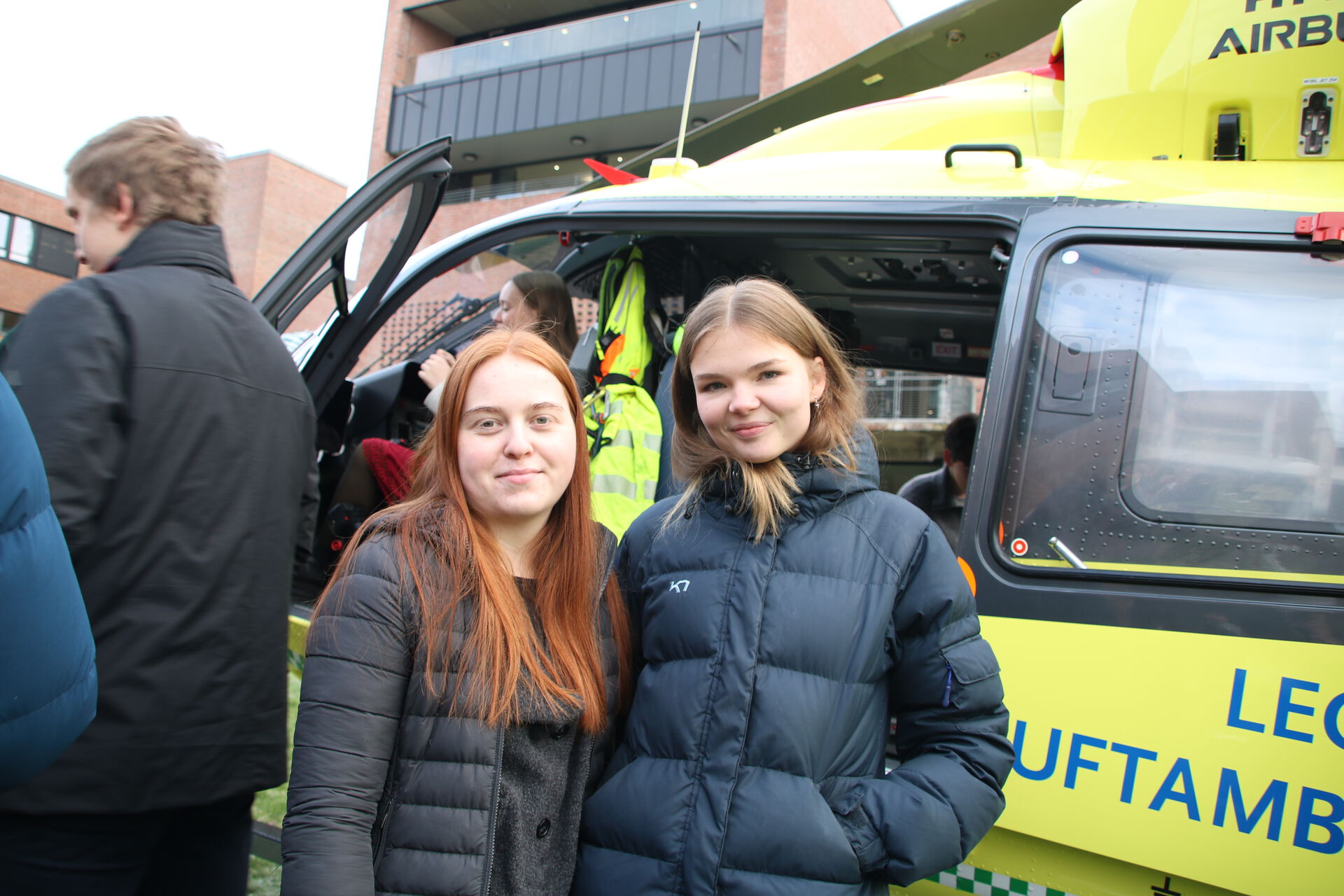
The air ambulance landed on the lawn between the faculty buildings at UiA’s Kristiansand Campus on 26 November. The students were able to go inside the helicopter and observe the pilots’ working conditions.
“This has been very different from working purely with theory. And it’s really fun that they come by for a visit,” says student Ellen Runestad.
Impact on flight safety
After landing, pilot Trygve Borgen spoke about the helicopter, and everyone on board also had the opportunity to go inside and see the students’ work.
“This is fun to be part of, but there is also a serious side to it. These are very real issues for us, and I hope this collaboration can help strengthen our safety,” says Borgen.
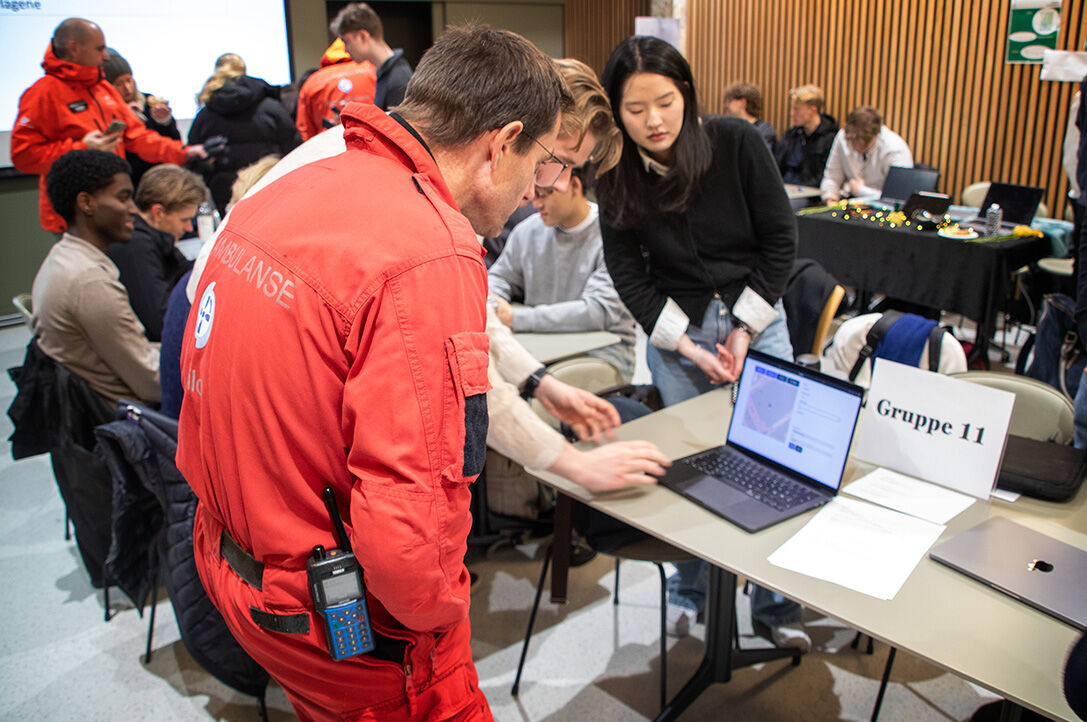
The Norwegian Mapping Authority (Kartverket) operates the National Register for Aviation Obstacles. The idea is that they will double-check and update their register after pilots have marked aerial obstacles.
“This is a collaboration that has a direct impact on flight safety. We have worked with UiA before, and the students impress us every time. They are solution-oriented and curious, and have shown a great ability to understand complex issues,” says Lars Fredrik Gyland, Department Director at Kartverket.
Opportunities for collaboration
Kartverket has good experience collaborating with UiA.
“UiA is a forward-thinking and professional partner, with a solid academic framework and a strong willingness to facilitate real-world challenges from the field,” says Gyland.
The Bachelor’s programme in IT and Information Systems is keen to enable further collaborations with companies in the future.
“This type of collaboration ensures our studies remain relevant and is highly motivating. We are eager to connect with others from the field who are interested in similar partnerships in the future,” says Wass.