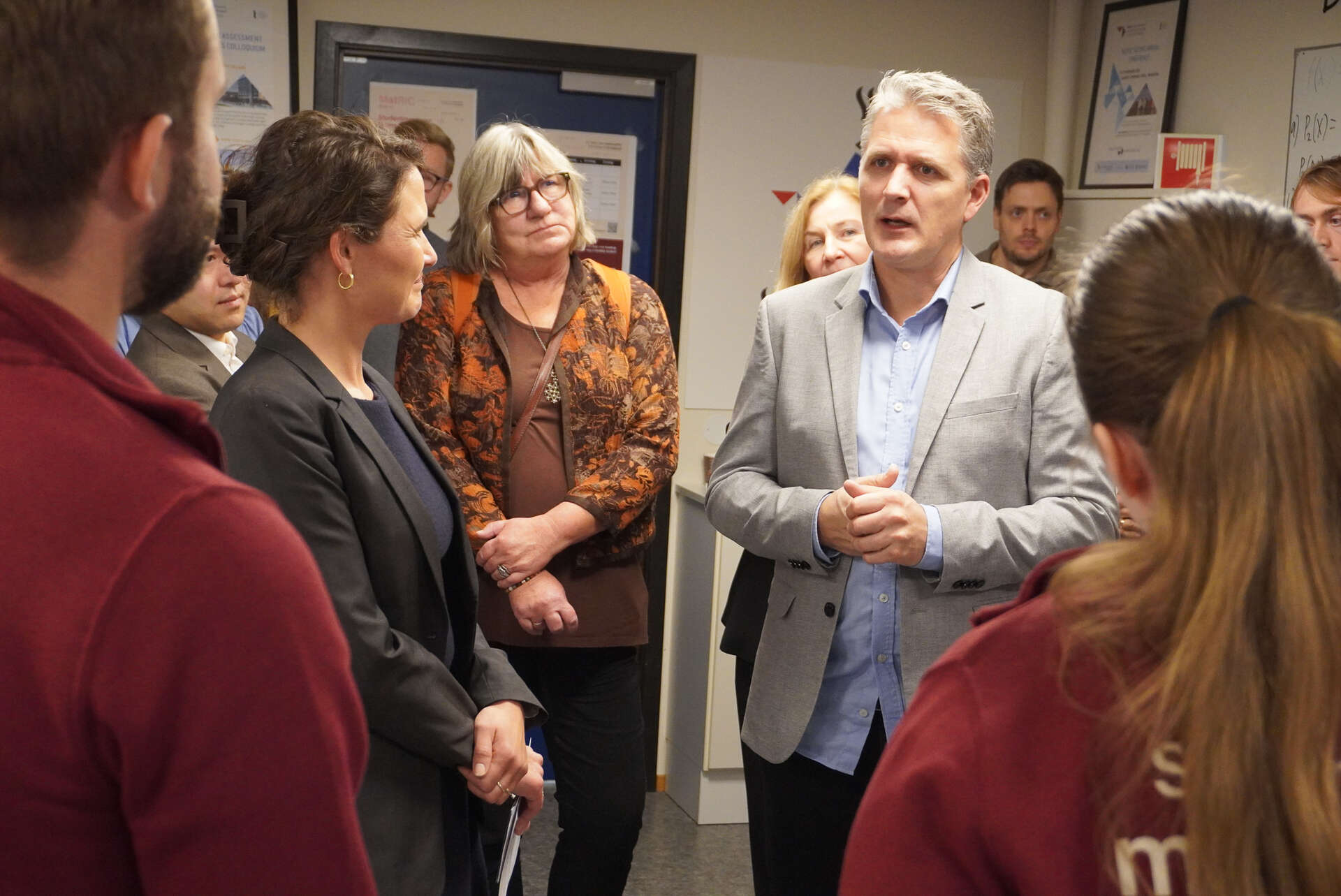
"The quality of teaching is linked to the quality of the teacher. It may sound harsh, but that is what the research tells us", says Martin Carlsen, professor of mathematics education at UiA.
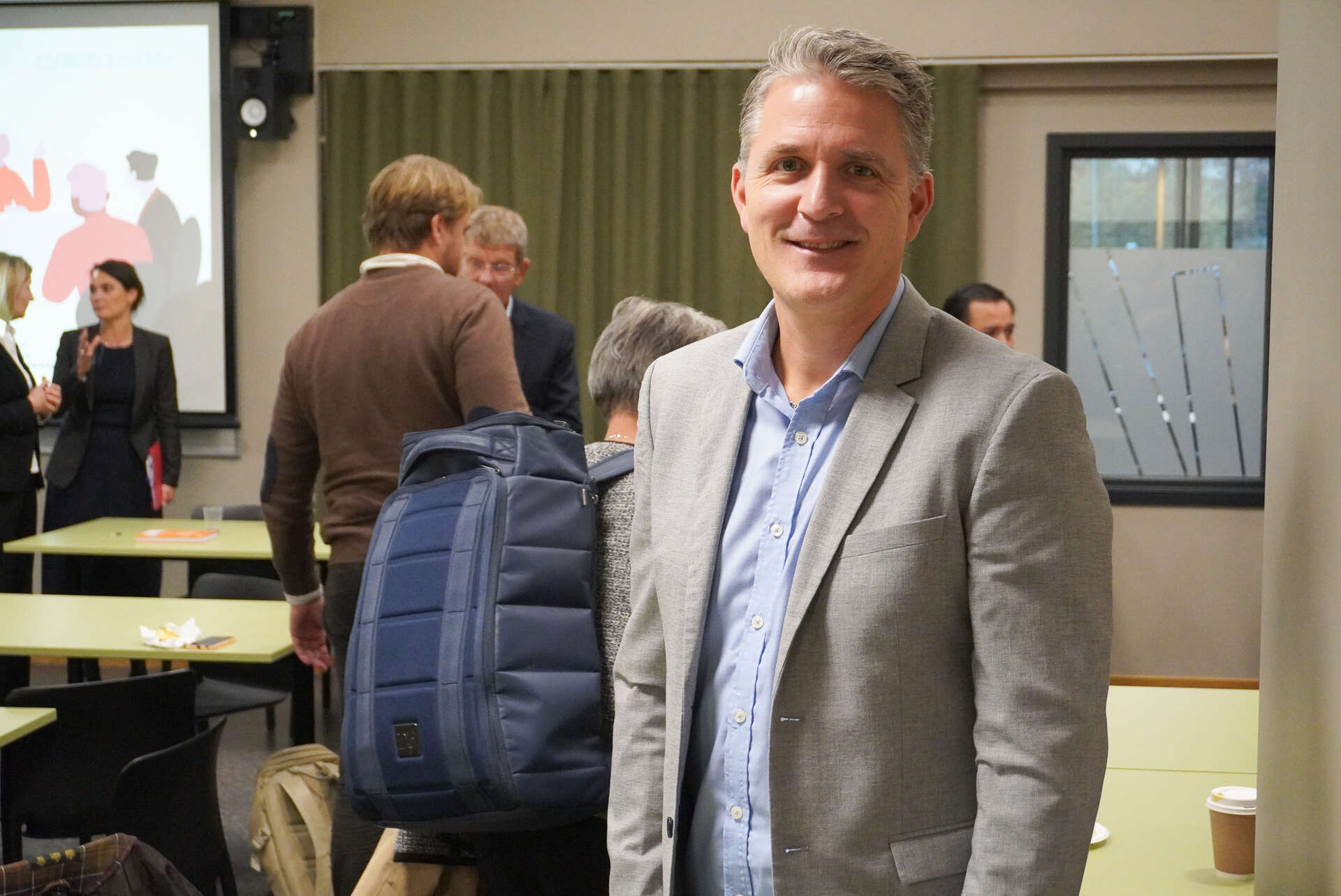
The Government is working on a new national strategy for science and technology, which is due to be presented in 2027.
At the consultation meeting at Campus Grimstad, the Minister of Education met with representatives from the University of Agder (UiA), local business, the public sector and interest groups. They discussed how more children and young people can choose and complete science and technology courses, and how to foster a sense of achievement and motivation from an early age.
Carlsen gave a presentation on maths proficiency in primary school and what we know about what works.
“We can see from the PISA survey that there is something we are not succeeding with in maths teaching. That is why it is important to use such occasions to promote positive experiences from practice and research. I feel that I managed to get my point across in the presentation, as well as in several informal conversations here and there,” says Carlsen.
Teachers are the most crucial factor
According to Carlsen, pupils taught by the most skilled teachers have a better understanding of maths. Research shows that teachers themselves must have a firm grasp of the subject and be strong both academically and pedagogically.
"We must dare to talk more about this. A focus on teachers must be central to the new strategy. A teacher’s competence is crucial to what happens in the classroom,” says Carlsen.
He believes we must keep up the pressure on teacher training programmes. Returning to the old general teacher training model, with more subjects and less in-depth study, is not the solution. Today, students have greater opportunities to specialise.
"We must support trainee teachers throughout their training and preserve the opportunities they have to specialise in their subject. In addition, those already working in schools must be given the opportunity to undertake further training in mathematics. But that requires financial prioritisation", says Carlsen.
Three approaches in the classroom
Carlsen also presented three specific findings from the research on what makes for better maths teaching:
- Meaningful play for the youngest pupils. Carlsen’s research on the youngest pupils suggests that play-based maths works particularly well for Years 1–4. He believes it is important to prioritise play in schools, but emphasises that pupils need teachers who can interpret the experiences gained through play and translate them into mathematical concepts.
- Understanding over rote learning. Carlsen is positive about the current curriculum, which emphasises core elements and exploratory work. Pupils should learn the reasoning behind the concepts, not just memorise answers.
- A clear objective for the lesson. The teacher should explain the lesson plan and introduce the tasks in a way that arouses curiosity. The lesson should conclude with a summary. Pupils gain a solid academic foundation when they summarise the mathematical experiences they have had and what they have learnt, explains Carlsen.
The Minister of Education expressed his gratitude for all the contributions to the ongoing work. Nordtun emphasised the importance of ensuring the success of the new strategy, so that Norway gains access to the skills we will need in the future.