In 2024, the French researcher and director Jérôme Delafosse made the documentary *Hvaldimir, la véritable histoire du béluga espion* (‘Hvaldimir, Conversations with a Spy Whale’). The film was screened at a number of international film festivals, including in Berlin, and illustrates how the curious beluga whale captured people’s interest far beyond Norway’s borders.
"There is little doubt that Hvaldimir has meant a great deal, and different things, to different people. That is perhaps one of the most fascinating aspects of the whale,” says Raúl Ramírez, museum director at the Natural History Museum and Botanical Garden at the University of Agder (UiA).
“In addition, Hvaldimir is a striking example of an animal that has probably lived in close proximity to humans, and which has been shaped by this throughout its life,” he says.
200 articles and a film on NRK
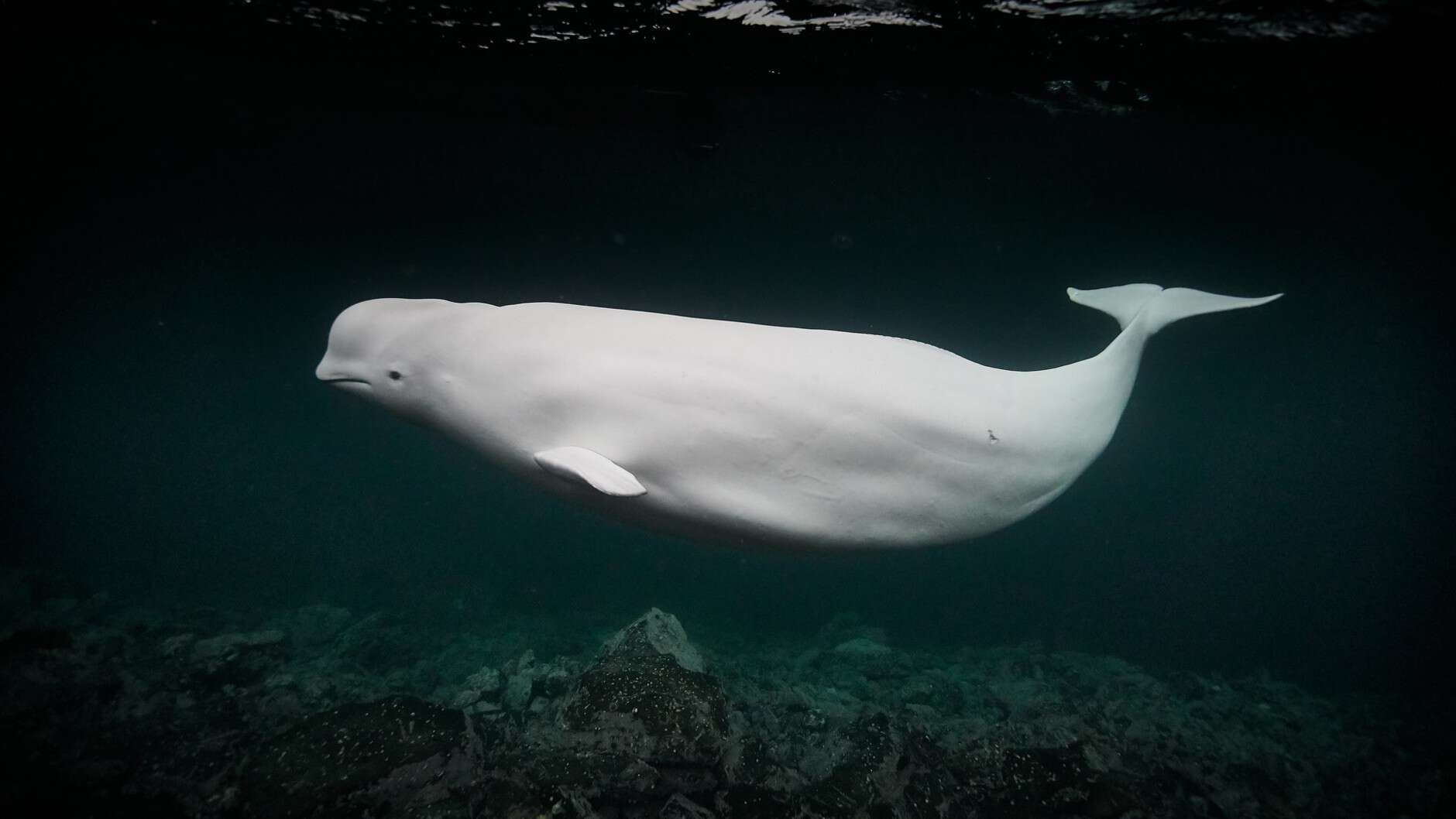
The Norwegian media also followed the whale closely, right from the first time he was spotted by fishermen off Rolfsøya in Finnmark in April 2019, until he was found dead in Risavika in Rogaland in August 2024.
Among others, NRK has a dedicated page on Hvaldimir featuring over 200 articles and TV reports. NRK also collaborated with the BBC on the documentary ‘A White Whale Astray’
The questions that captivate
Although Hvaldimir is well known, his story also has many unanswered aspects, which may explain why it has captured the imagination of so many people. Where did he come from? Where did he travel to? Why was he wearing a harness? And what happened when he died?
These are the questions that the new exhibition ‘Hvaldimir’s Journey’ at the Natural History Museum seeks to answer. Through interdisciplinary research, new insights into the whale are now being presented.
Among other things, visitors will gain an insight into where Hvaldimir likely originated from genetically, which population he belonged to, and how old he was when he died.
The exhibition also displays unique data on his migrations along the Norwegian coast – including the lesser-known detour up the Otra river when he visited Southern Norway.
"In light of the current geopolitical situation, some will be interested in the speculation that he may have had links to the Russian military. Others will be more interested in his biology and migration routes. For many, however, it is the encounters and interactions between Hvaldimir and humans that arouse the greatest curiosity", explains Ramírez.
Built on strong academic environments
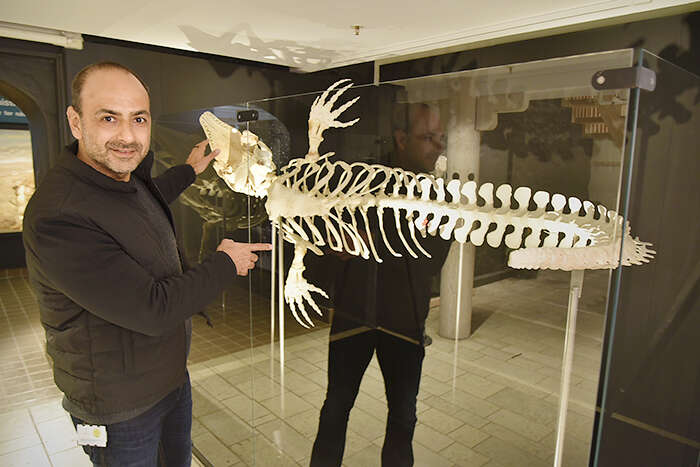
The exhibition itself is structured around Hvaldimir’s skeleton, supported by film, images and research data. The project is the result of the museum’s new five-year strategy, adopted last year, and its ambition to develop several major collaborative projects across institutions.
As the Natural History Museum currently lacks suitable facilities due to the condition of its own storage building, the Natural History Museum of Denmark in Copenhagen has been a crucial partner in preparing the skeleton. In addition, marine biologist Sebastian Strand from the non-profit organisation Marine Mind has contributed valuable knowledge and tracking data.
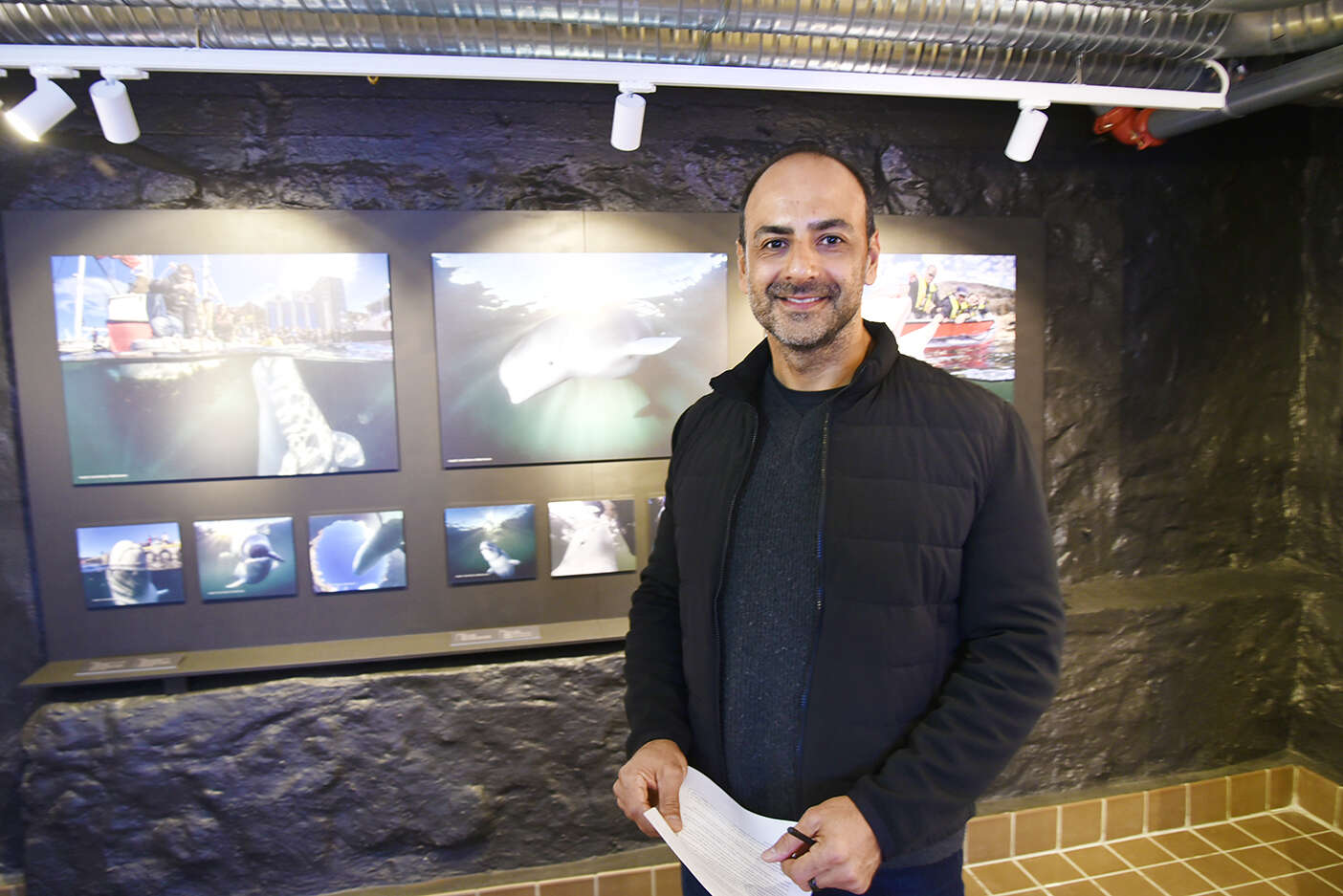
The visual presentation is characterised by contributions from outstanding photographers, including Professor Audun Rikardsen at UiT The Arctic University of Norway and the award-winning Norwegian photographer Alexander Nordahl. The technical team has built the exhibition, including advanced lighting, from scratch in a short space of time.
What is the value of a life?
Ramírez points out that the exhibition is closely linked to the museum’s other exhibition on the second floor: the value of a life.
"As humans tend to assign value based on our own perspectives and needs. When Hvaldimir arrived in Norway, he became known for his calmness, playfulness and curiosity. Many people sought him out. At the same time, it may well have been this closeness to people that made him vulnerable", he reflects.
The aim of the exhibition is not merely to present dry facts, but to spark curiosity and reflection on our own relationship with nature, the impact we humans have on the species around us, and the stewardship responsibilities we bear.
Planning an expert gathering for the autumn
Although the doors are opening now, an official celebration is planned for the autumn under the banner ‘Hvaldimir’s Week’.
The museum aims to bring together both national and international experts for lectures and debates. Podcasts will also be produced, along with dedicated activities for children and families, so that the museum can serve as a vibrant meeting place for discussing the scientific and ethical questions raised by the exhibition.
More about the Natural History Museum and Botanical Gardens