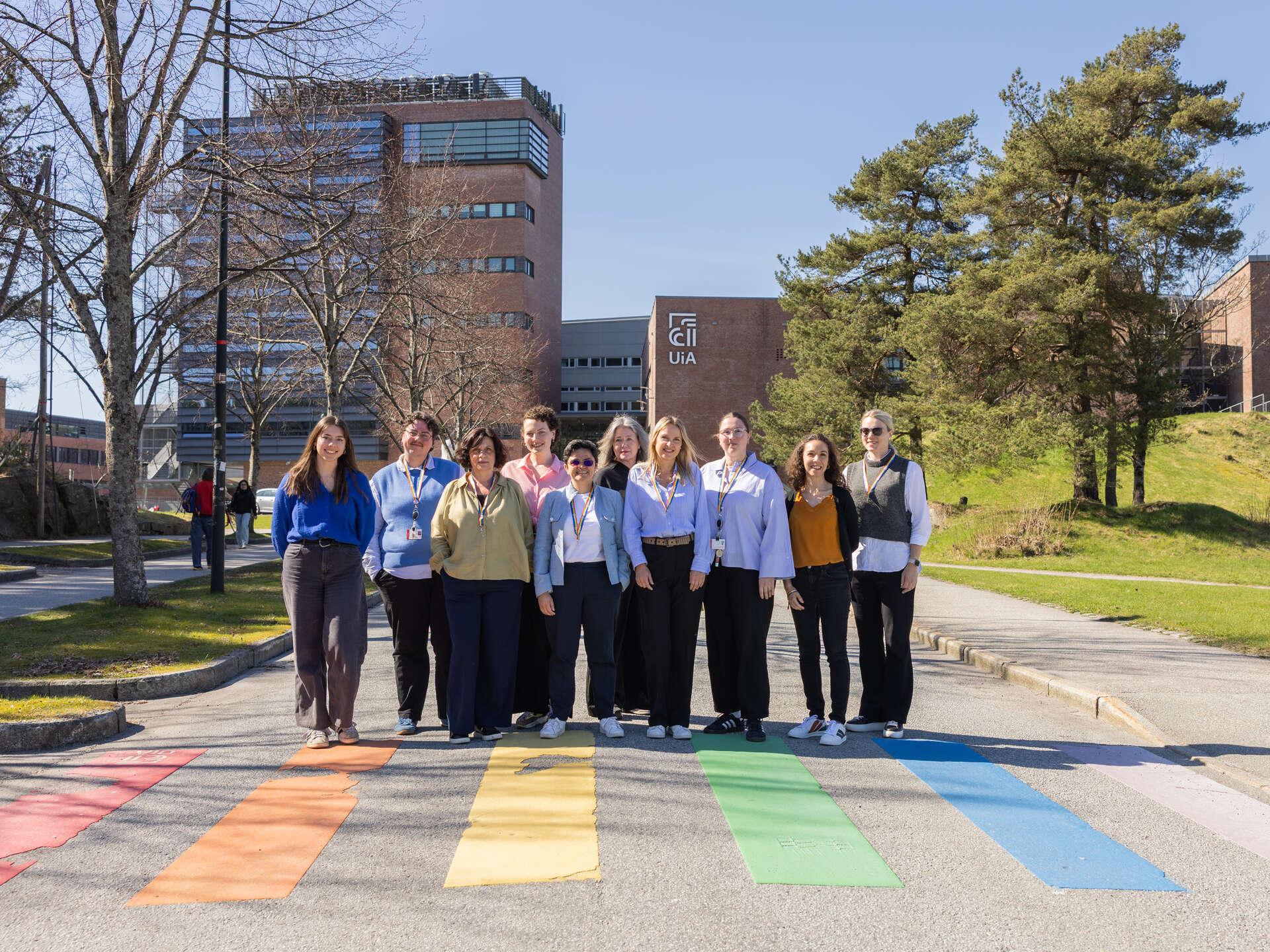
Through the European university alliance FORTHEM, the University of Burgundy (UBE) in France made contact with the University of Agder (UiA).
The French university has long been working to improve living conditions and the everyday student experience for trans and non-binary students, and was looking for a European partner.
Now, the two universities have joined forces to produce a resource booklet on gender diversity, aimed at both staff and students.
"The aim is to provide simple and essential knowledge about gender diversity, whilst highlighting specific measures and good examples. This way, the booklet can be actively used in everyday life and become a useful tool,” says Thea Mujkic Litschi.
She is an advisor at UiA – Centre for Gender and Equality, where she works on gender and sexual diversity.
This is the FORTHEM partnership
FORTHEM is a European university alliance of which the University of Agder (UiA) is a member.
The alliance comprises nine universities from nine countries and collaborates on education, research and mobility across national borders.
Through FORTHEM, students and staff have the opportunity to take part in exchange programmes, joint master’s programmes and academic networking.
It is through this alliance that UiA – Centre for Gender and Equality and the University of Burgundy have entered into a partnership to produce the resource booklet for trans and non-binary students.
Prioritising health and well-being
On the French side, the work is led by Cinthya Ramos, a clinical psychologist at the University of Burgundy’s health centre. She runs the TAO programme, a service for trans and non-binary students.
Here, participants receive individual counselling, group sessions and a sense of community, with support from a team of psychologists, doctors and nurses.
Ramos emphasises that the high risk of suicidal thoughts in this group makes the work particularly important.
“For us, it is important to take this seriously and ensure good healthcare provision in the education sector too,” she says.

Serious findings
As part of the project, the two European universities have conducted a joint survey. The results paint a worrying picture.
57–59 per cent of trans and non-binary students report mental health issues, compared with 11–18 per cent among other students.
Trans: People who do not identify with the gender they were assigned at birth. For example: trans woman, trans man, non-binary.
Non-binary: A person who does not identify as solely male or female. Non-binary people may perceive themselves as falling between genders, as both genders, or as neither gender. Some non-binary people identify as trans.
Source: www.uia.no/mangfoldsveileder
Self-harm and suicidal thoughts are far more widespread, and many experience loneliness and social exclusion in their everyday student life.
These findings are consistent with previous surveys of living conditions and studies on life satisfaction and mental health among transgender people in Norway.
"The responses were, unfortunately, as expected. We see social exclusion, incorrect use of names and pronouns, cumbersome administrative systems and experiences of transphobia. These are serious findings that show we need action", says Mujkic Litschi.
The students themselves are clear about what they need: greater staff awareness, gender-neutral toilets and changing rooms, simpler solutions for changing names and gender in the systems, and a study environment where they feel valued and heard.
Working together on a practical resource guide
This visit is just the beginning. The two universities are continuing their collaboration, and together they will finalise the resource guide. This practical tool, featuring specific measures and examples of good practice, will eventually be launched at both institutions.
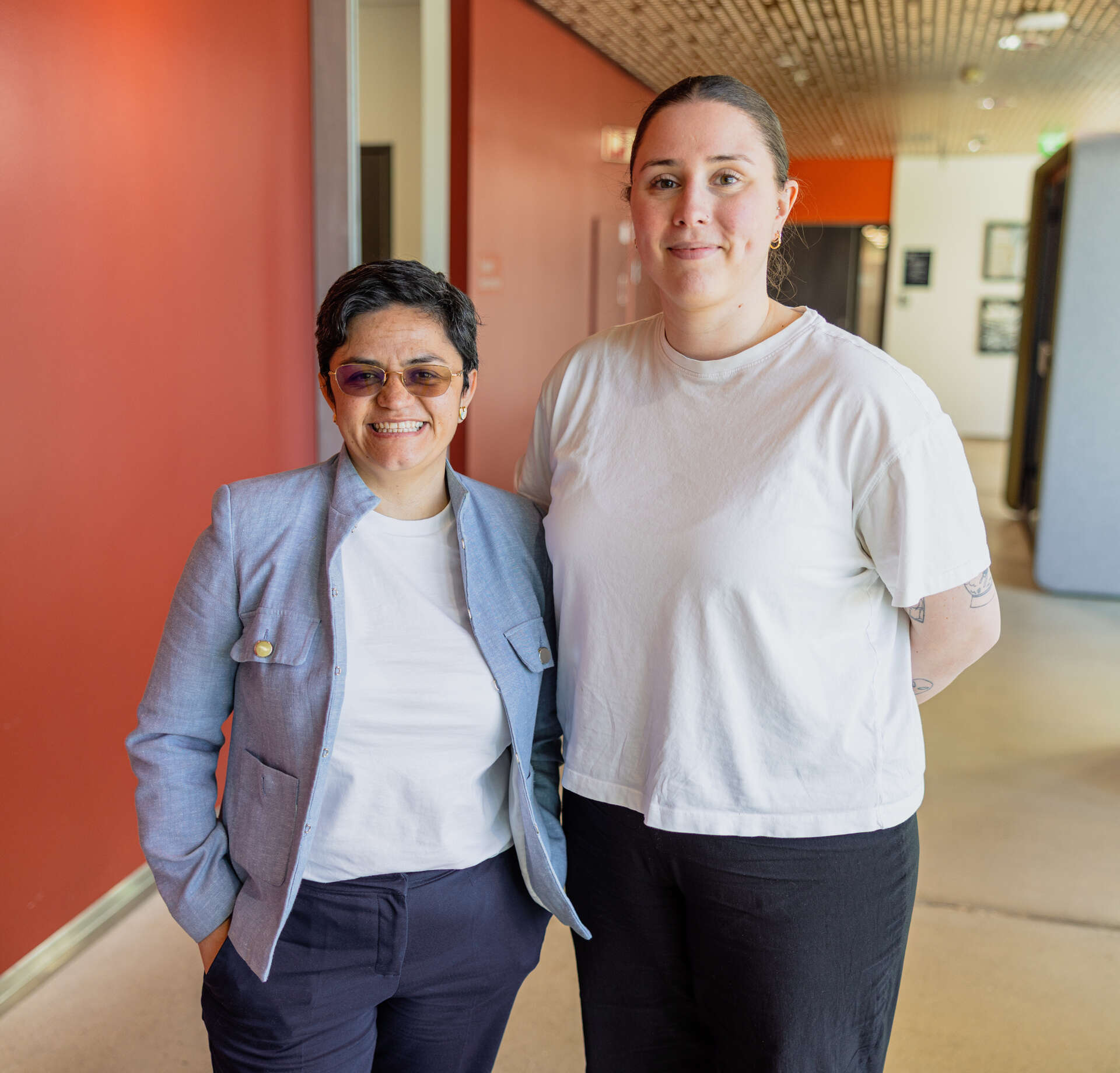
"We want the booklet to be actively used in day-to-day work, not just left lying in a drawer", says Mujkic Litschi.
One of the students who took part in the survey sums it up as follows:
«I am not something you can simply opt out of, regardless of your political stance.»
– Student