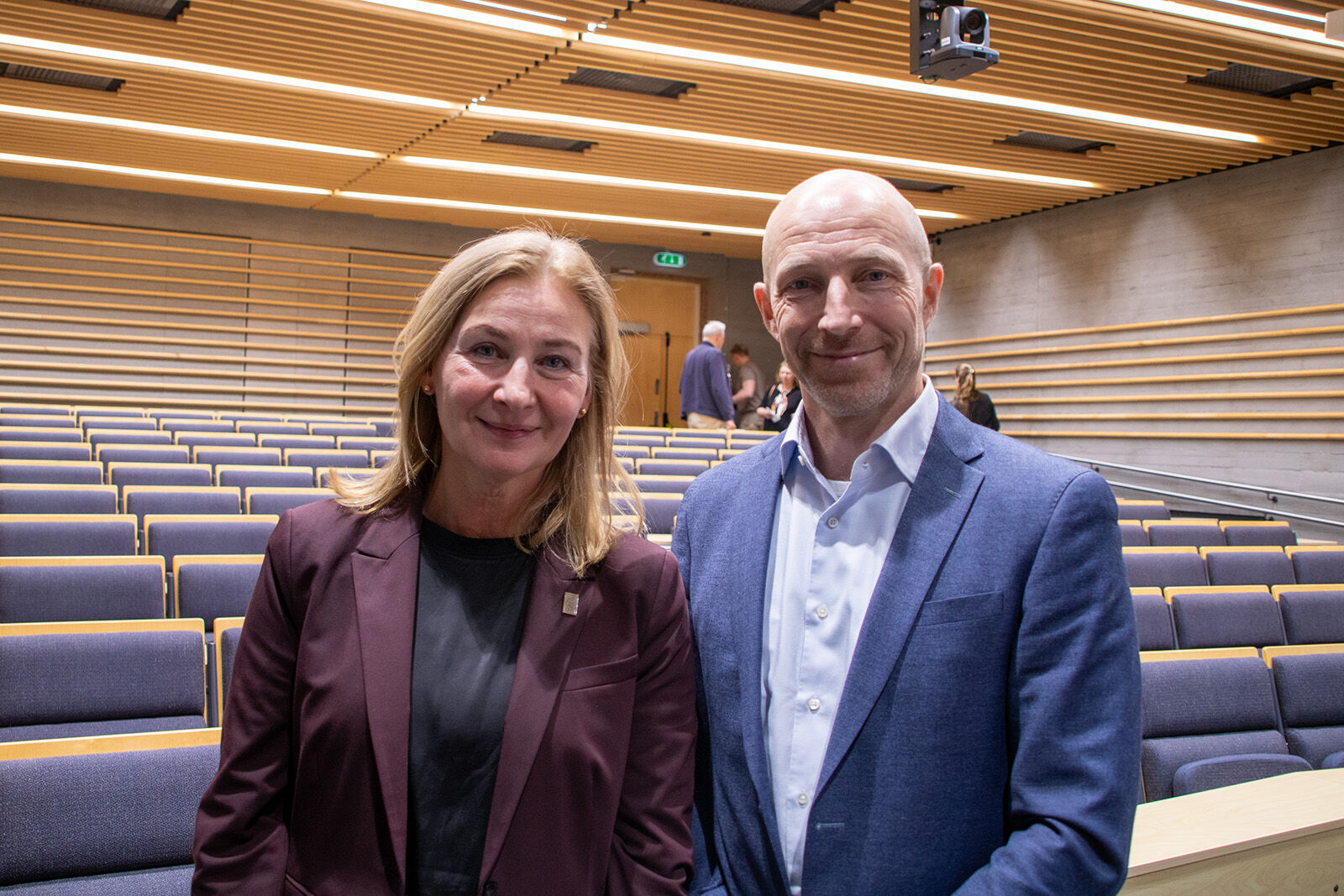
"We're exploring various issues within higher education. We wanted to learn more about how professional education is engaging with AI. In many professions, AI has led to new challenges and opportunities," says Professor Anders Malthe-Sørenssen from the University of Oslo.
He chairs the committee that was appointed by the King in Council on 21 March 2025 and is tasked with assessing how the development of AI technology affects higher education.
AI affects nursing
UiA's Vice-Rector for Education, Hilde Inntjore, is also part of the committee.
"We have several large professional education programmes and a strong professional identity. We train teachers, nurses and economists, among others. These are programmes we seek input from, and that's why the meeting was held at UiA," says Inntjore.
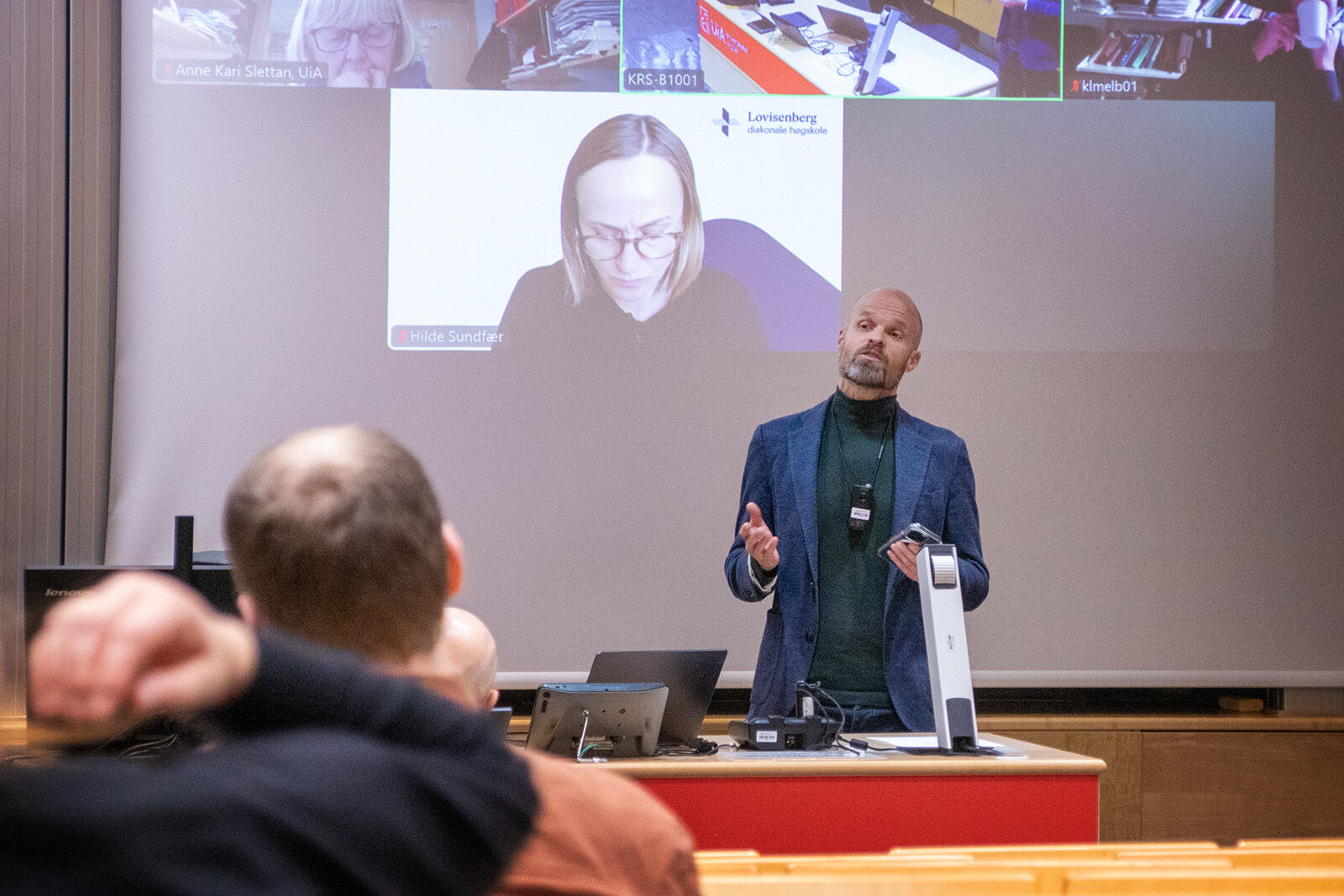
Many contributed to the committee, including Dag Tomas Sagen Johannesen, head of the Department of Health and Nursing Science.
"AI affects clinical judgment, relational work and ethics. AI should strengthen, not weaken, the patient's right to participation, safety and human care," Johannesen said in his remarks.
Good simulations
The teacher training programmes emphasised their need for greater expertise in this area, given their role in educating the entire population.
"There is a lot of uncertainty around AI, even as more people are adopting it. We've found it very useful for creating realistic practice scenarios, such as student and parent conferences and even bullying cases," said Dean Gunn Bjørnsen from the teacher training programme at UiA.
The committee's work will continue until autumn next year, with the main report scheduled to be delivered to the Ministry of Education in October 2026.