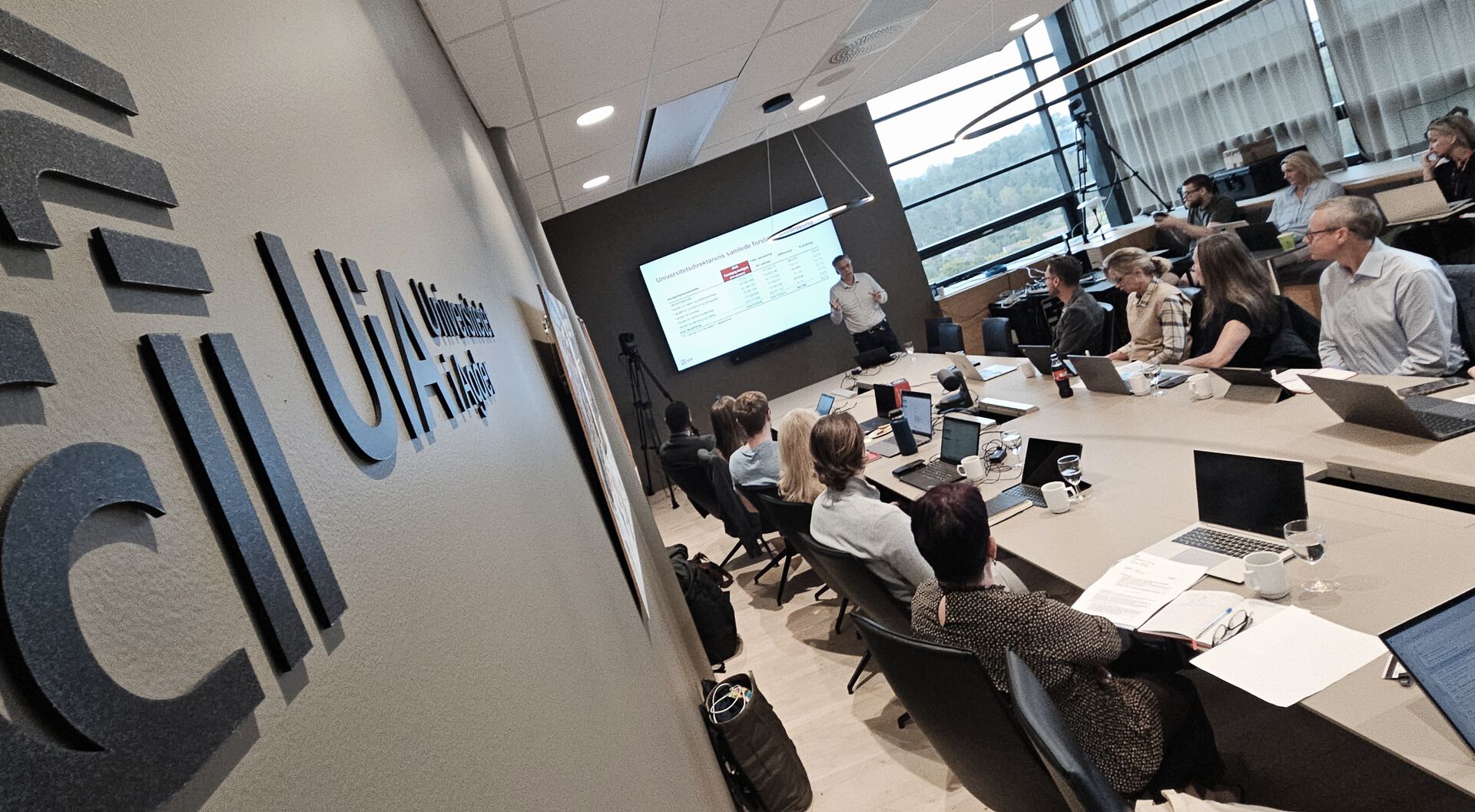
The University Board met for the first time since the summer, for both a seminar and a meeting.
With new representatives for students and temporary staff, much of Tuesday's seminar was dedicated to updating the status of education, research, community engagement and university finances.
Budget model for more collaboration
The allocation of funds to the university among its faculties and administrative units follows a budget model. Efforts have been made to ensure the model works well in light of the new strategy and societal changes impacting the university.
The amended model has been under consultation at the university, and feedback from the faculties has shaped the version that the University Board has now approved.
The changes are:
- Study programmes offered by the university in locations across the region – 'distriktsvennlige studieprogram' – will no longer have separate funding arrangements. Flexible study programmes will be funded as regular programmes of study, with individual assessments of how much funding to allocate. NOK 23.9 million has been set aside for developing and operating strategically important flexible study programmes.
- To foster more cross-faculty collaboration, the "bonus" for interfaculty programmes will increase from five to ten per cent.
- A reward system will be introduced for sharing students between faculties, for example to take an elective course. A faculty that sends students to other faculties for a course will now receive half financial credit as compensation. The faculty that teaches students from other faculties in a course will continue to receive full financial credit.
- The incentive given to UiA's faculties for registered dissemination activities has not worked as intended and will be removed. UiA is the only Norwegian university to have had such an incentive. The University Board emphasises that dissemination remains as important priority in UiA's strategy, just as before.
- The changes in the budget model may cause a shift of funds between the faculties, but never more than three per cent.
Several faculties have requested a review of the financial allocation for practical-aesthetic disciplines. This is a substantial task that could not be undertaken in the current round. The Board decided that the next review of the budget model will address this specifically.
New study programme
There has been interest expressed in the region for a new programme in management and HR, and the School of Business and Law at UiA wants to meet this demand.
Based on the Board's decision, an experience-based master's programme in management and HR, totalling 90 credits, will be established.
The programme will be part-time. To enrol, students must have both a bachelor's degree or equivalent and two years of relevant professional experience.
The programme will be funded through tuition fees from students. The planned start is autumn 2026.
Other selected matters
- Briefing on student admissions in 2025. The current number of students is 14,471, an increase of 1,701 from the same time last year.
- Briefing on the campus development plan for 2025-2040, which is currently being heard at the university and will become a decision item at the October meeting.
- Meeting dates for the University Board in 2026 were approved. The proposed date for June has been moved.
- The Board received an overview of doctorates completed in the first half of the year.
See all board documents (Norwegian only)