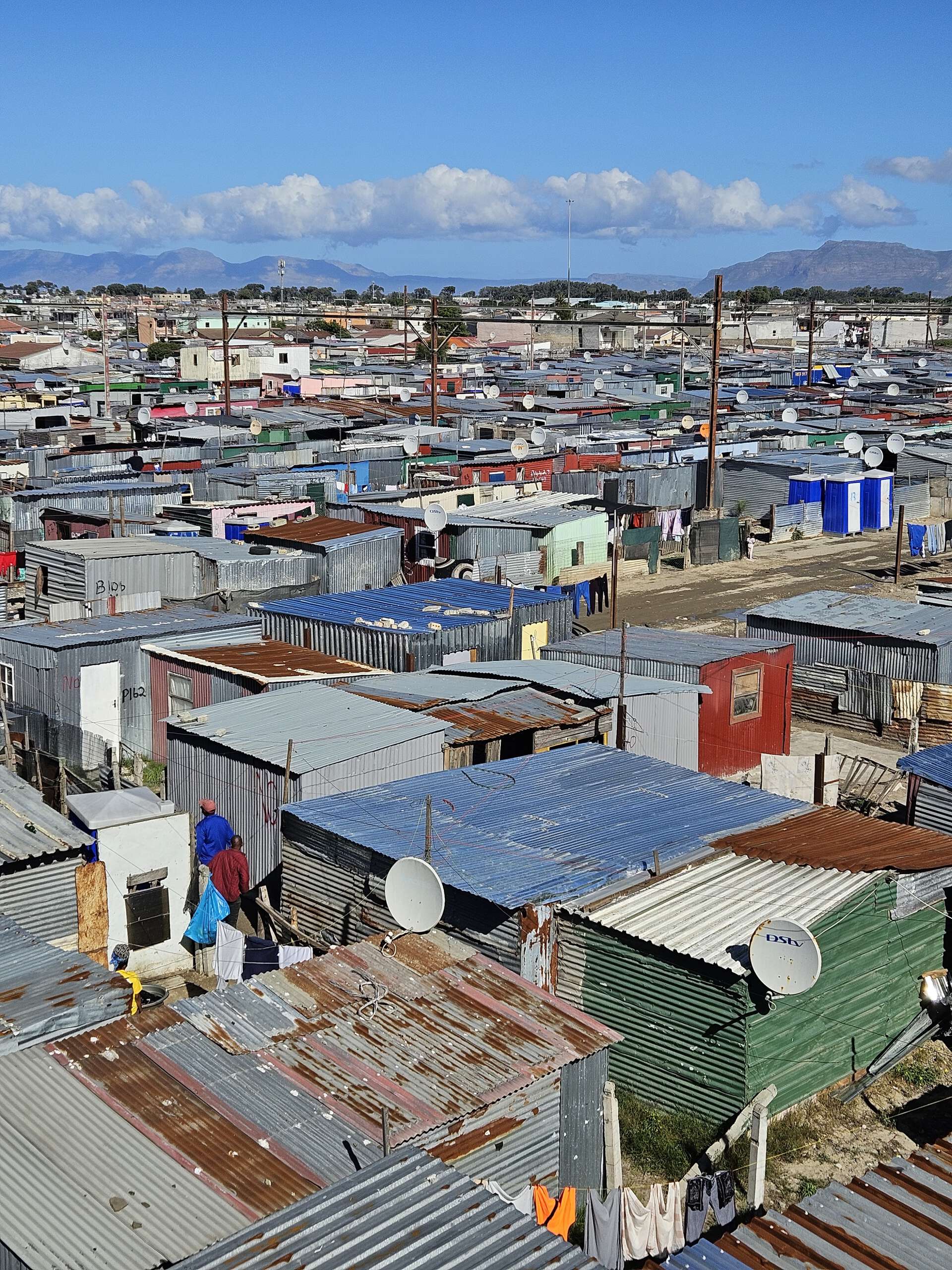
The telethon on 18 October will raise funds for NRC Norwegian Refugee Council and aims to help provide safer and better living conditions for people fleeing their homes.
Understanding the challenges and needs in vulnerable areas, so-called slums, was also the starting point for a research project in which Hanne Haaland and Hege Wallevik at the University of Agder (UiA) took part. The project aimed to investigate how different research methods could provide a more complete picture of the situation and generate knowledge that could be used to address the challenges.
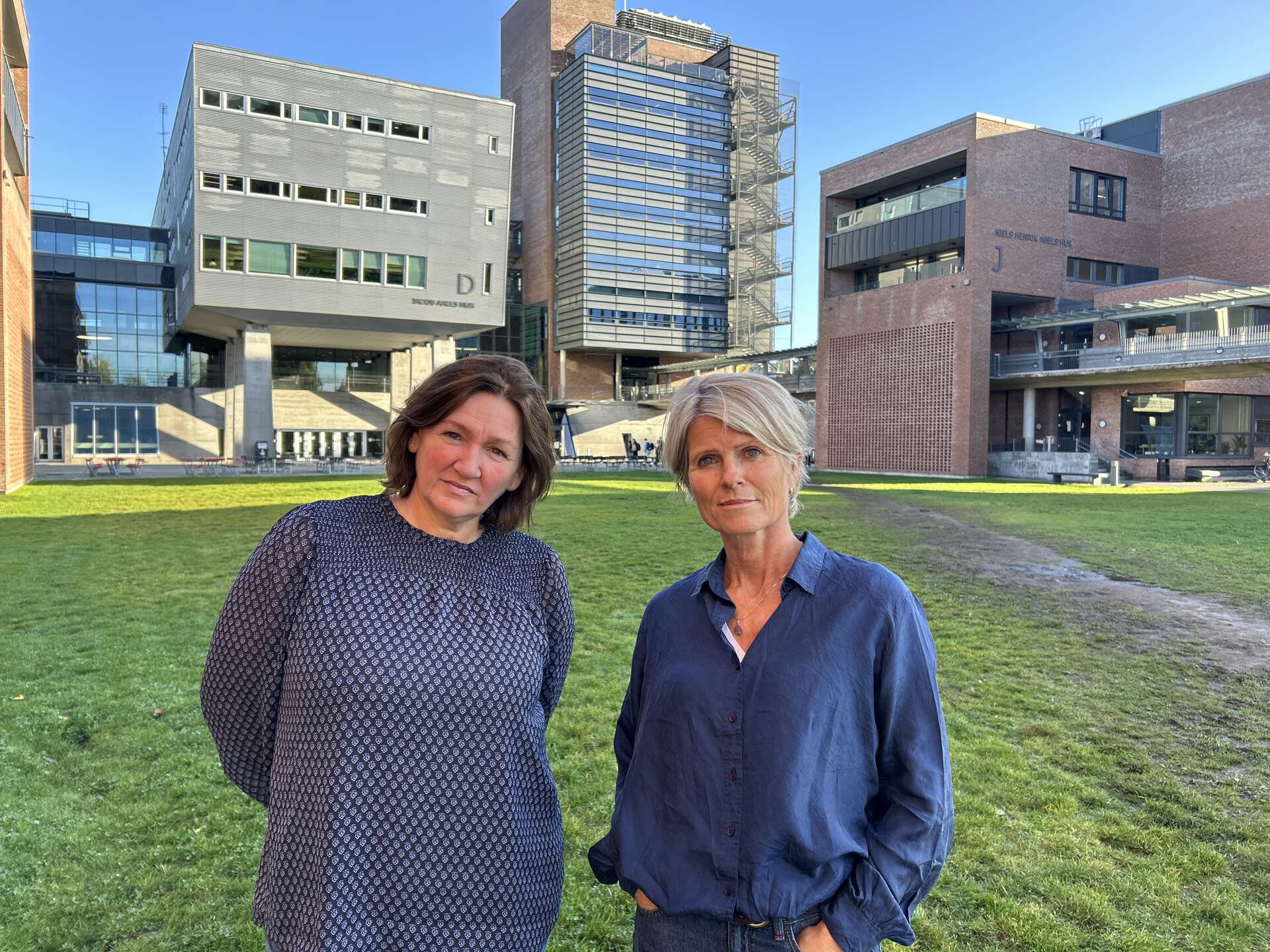
However, the work was not completed as planned. The international research team, comprising members from Canada, Colombia, the USA and Norway, is now attempting to continue their collaboration without funding from the project.
Unable to complete the project
The project was led by Old Dominion University in the USA and funded through the US Department of Defence’s Minerva programme. Various research groups were to investigate the same areas in South Africa and Colombia using different methods. They would then compare the data and examine what the different methods captured, and what might have been overlooked. Project description from Old Dominion University
On 28 February 2025, the project leader was informed that the project was to be terminated with immediate effect. Following a delayed start, the plan was for the work to continue throughout 2025, Haaland explains.
The formal justification was that the project no longer met the programme’s objectives or the Department’s priorities. The termination notice did not specify any particular research topics as the reason.
Haaland explains that the team was, to some extent, prepared for a halt. She points to what she describes as a political shift in the US, with less support for work relating to, amongst other things, diversity, refugees and gender. As migration was a key part of the work in Colombia, the researchers feared that their project might also be affected.
Haaland and Wallevik, who work at the Department of Global Development and Social Planning, had completed their fieldwork in South Africa and were about to begin work in Colombia when the project was halted.
According to Haaland, the researchers also did not manage to complete the work of comparing the data from the different groups. Modelling and simulation were to be central to the work of demonstrating how the methods could complement one another.
“We all want to achieve something, but now that the funding has run out, the collaboration has taken a different form and we are also missing some of the empirical data we would have needed to complete the work,” she says.
Continuing to work with the data
For the UiA researchers, the data from the fieldwork in South Africa remains available. They can analyse and write up what they have already collected. However, this is not enough to complete the entire project as originally planned.
Haaland believes the suspension means the researchers are missing out on important knowledge about how different methods can be used to investigate hard-to-reach areas.
She explains that the participants wish to continue the collaboration. She describes the ongoing work as a sort of hobby project, which several people have to carry out alongside their regular duties.
Haaland describes the situation as particularly difficult for the American researchers. In her view, the obstacles are not just about money, but also about the political scope for continuing the work.
"It takes a long time to build both research collaborations and research fields, and unfortunately it takes very little time to dismantle such fields and relationships," she says.
Parallels to new aid conditions
On 3 September 2026, Norwegian People’s Aid announced that the organisation was phasing out its cooperation with the US. According to the organisation, new conditions imposed by the US Department of State restrict, amongst other things, work on gender equality and diversity, including in projects funded by other donors.
If US funding is withdrawn entirely, Norwegian People’s Aid says this will mean a shortfall of nearly 400 million kroner in annual income for mine clearance work. The organisation warns of major consequences. Norwegian People’s Aid’s announcement
The two cases are different: the research project was terminated by the funder, whilst Norwegian People’s Aid itself is rejecting new terms and phasing out the collaboration.
Haaland nevertheless sees similarities between the situation the organisation finds itself in and the experiences from the research collaboration.
"Both research and aid are increasingly subject to political control. It is admirable that an organisation has the integrity to reject this type of control and remain true to its values. But I believe that both academic freedom and more fundamental humanitarian values are at stake in these times. That deeply concerns me", she says.