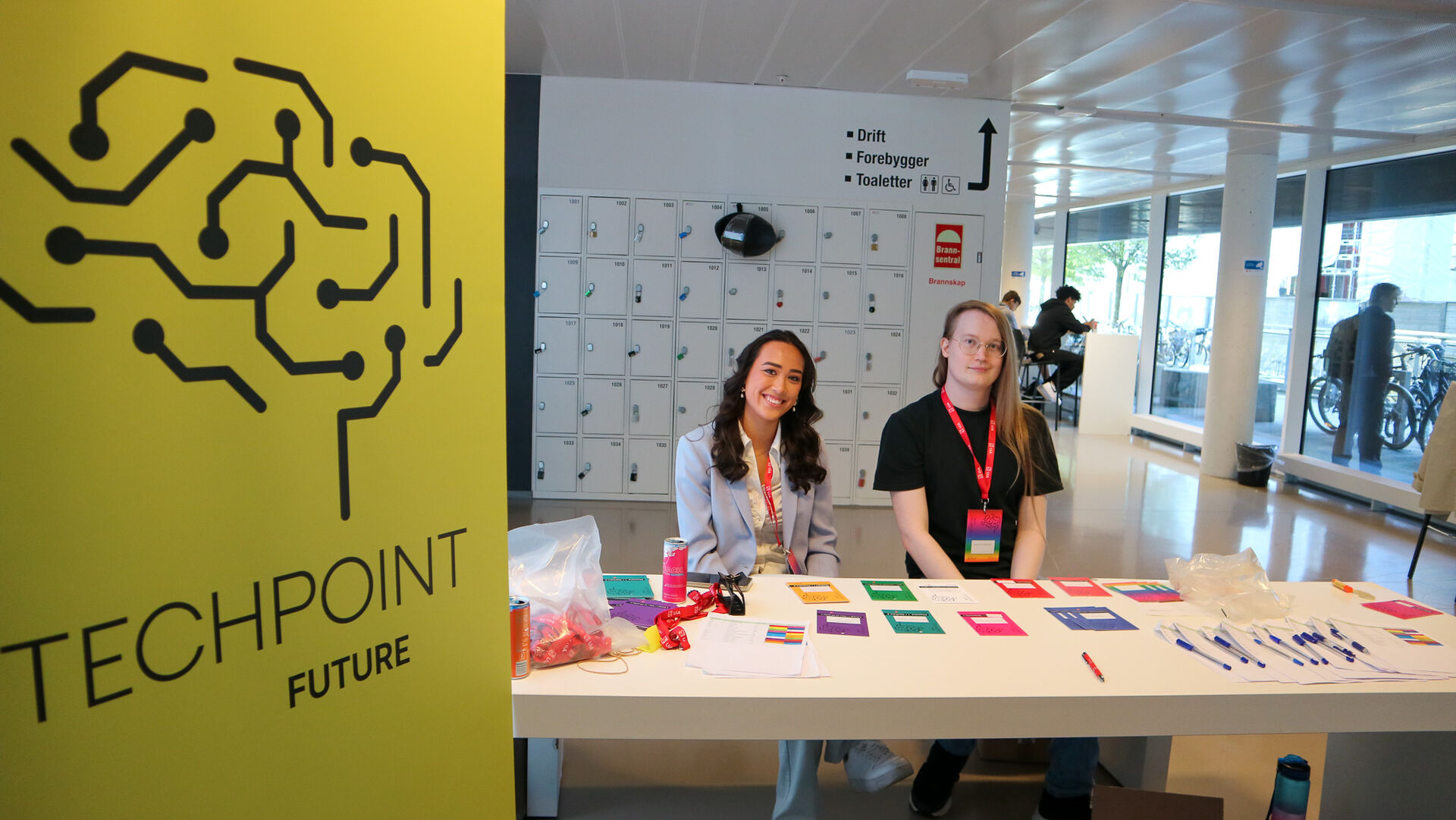
On 16 September, the 'youth version' of the upcoming business conference Techpoint took place in Kristiansand. Several companies from Southern Norway spent the day at Tangen Upper Secondary School working with students on exciting new technology. They were joined by students from bachelor's and master's programmes at the Department of Information Systems.
Jo Erlend Thunberg, section head at Tangen Upper Secondary School, worked closely with staff and students from the department in planning the event. The idea behind the conference is to introduce young people to the technology and inspire them to become future innovators. This is the fourth year the conference has been held and the department's partner companies in the region play a significant role in the agenda.
Built their own prototype
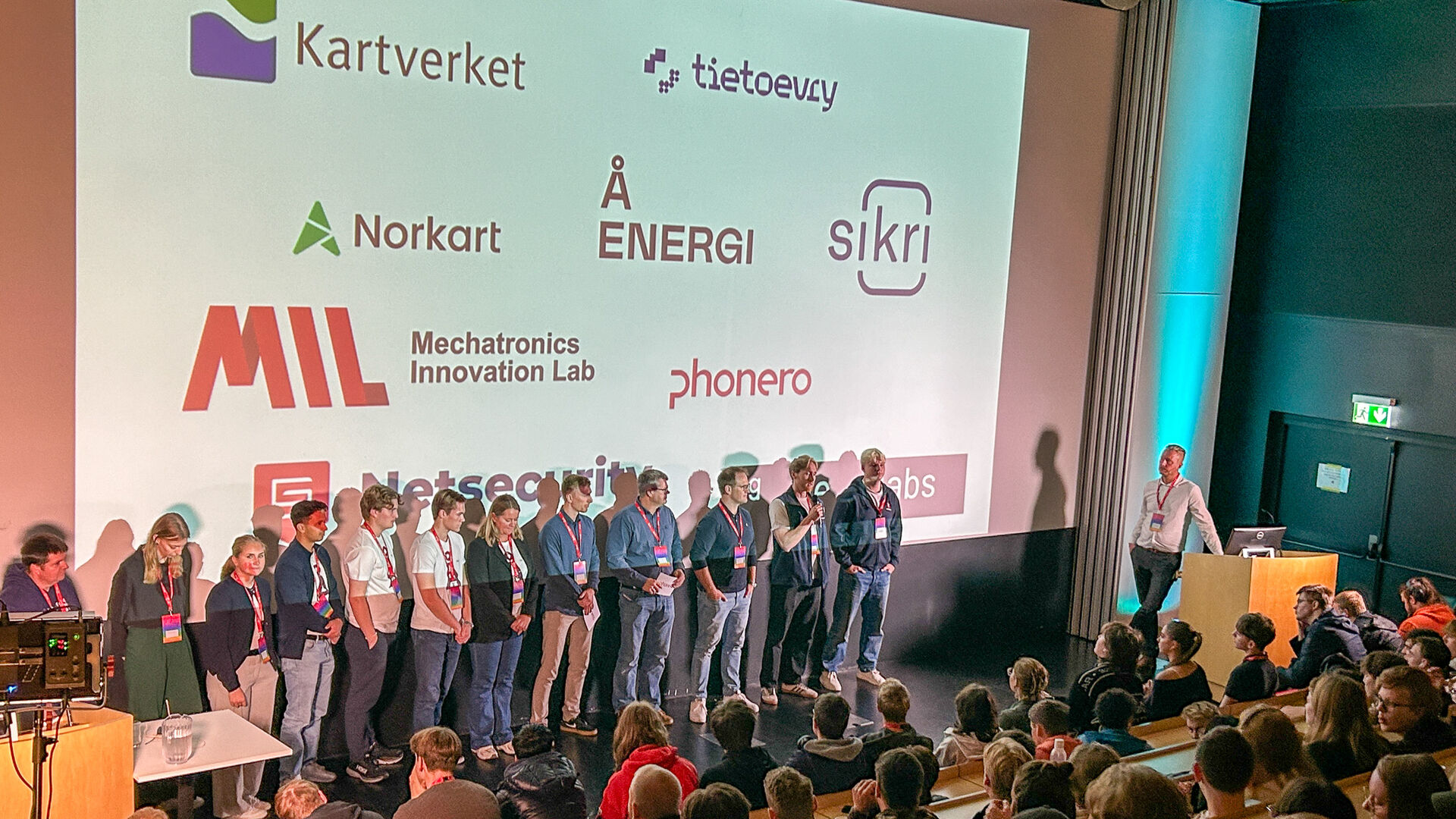
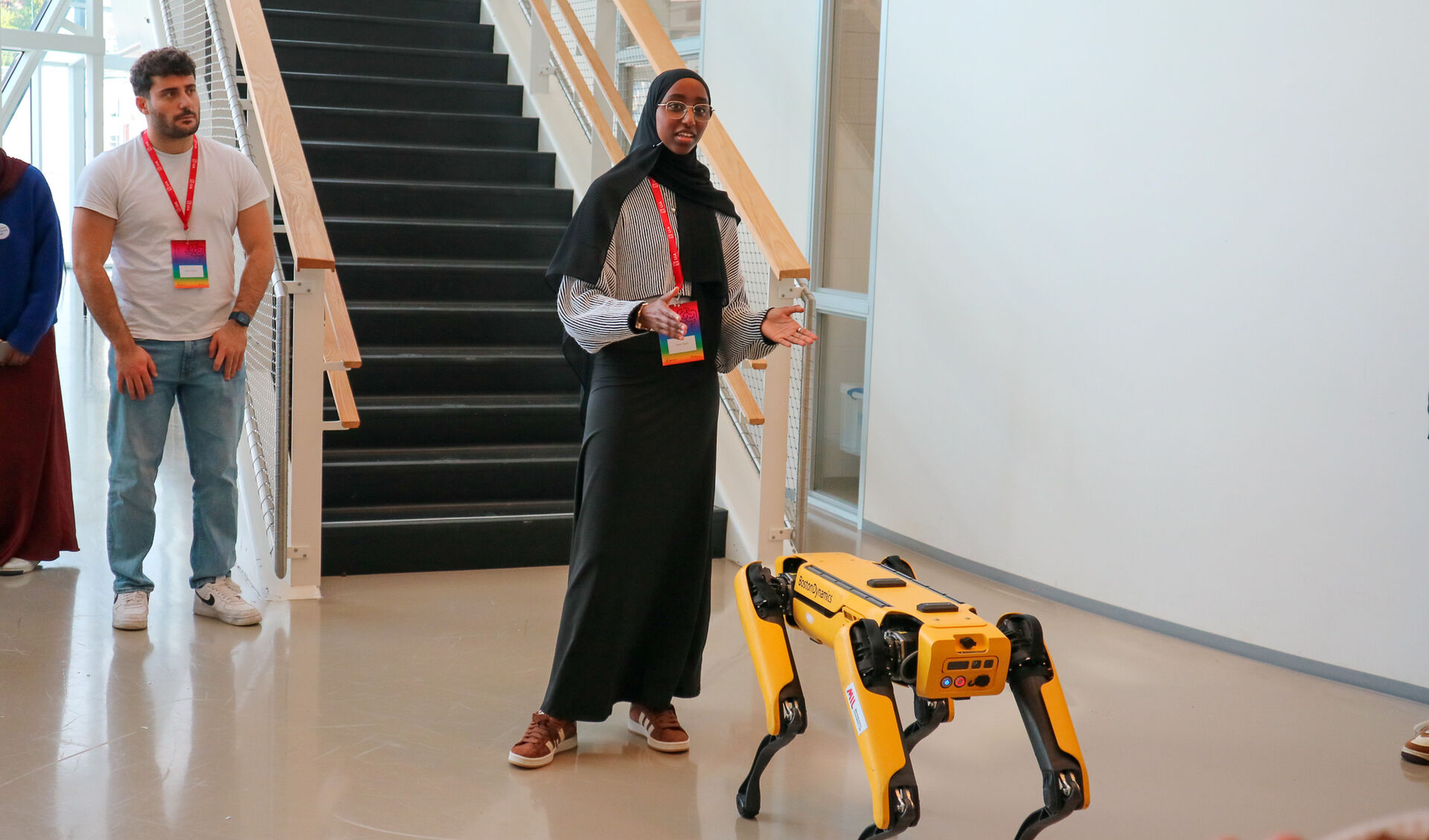
The main topic of the day was artificial intelligence, and students heard from Morten Goodwin about its impact on the workplace. They were also shown how companies are working with AI. In small groups, students attempted to solve various tasks set by companies like Netsecurity, Norkart, Sikri, Phonero, the Norwegian Mapping Authority, Tietoevry, Å Energi and Mechatronics Innovation Lab – MIL.
"We want you to build a prototype to solve our problem with a laser in Svalbard," was one of the challenges presented by the Norwegian Mapping Authority and Tietoevry.
Roar Engen from Tietoevry explained the problem to be solved.
"The Norwegian Mapping Authority collaborates with NASA on a laser in Svalbard that measures the distance to satellites in space, but there's a problem: the laser poses a danger to humans and birds if they look directly at it," he said.
UiA students have been helping the Norwegian Mapping Authority and Tietoevry develop an algorithm to detect birds and planes in the sky, which automatically turns off the laser when they are detected. However, the logic to turn off the laser has yet to be implemented, and students were now challenged to program the solution for this AI algorithm.
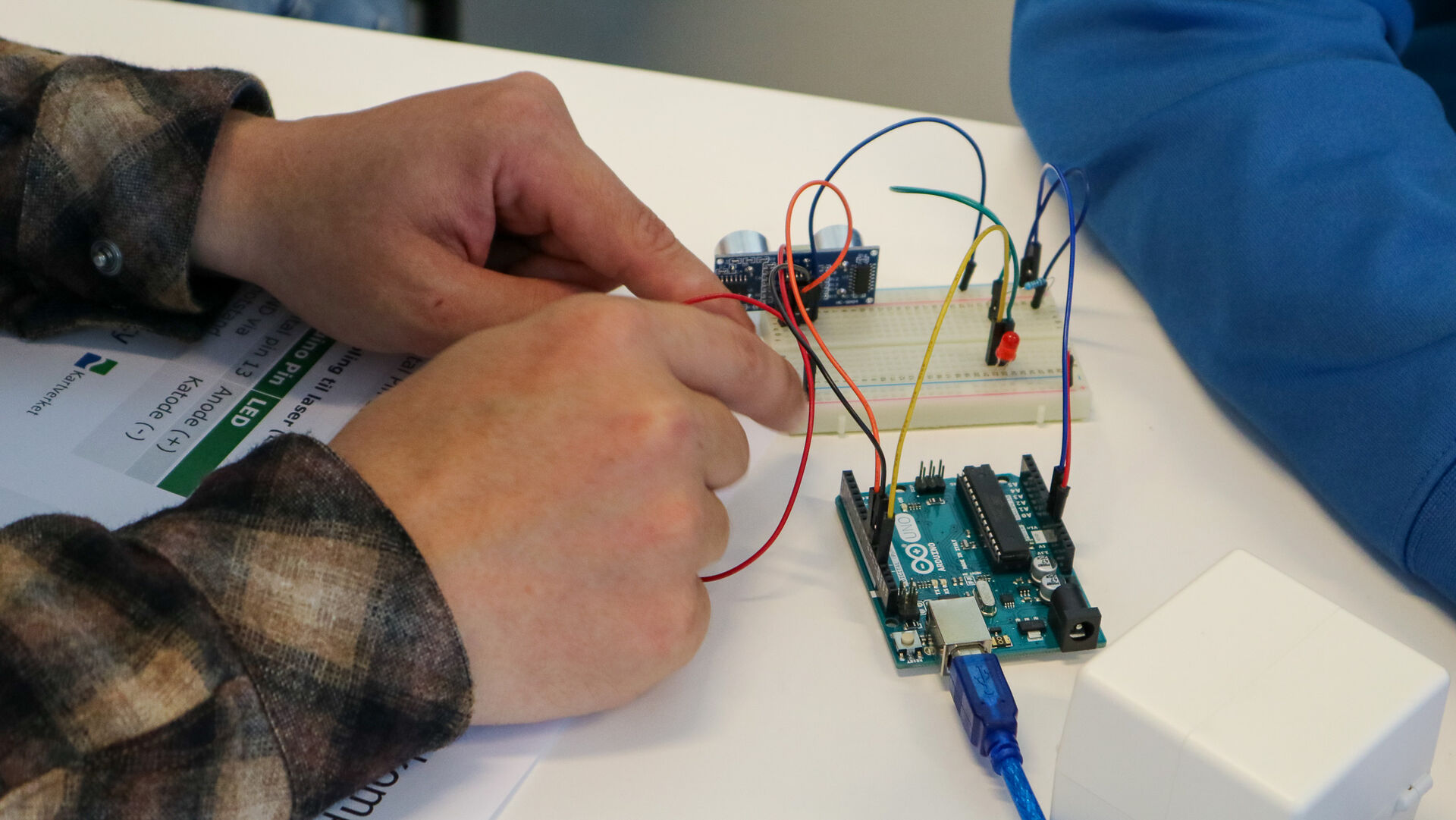
Provided with electronic components, student groups worked to find solutions. Throughout the process, they received guidance and support from internship students at the Norwegian Mapping Authority and staff at Tietoevry.
Several student groups managed to find working solutions, according to Roar Engen from Tietoevry. He leads Tietoevry Create in Kristiansand and is enthusiastic about the collaboration with both Tangen and UiA. "I am impressed by how quickly the students grasped the task, their curiosity and ability to solve it," he said.
Contributed as mentors and inspirations
The six students who helped plan and execute the task are pursuing bachelor's degrees in IT and Information Systems and are doing internships at the Norwegian Mapping Authority this autumn. They are working on emergency preparedness and AI.
"Being involved in such an event throws us into topics and roles we don't necessarily know much about. It's a valuable experience, and it's rewarding to promote interest in IT and technology," said Ørjan Fidje.
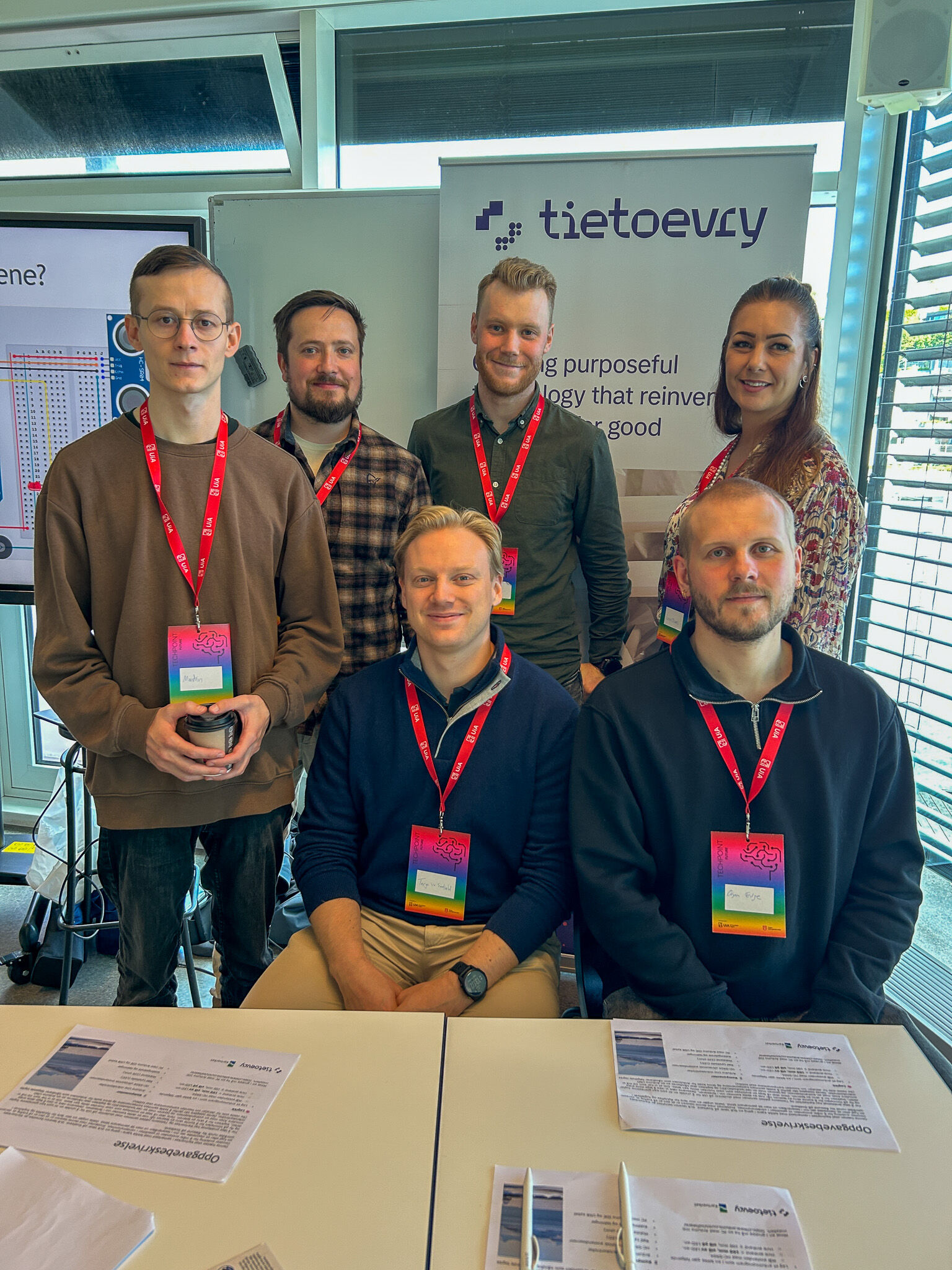
"I think it's important to expose young people to as much varied technology as possible and to highlight that there are many different aspects within IT one can engage with. Our study programme covers much more than programming; we learn about people and organising systems - what works and what doesn't," he said.
Students do some work with artificial intelligence in their studies but also try it out on their own.
"What is unique about UiA is that we’re often sent to companies. Being in internships gives us a great opportunity to try out artificial intelligence even more by dealing with real tasks and challenges faced by businesses," said Kristian Nielsen.