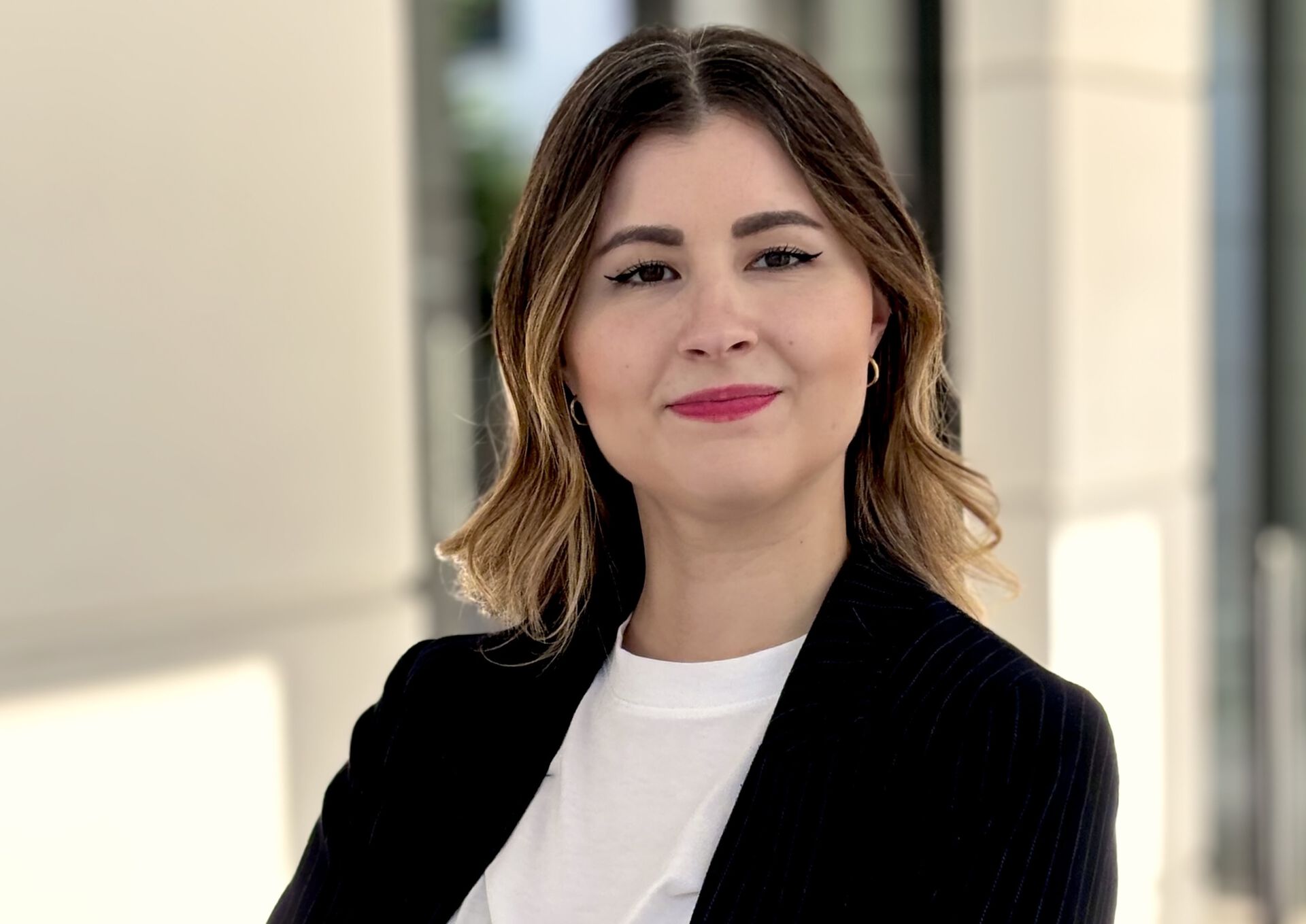
- Trial lecture starts at 10.15
- Public defence starts at 12.00
The title of the trial lecture is "The Future of Work in the Age of Artificial Intelligence”
Assessment committee:
- Professor Bram Timmermans, NHH
- Professor Denis Dennehy, Swansea University
- Associate Professor Stine Øyna, UiA
Supervisors in the doctoral work:
Summary of thesis
To date, automation is still one of the key drivers for business transformation. According to the World Economic Forum (WEF), business-related tasks are in-creasingly performed by machines, in particular with recent developments in generative AI (GenAI). Across service sectors, the Covid-19 pandemic further accelerated digitalization of offerings, necessitating services without human touch. Despite the need to automate, the successful implementation of digital technologies within organizations is still proving to be a challenge; many digital transformation projects fail. Possible explanations include a lack of understand-ing of resulting changes, missing skills, or absence of an expansive strategy for organizations to adapt.
Despite the vast interest, automation is occurring slower than anticipated. Alt-hough automation is the term most commonly referred to, augmentation is now receiving increasing attention. While automation describes human tasks that are taken over by machines, augmentation is used to define tasks where human and machine collaborate. Recognizing the need for human workers as we move into Industry 5.0, scholars and practitioners have thus started arguing for the need to augment.
Along with automation efforts and digitalized services, self-service technology (SST) has been a way to automate by delivering directly to consumers. SST pro-vides accessible, often affordable, services to individuals around the clock, com-monly without the need for human touch. With solutions such as robo-advisors, self-checkouts, or symptom checkers, consumers have become co-producers of service delivery, reducing the need for human-to-human interactions altogether. However, whether for touristic, legal, or financial advice, individuals are increas-ingly trusting information available online, neglecting its limitations and possible risks.
As digital SST receives human traits and artificial intelligence, the need for hu-man workers in services declines, once again reviving debates on automation and fears of being replaced. Although automation and self-service existed for many decades, the current technological, economical, and societal landscape today ne-cessitates the continuation and evolution of this matter. This means to reevaluate automation in the context of the United Nation’s Sustainable Development Goals. Constant technological change, improper working conditions, and inequality call for human-centered automation strategies that promote accessible services and augmented work environments.
Without a doubt, the opportunities provided by SST and automation are numer-ous, but the challenges are mounting as we move into Industry 5.0. As I argue, automation today cannot be viewed independently but has to be understood holis-tically. As such, automation and augmentation coexist, and SST can serve as ena-bler. Combined, I believe that automation entails augmentation and as such re-sults in changes that have to be understood at a larger scale as actors within and outside the organization are affected. From the service lens, this means that SST not only automates from the consumer perspective, but it enables augmentation as new interfaces allow for hybrid service delivery across physical, digital, and social realms.
The here presented PhD project aims to provide insight for scholars and practi-tioners on the ongoing organizational impact from SST-driven automation and augmentation in service sectors. As exemplary cases, the financial and healthcare sectors were chosen due to their similar advice-giving practice, established pro-cedures, and fundamental consumer/patient interaction. Along this debate, this work is situated in management studies, exploring the interplay and triadic rela-tionship of organization, human, and technological resource in the context of services, aiming to comprehend and manage the effects of introducing SST for the purpose of automating and augmenting services.
Across a total of four empirical and theoretical research papers, various contribu-tions for scholars and practitioners are made.
First, findings expose a lack of full integration of SST and persisting challenges on all levels—technological, organi-zational, individual, and external. Second, SST needs to be incorporated at the in-tersection of worker and consumer for hybrid service delivery enabling automa-tion and augmentation. Third, SST requires organizations to handle accountability and responsibility of self-services and provide adequate education of users. Finally, this research has provided some specific insights for the healthcare and financial sector, as well as some general insights for services and professional services at large. Though more research will be needed, this work contributes to existing management and service research, enables a bridging of perspectives, and seeks to provide guidance and awareness of this recent and evolving phenomenon.
What to do as an online audience member
The disputation is open to the public. To follow the trial lecture and the public defence online, register on Zoom.
We ask online audience members to join no earlier than 10 minutes in advance. After these times, you can leave and rejoin the meeting at any time.
Opponent ex auditorio:
Deadline for the public to pose questions is during the break between the two opponents. Questions ex auditorio can be submitted to disputation chair.
Questions?

- gunvor.guttormsen@uia.no
- Phone
- +47 38 14 16 48