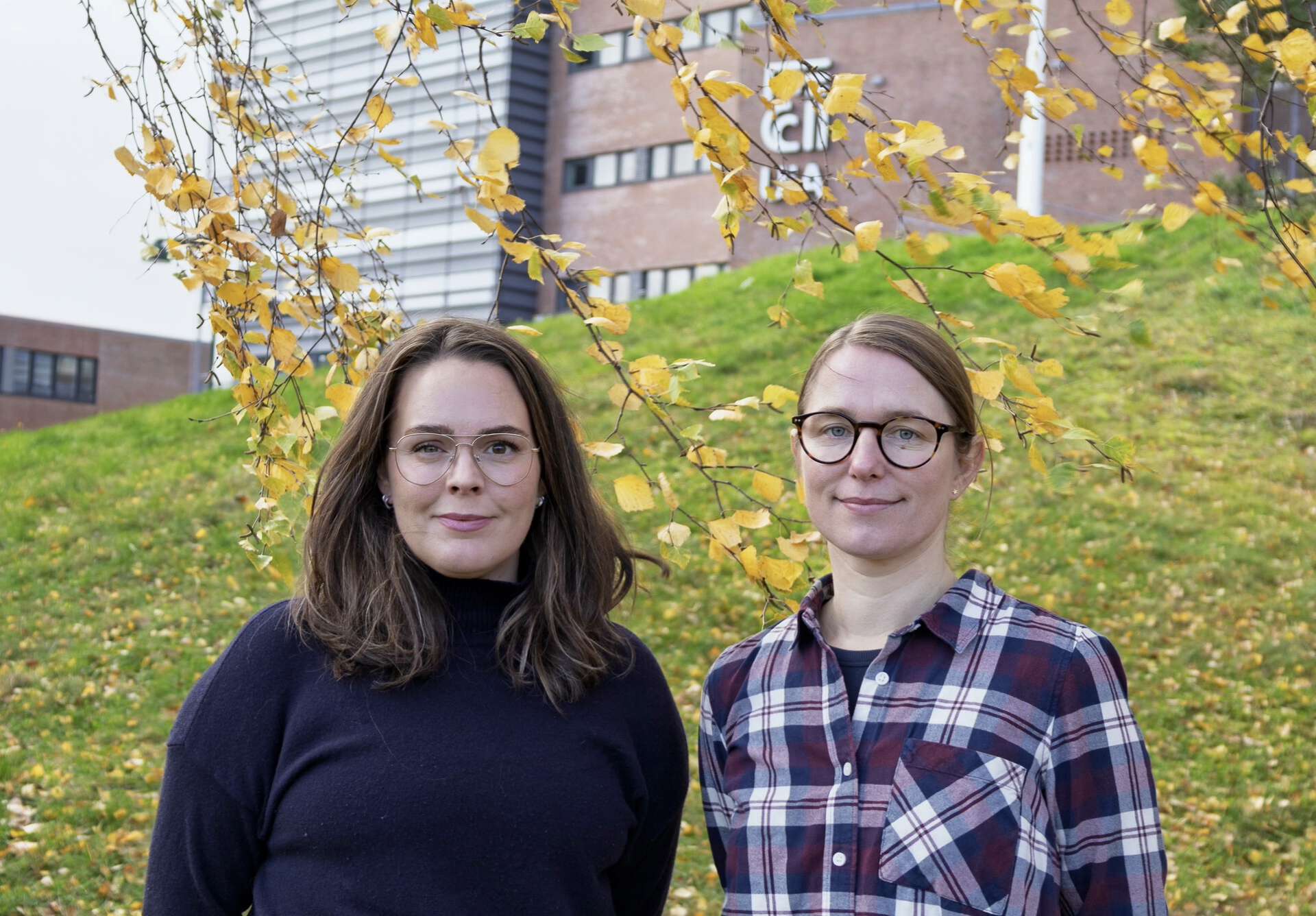
‘Working life is mostly organised as if we all work full-time and have just as much to give right up until we reach retirement age. That isn’t the case for most of us,’ says adviser Maren Garmann Launes.
She has led the development of the tool at the Centre for Gender and Equality at UiA.
The tool will be launched on 9 November.
According to Launes, the point is in the name: a life-stage-aware workplace has planned for the fact that life happens, so no one has to go cap in hand and ask for adjustments.
‘A workplace designed for the average employee is like a shoe shop that only stocks one size. Most feet won’t fit,’ she says.
Life-Stage-Aware Working Life
- A free HSE tool from the Centre for Gender and Equality at the University of Agder (UiA)
- Consists of a management briefing, nine guides, a knowledge base and a worksheet
- For managers, HR, safety representatives and union representatives
- The guides are written for all employees
- Follows the same four-step method as the duty to promote equality and report (ARP)
- Launches on Monday 9 November at www.uia.no/livsfase (in Norwegian)
Shorter than a staff meeting
The tool consists of a briefing for managers, nine guides, a knowledge base and a worksheet. The guides are written for all employees, while the other documents are intended for managers, HR, safety representatives and union representatives.
Life-Stage-Aware Working Life is suitable for all kinds of workplaces, whether it is a nursery with twelve employees, a municipality or a large corporation. Each workplace decides for itself how much of the tool to use.
The simplest option is to share one or more of the guides with employees. Each one takes two to four minutes to read.
‘It was important to us to create something people actually have time to use. Nobody needs another ring binder gathering dust on a shelf,’ says Launes.
For changes to last, they must be anchored in management. Launes does not believe good intentions alone are enough.
That is why the tool starts with the manager, who goes through the worksheet together with the safety representative or union representative. The work follows the same four-step method as the duty to promote equality and report (ARP), and can be built directly into the organisation’s internal control system.
They choose one topic and one measure and try it out. After twelve weeks, they assess whether it is working as intended.
‘The first meeting takes less than an hour. That’s shorter than most staff meetings,’ says Launes.
NOK 59 billion a year
When a workplace does not plan for life stages, individuals are left to manage on their own. More often than not, this ends in part-time work or sick leave, particularly for women, who still carry most of the responsibility for caring for children and ill parents.
‘Many people go to great lengths, working through pain or sleepless nights and cutting back wherever they can. Reducing your hours costs you both salary and pension, and you feel the effects long afterwards,’ says Launes.
Employers pay too, even if the bill rarely becomes visible. Sick pay for the first 16 days comes on top of the costs of temporary staff, overtime and training. When an experienced employee leaves, expertise that took years to build disappears with them. And if colleagues cover the absence without additional staffing, it can have knock-on effects as well.
Vista Analyse has estimated that impaired work health and absence among women cost society around NOK 59 billion a year.
‘Waiting is the most expensive option,’ she says.
Launes stresses that the tool is for everyone, including men.
‘A father who wants to pick up his children from nursery or look after a sick parent needs the same arrangements.’
A paradox
Hanne Drangsholt is an adviser on the project. For her, working with life stages is first and foremost about prevention.
‘If we can organise working life so that it makes room for our natural fluctuations in productivity, availability and concentration, we can stand more firmly in our jobs through demanding periods,’ she says.
She points to a paradox: adjustments are easiest to make in office jobs, but the need may be greatest elsewhere.
‘It may be even more important in occupations where people are exposed to emotional strain throughout the working day and throughout their entire working lives. Especially in female-dominated workplaces such as nurseries and hospitals.’
Drangsholt hopes that higher baseline staffing, and extra staffing when needed, will be prioritised in the future. However, she believes it would be wrong to see staffing as the only solution.
‘Several of the measures in the tool cost little or nothing. It could be offering joint training on menopause, or having a fixed routine for what happens when an employee becomes pregnant.’
An hour shorter working day
The tool is freely and openly available on the centre’s website, and anyone can use and adapt it. According to Drangsholt, the job now is to make it known. The centre will continue working on the topic.
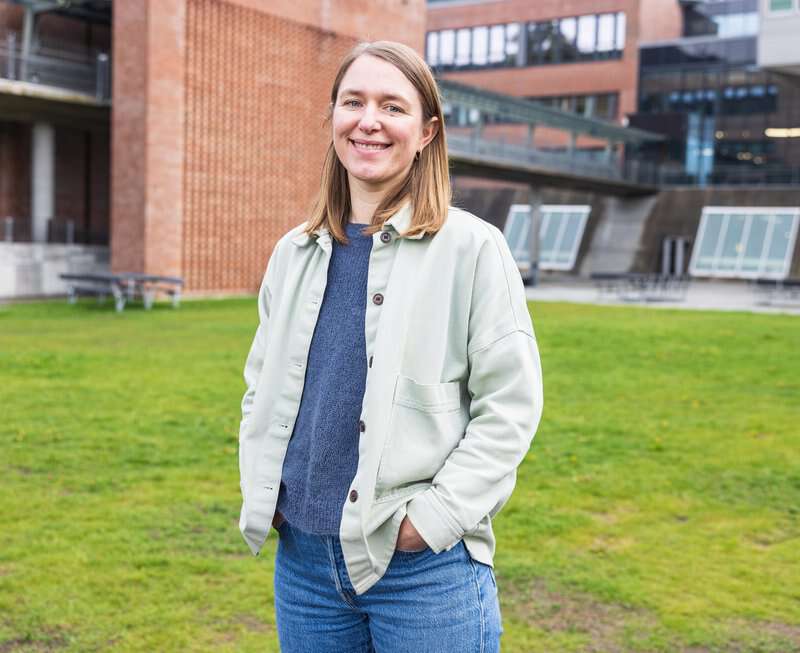
Drangsholt and Launes nevertheless have greater ambitions for working life. Drangsholt wants all parents with children under the age of three to be entitled to a paid one-hour reduction in their working day, equally for mothers and fathers.
This hour would come in addition to today’s breastfeeding leave, which only applies to the parent who is breastfeeding.
‘That would make the scheme equal, and make it easier for all parents of young children to keep working full-time through their busiest years,’ says Drangsholt.
Today, colleagues often cover breastfeeding leave without anyone being brought in.
‘I want workplaces to increase their staffing so there is room for parents of young children and pregnant employees without anyone having to work more,’ Launes adds.
But it comes at a price.
‘Both cost money. So does doing nothing.’
The tool is based on legislation and research
The tool is based on the Working Environment Act, the Inclusive Working Life (IA) Agreement and research on work health and life stages.
The Official Norwegian Report NOU 2025:5 on women’s work health has been particularly important. The committee recommended that workplaces do more to accommodate women’s life stages. It called for guidance on pregnancy, fertility treatment, breastfeeding leave and menopause. It also pointed out that existing knowledge is not reaching workplaces well enough.
Launes stresses that the measures have been made universal and apply to all employees.
For menstruation and menopause, the tool also draws on the British standard BS 30416. Each measure is labelled so that managers can see what is a legal requirement, what is supported by research and what is good advice.
In October, Statistics Norway (SSB) published figures showing that doctor-certified sickness absence has risen over the past ten years, and that the increase is only to a small extent due to changes in who is in work.