
The background for the seminar was that five years have now passed since sustainable development was introduced as a cross-curricular topic in the Norwegian national curriculum (LK20). Although children and young people in recent years have shown a tremendous climate engagement, recent global developments have once again shifted attention away from environmental issues.
How is it possible to succeed with sustainable development when all indicators suggest that the sustainability goals for 2030 will not be reached? How can education for sustainable development equip students with the will to care for the environment when society must navigate the balance between bleak climate prospects and utopian sustainability goals?
The seminar featured presentations from four different researchers at the Faculty of Humanities and Education:
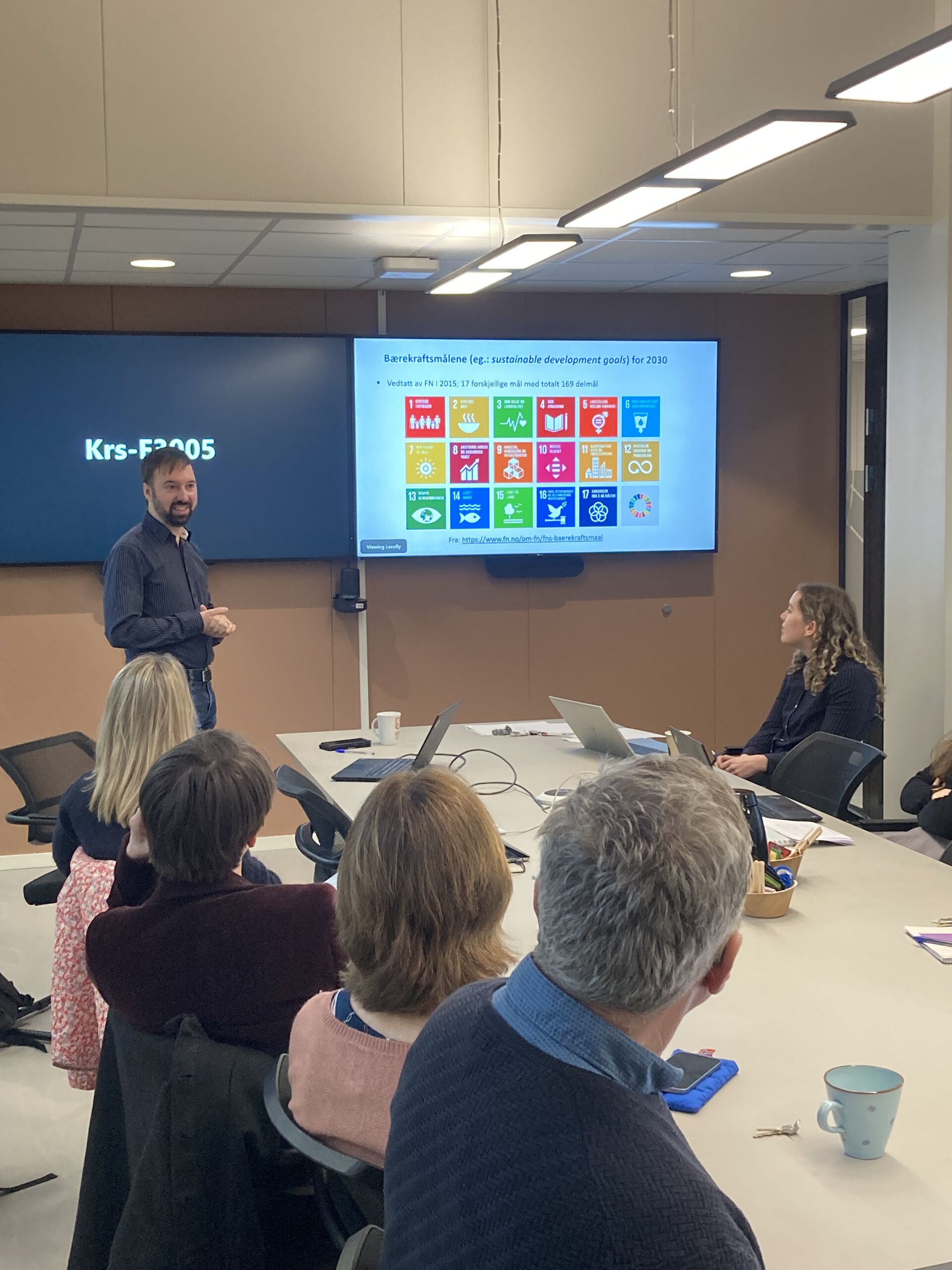
Reinhard Hennig, Professor of Nordic Literature, opened the seminar with a presentation on overarching perspectives on (education for) sustainable development. He offered, among other things, a conceptual-historical reflection on the origins of the terms “sustainability” and “sustainable development.” In the face of climate change, biodiversity loss, overconsumption, and pollution, it may be necessary to adopt a different term than “sustainable development” to prepare students for today’s climate realities.
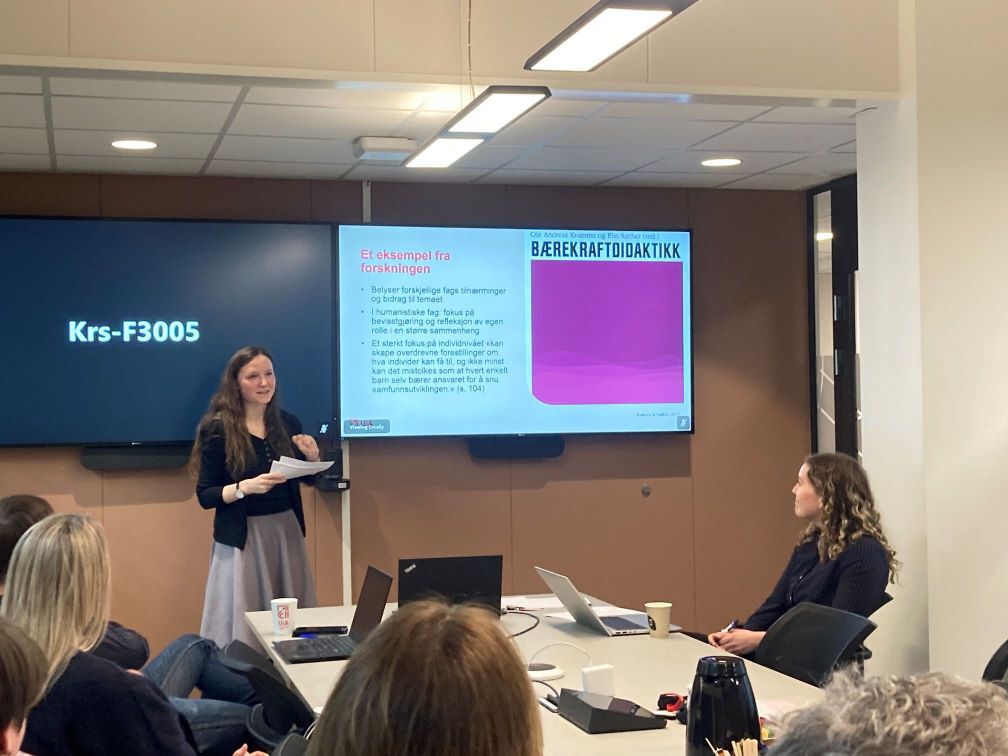
Berit Huntebrinker, Associate Professor in Nordic Literature, shared her research on the concept of environmental citizenship and discussed what environmental citizenship can mean for sustainable development. The current national curriculum emphasizes that each child should become a responsible citizen and make environmentally conscious choices. The challenge that remains is how systems thinking and structural conditions can be incorporated into education for sustainable development.
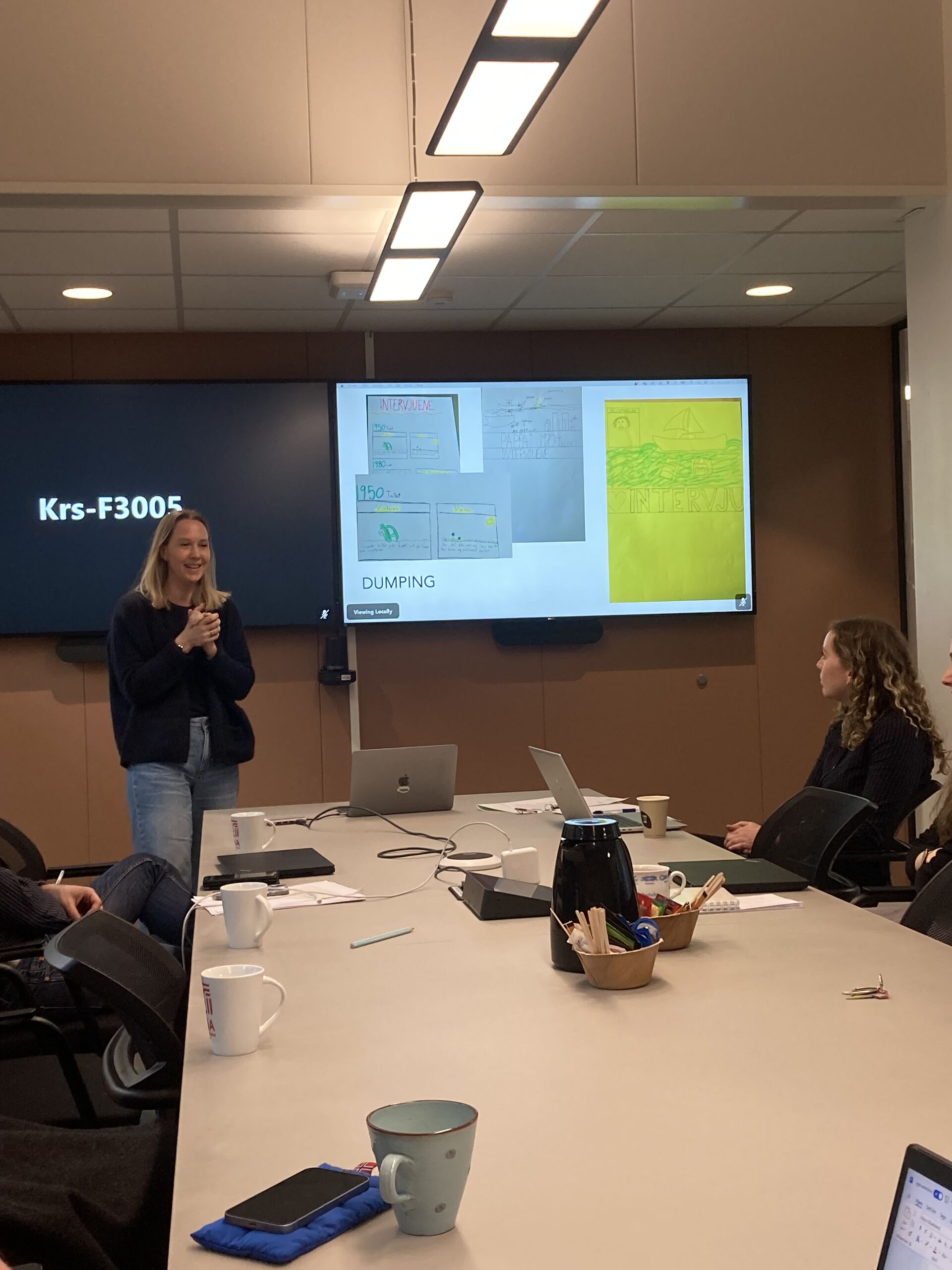
Hilde Kristin Røsstad, PhD candidate in History, shared her experiences from a research project she conducted together with university lecturer Ingvild Ruhaven. The project focuses on historical consciousness and sustainability didactics. The two researchers collected data in which lower secondary school students shared their own perceptions of environmental challenges, the time dimension in sustainability issues, and their reactions to how previous generations have treated the environment.
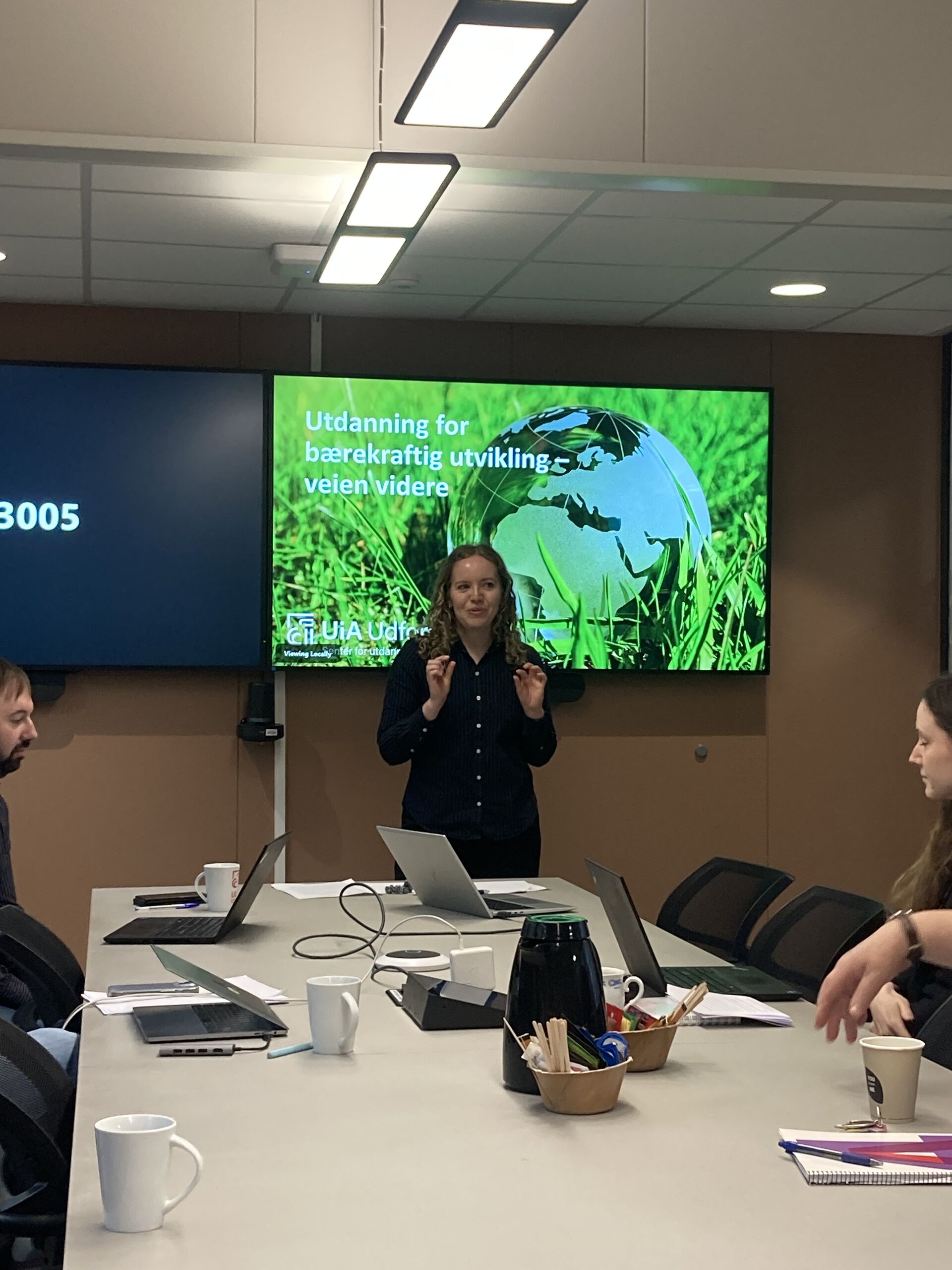
Finally, postdoctoral research fellow Ida M. Olsen presented her thoughts about her current research project dealing with the English subject and sustainable development, arguing for the importance of integrating environmental perspectives in the teaching of English as a foreign language.
All in all, this was an inspiring seminar, demonstrating that education for sustainable development is a highly relevant field of research that requires an interdisciplinary approach.