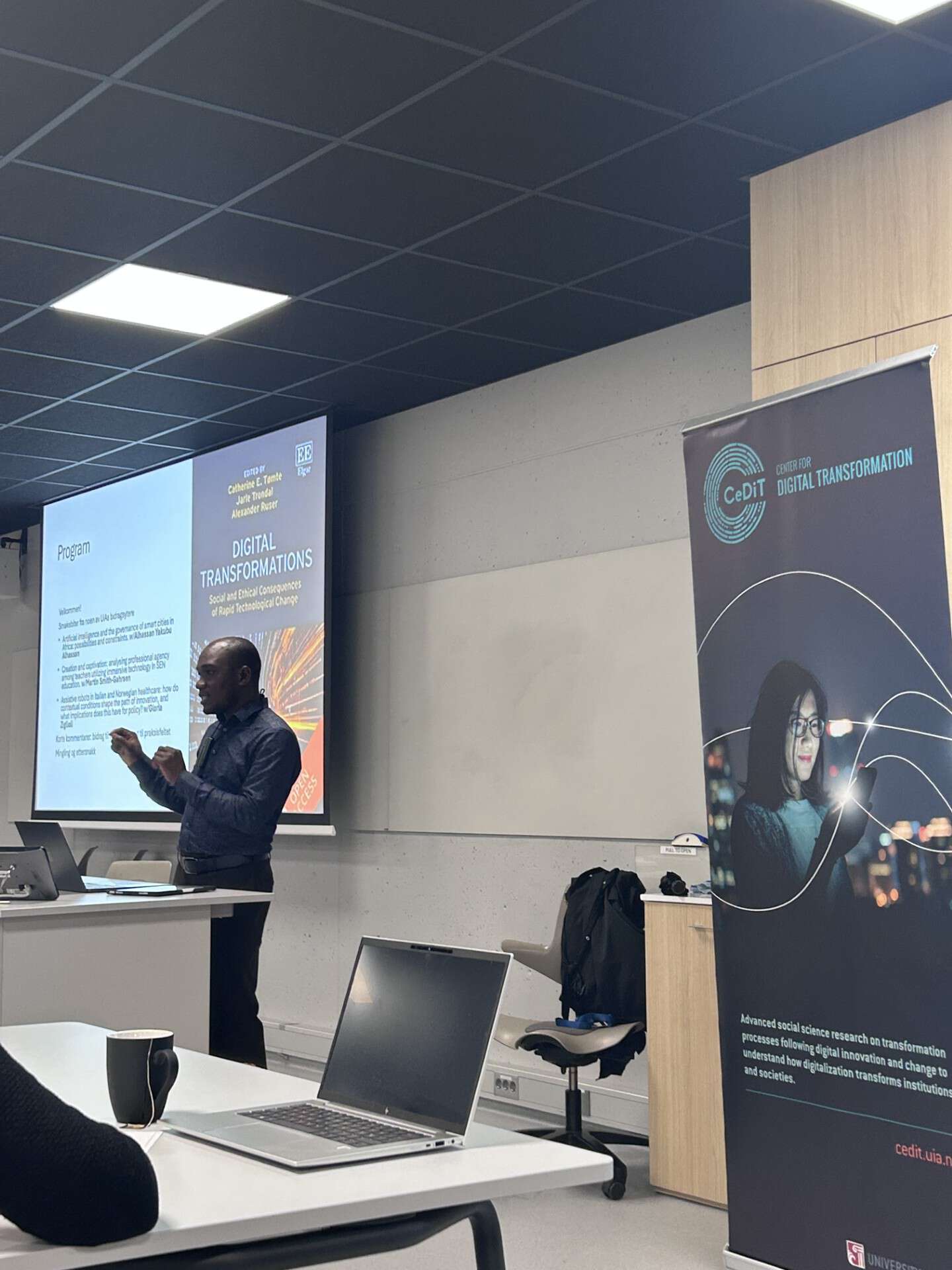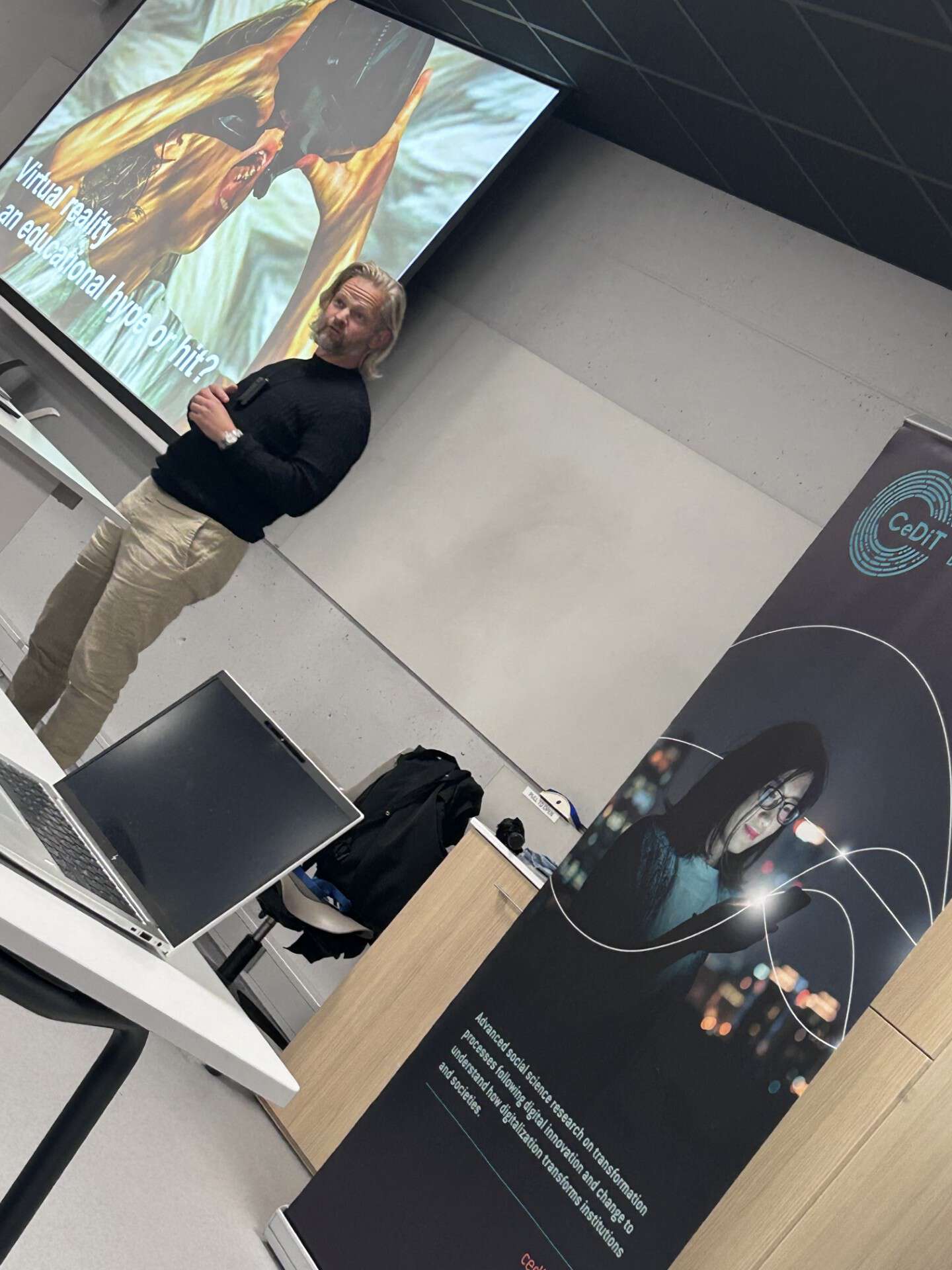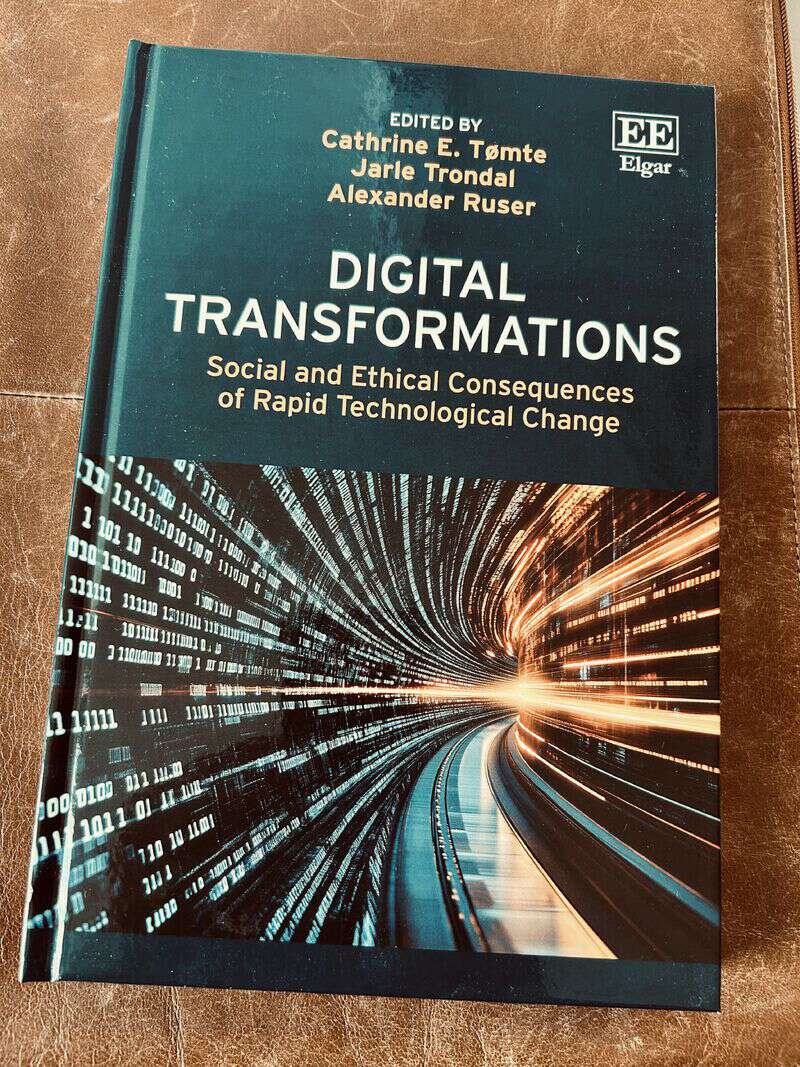
On September 15, the Centre for Digital Transformation (CeDiT) marked the launch of its new book, Digital Transformations: Social and Ethical Consequences of Rapid Technological Change. The event brought together researchers, partners, and interested participants for academic presentations, discussions, and reflections on how digital technologies and artificial intelligence are shaping societal development.
The book brings together several of the themes that have characterized the center’s research over the years, including governance and leadership, digital citizenship, sustainability, responsible digitalization, and the use of artificial intelligence. It illustrates the breadth of research conducted at the center and demonstrates how digital transformations create both opportunities and challenges across sectors and areas of society. The book is available as Open Access.
The seminar was opened by Dean Leif Skiftenes Flak of the Faculty of Social Sciences and moderated by CeDiT Deputy Director Cathrine Edelhard Tømte. Participants were given insights into three of the book’s twelve chapters.
Alhassan Yakubu Alhassan presented research on artificial intelligence and the governance of smart cities in Africa. Martin Smith-Gahrsen shared findings on teachers’ professional autonomy when using immersive technologies in special education. Gloria Ziglioli presented research on the use of robots in Italian and Norwegian healthcare services, illustrating how different contexts influence innovation and policymaking.
Relevant for Educational Research and Teacher Education
Although the book is intended for a broad audience interested in digital transformation, it is also highly relevant for educational researchers and teacher educators.
The introductory chapter presents key concepts and recent research on governance and leadership, digital citizenship, and ethical and responsible digitalization and artificial intelligence, all topics of relevance to education researchers.
Two of the chapters focus explicitly on education. As mentioned above, Martin Smith-Gahrsen’s chapter examines teachers’ professional autonomy in the use of immersive technologies and virtual reality (VR) in teaching. Another chapter, written by Silvia Zanazzi and Cathrine Edelhard Tømte, discusses the opportunities and challenges associated with the use of artificial intelligence for students with special educational needs.
Taken together, the book offers both theoretical perspectives and empirical examples that may be valuable for researchers, teacher educators, and others working with digitalization and AI in education.