Contact:

- oivind.eskedal@uia.no
- Phone
- +47 38 14 18 62
Digital consent form on storage and use of photo/video
Do you need written permission?
Portraits require written permission. Portrait photos or videos show a single person or a group of people and the people themselves are the subject of the picture. Class photos are defined as portrait photos.
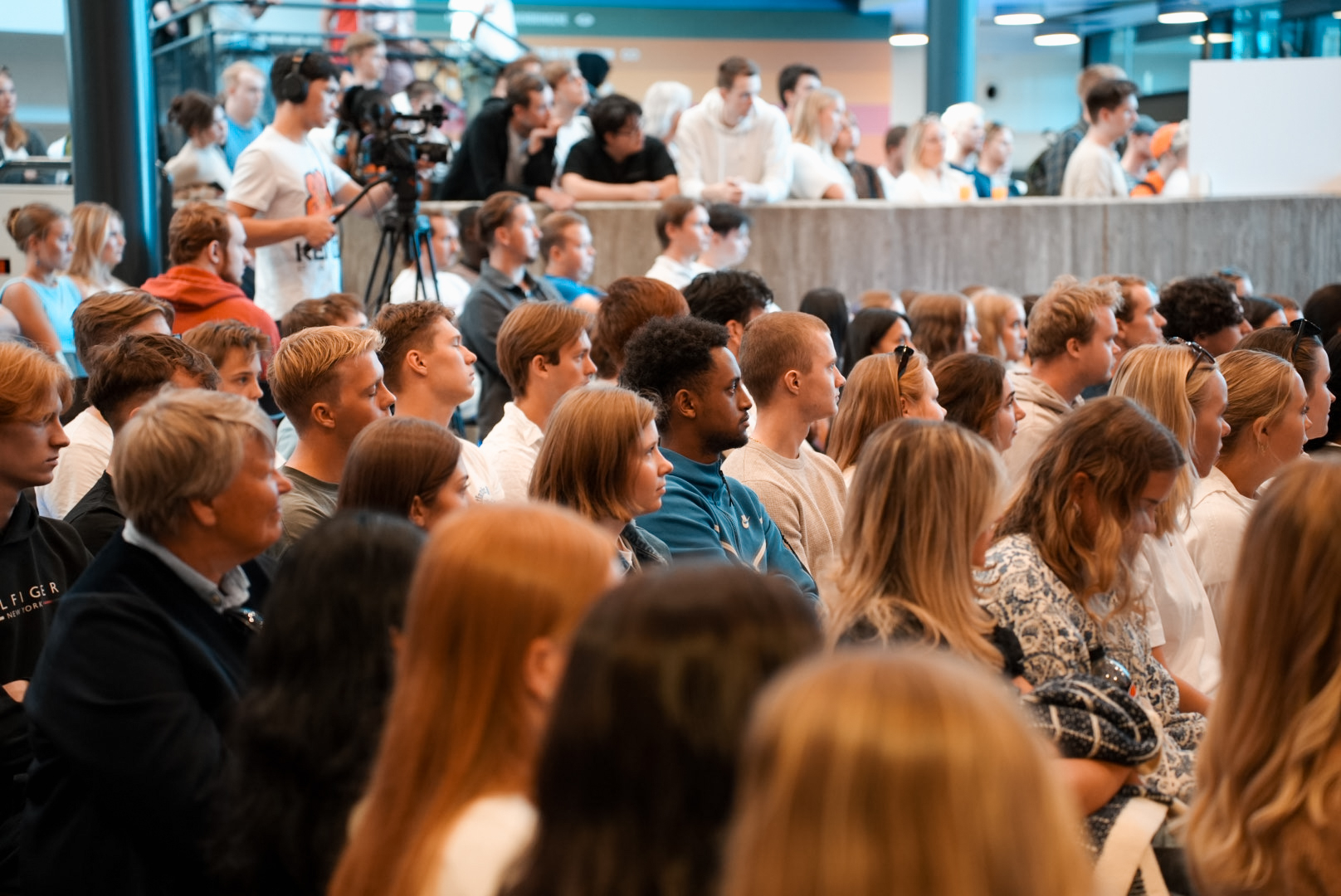
Situation pictures do not usually require permission. Situation photos or videos may contain people, but the activity or situation is the real subject. Exactly who is in the picture is of less importance. The Data Protection Authority mentions photos from concerts, sporting events, processions or parades, and other events of general interest as examples of situation images. Situation images can be published without the subject’s consent as long as the images are harmless and not in any way offensive to those depicted.
Read more about portraits and situation pictures on the Data Protection Authority website.
Examples
Below is one example to show what kind of images do not require consent:
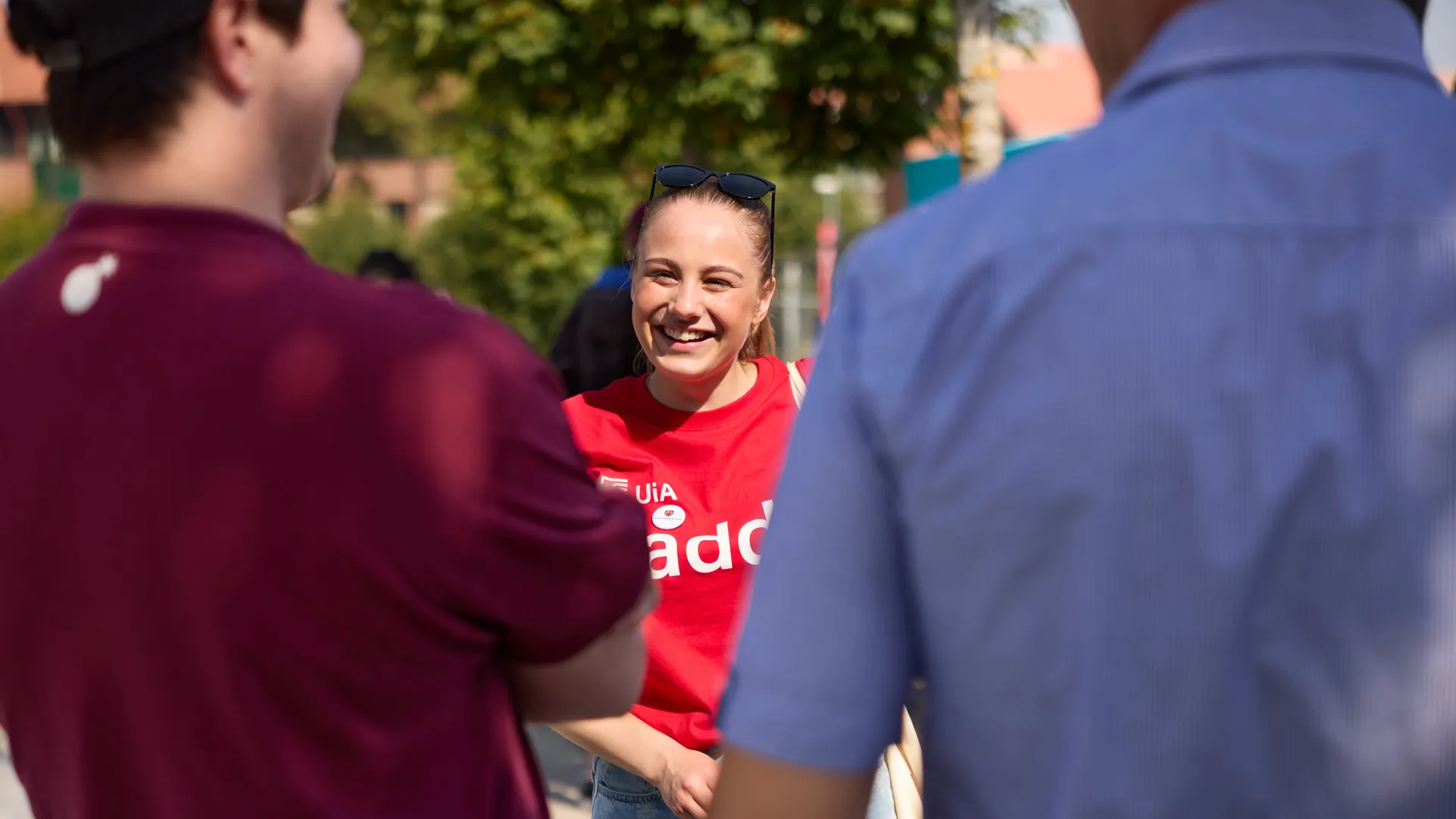
Close-ups of individuals always require written permission, even if the person depicted does not have an active participating role (speaker, entertainer and the like). See example:
When in doubt, get written permission
Frequently we take pictures or video where it is difficult to determine which of these two categories apply. The regulations do not provide precise answers, which the Data Protection Authority acknowledged over the phone when we asked for a clearer definition. But here are some key rules:
- Photos or videos of persons under the age of 18 or other persons who cannot give a valid consent always require written permission from the parents/guardians
- Photos or videos of people in vulnerable situations always require written permission
- Photos or videos that show people in a situation or environment that may put them in a negative light always require written permission
Unfortunately, in many cases it becomes a matter of discretion and common sense. But if in doubt, you should always get written permission before publishing.
How to obtain permission/consent
- Start by obtaining consent from the subject. Feel free to use a PC or tablet on location.
- If you do not find a suitable event to tag the photo/video in, you can create the event yourself
Digital consent form on storage and use of photo/video
All consents are stored and linked to stored photos and videos. You can also gather consent after the photos have been taken in the same way described above.
If there is disagreement about what permission has been granted before a photo or video has been published, we must be able to prove that we have obtained the consent. The consent must as a minimum contain:
- Name of the individual who gave the consent and to whom
- Contact details - preferably a mobile phone number
- Date
- Which photos the consent covers, the context in which the photos were taken
- Any restrictions on which contexts or in what media the images may be used
- Any restrictions on how long the images can be used
To comply with the General Data Protection Regulation (GDPR), we must be able to find the pictures we have of a person if requested. It means that:
- photos of individuals that require consent must be tagged with the person's name
- the permit/consent must be stored in such a way that it can be retrieved (without personal information being made available to outsiders.