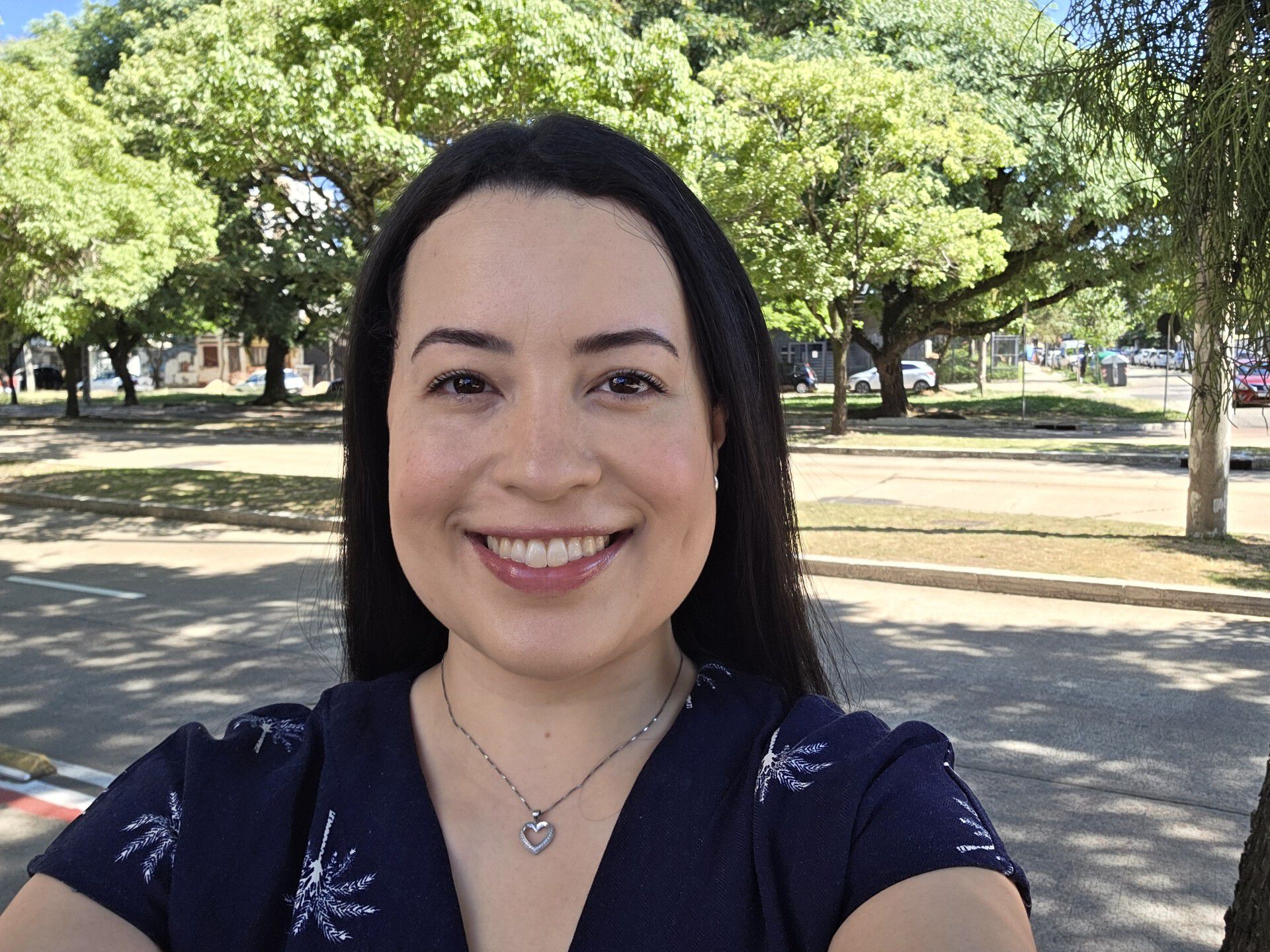
Luísa Cristina Buogo Silva
Studying:
Global Development, Crisis and Change, master
It is a strong peer-to-peer learning environment, where we constantly learn from each other’s perspectives.
How is it to be a student at this programme?
I’m really enjoying the programme and my experience as a student at UiA. I love being surrounded by so many different perspectives, ideas, and ways of thinking. On top of that, the support from the university creates a space where I feel encouraged to grow, experiment, and engage deeply with what we’re studying.
What do you study?
The programme is focused on global challenges and development, and it really trains us to think like critical social scientists. We learn how to question dominant narratives, place local experiences at the centre of analysis, and understand complex global issues through a systemic lens.
Throughout the programme, we explore what crises are, what causes them, and different ways of responding to them. We also study the relationship between humans and the environment, not only in physical terms, but also in social and political ones.
Above all, the programme gives us a deep understanding of development and development processes: how they unfold, who they affect, and how power, inequality, and context shape outcomes.
What do you appreciate most about the programme?
I really appreciate the truly international and diverse academic environment of this programme. The professors, instructors, and tutors come from all over the world, bringing different perspectives, experiences, and ways of thinking into the classroom. This diversity makes discussions richer and constantly challenges us to see issues from multiple angles.
How is the contact with the job market during studies?
The Master's programme places a lot of emphasis on the importance of fieldwork and contact with the job market. In my second semester, I will attend a three-week fieldwork stay in Sri Lanka. The field work is designed to deepen our understanding of development, while gaining the practical experience of conducting field research. During this period, we will take part in lectures and visits to organizations and institutions, with a final field exercise in the end. I believe this experience will be highly valuable for my future, as it will provide new perspectives, meaningful connections, and fresh ideas.
The program places a strong emphasis on professional preparation from the very beginning. We’re constantly encouraged to think about how our studies connect to real-world experiences and future careers. This includes thinking carefully about ethics, responsibility, collaboration, and how to engage constructively with peers during regular studies or fieldwork.
What is the teaching like?
The teaching style in the program is flexible and course-dependent. Some courses have weekly lectures, while others are organized around introductory lectures at the start of each module. Instead of being lecture-heavy, a typical week is largely built around independent study, readings, assignments, and group discussions.
The reading load is substantial, and we’re expected not only to keep up with it, but to engage with the material in depth and demonstrate critical understanding in discussions and written work.
A big part of the learning experience is collaboration: we do a lot of group work, including written discussions, live discussions, and group essays. It is a strong peer-to-peer learning environment, where we constantly learn from each other’s perspectives.
What is student life like outside of academics?
I find student life very balanced and flexible. Since our program is online, we have a lot of autonomy in how we manage our time, which makes it much easier to combine studying with social life, work, and personal interests. This flexibility is one of the aspects I value most. At the same time, it is consistently emphasized that the program is a full-time commitment, so good organization and time management are essential.
The student environment in Kristiansand is very welcoming, and everyone in the faculty is friendly and approachable. In terms of free time and activities, the university offers a wide range of opportunities, including sports events, language cafés, lectures, and faculty- and department-led events. These activities play an important role in helping students connect, build friendships, and feel socially integrated.
What do you envision yourself doing in the future?
I envision myself working at the intersection of gender and climate, contributing to policies and programs that address inequality while responding to the climate crisis. My dream is to work within one of the leading global institutions, where I can help design and support initiatives that are inclusive, evidence-based, and grounded in local realities. I’m motivated by the idea of turning research and critical analysis into concrete action that creates meaningful and lasting impact.
Would you recommend the program and UiA?
Absolutely. I would highly recommend the program to anyone interested in working with global issues, whether in the Global North or the Global South. It’s an excellent fit for those who want to engage with development, institutions, and complex global challenges, or simply develop a strong critical mindset. The program equips students with the tools to question, analyse, and understand the world in a thoughtful and responsible way, which I believe is invaluable regardless of the career path you choose.