
"Some days I come here at nine in the morning just to sit. The seating is really nice, and it's great to have walls on both sides of the sofa," says Elisabeth Synnøve Marthinsen.
She is studying education at the University of Agder and has made herself at home in the cafeteria run by the Student Welfare Organisation in Agder (SiA) at Campus Kristiansand. Fellow student Roma Hamde agrees.
"It doesn't feel like a dining hall. It's an all right place to spend time."
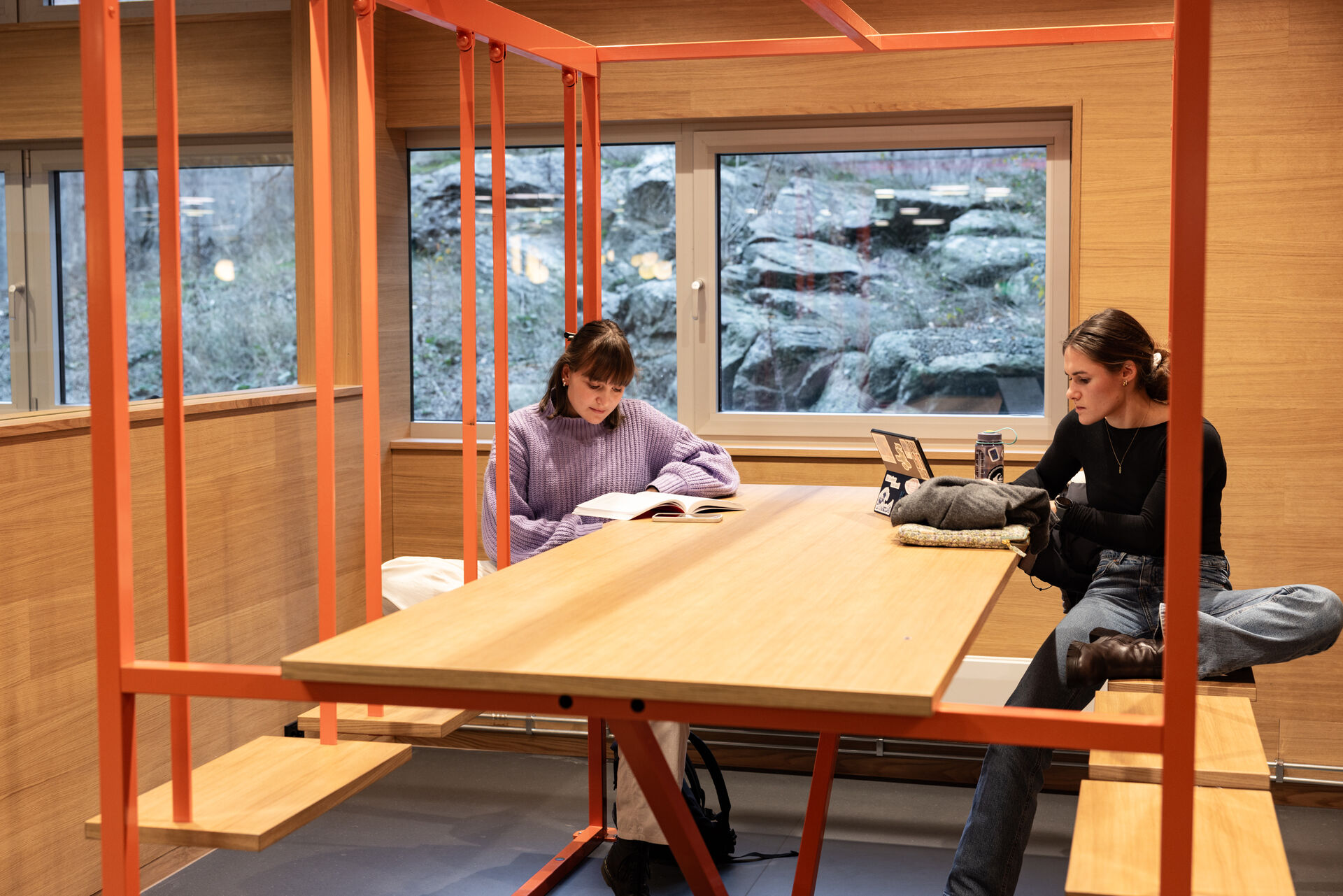
Studying, socialising and meals
The student cafeteria has been voted the best in Norway several times. But it's been over 20 years since its last facelift. With an average of 3000 guests every day for forty weeks a year, that kind of traffic can take a toll. Refurbishment has been ongoing in phases since 2022, and now, in November 2024, only a few finishing touches remain.
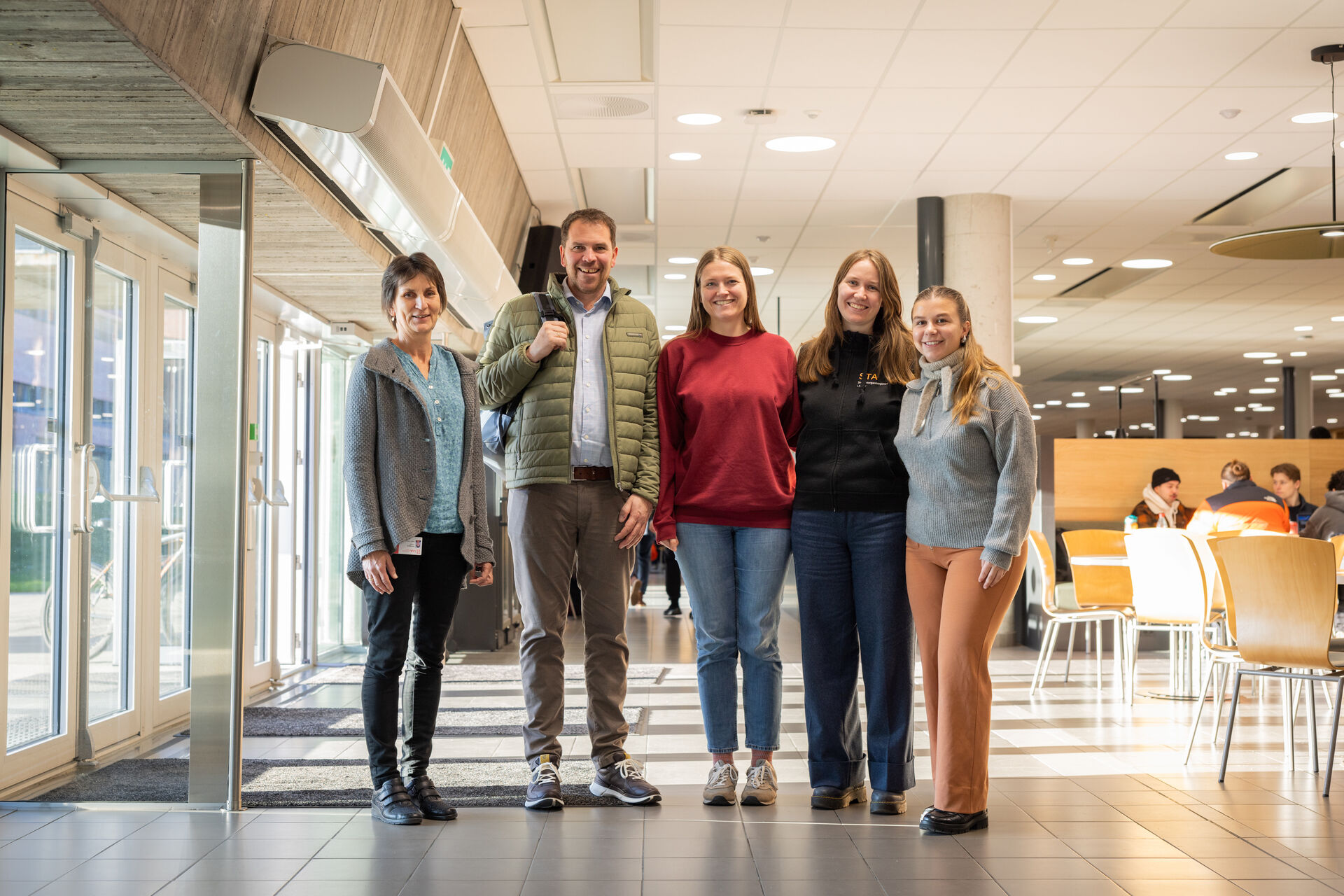
"It's incredibly important to us that students are involved in decision-making. They know how they spend their time, and we want them to be satisfied," says project leader Torill Gjelsvik.

Two representatives from the Student Organisation of Agder (STA) have been part of the working group to ensure that students' voices are heard.
"For us, it's important for us that the cafeteria has an inclusive design and is accessible to everyone. It should serve more purposes than just a place to eat lunch. We want the cafeteria to be used both as a social space and a study area," says STA Deputy President Lisa Kjosnes Fredsvik.
Invisible reuse
UiA recently received the Eco-Lighthouse certification, which means extra attention is given environmental considerations, and this focus was also evident in the new cafeteria.
"Our goal was to buy as little new stuff as possible. When we did have to buy something new, we wanted to prioritise longevity and quality," says UiA Environmental Adviser Katharina Reionn Bjørnestøl.
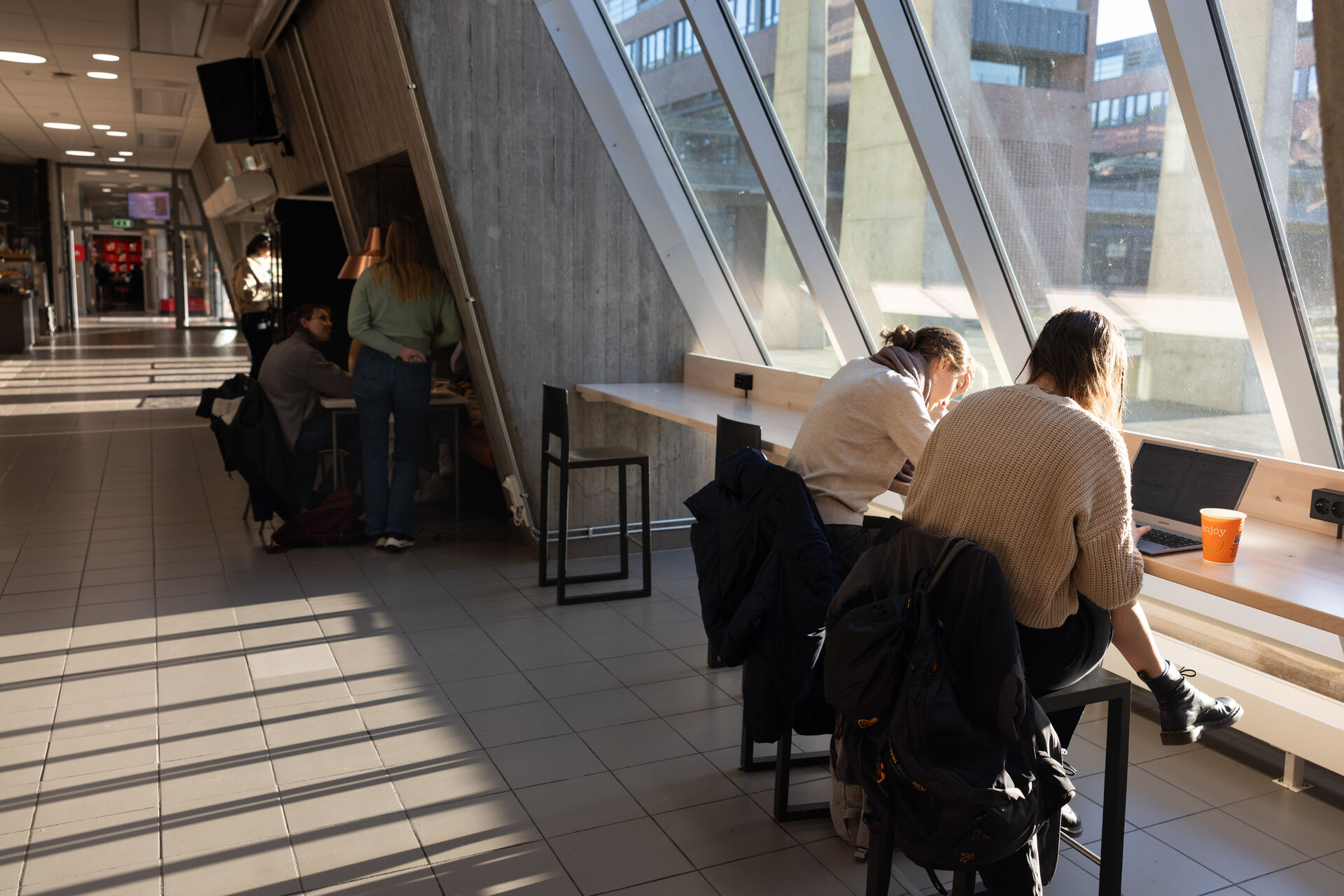
The result is that all the old tables in the cafeteria have been refurbished, and chairs have been reused. Benches have been converted into high tables, and old sofas have been reupholstered. Chairs in the lounge area have been re-covered, and lamps in the coffee bar have been reused.
"It all looks new. I don't think anyone would realise that this is reused," says Bjørnestøl.

Increased seating capacity
The acoustics have improved, and the hum of hundreds of voices now feels more subdued. The cafeteria also offers more seating than before. Previously, it had 600 seats, but this will increase to 635 when the final touches are completed. For events, it can accommodate 400 people without needing to move many tables, and it can be expanded to 500 seats for larger events.

Special tables for chess and table tennis also help the cafeteria feel like more than just a place to eat.
"We're very pleased with how it turned out. It's great to hear that students feel prioritised in the new cafeteria," says Gjelsvik.
Interior architect for the project was Ratio Architects AS.