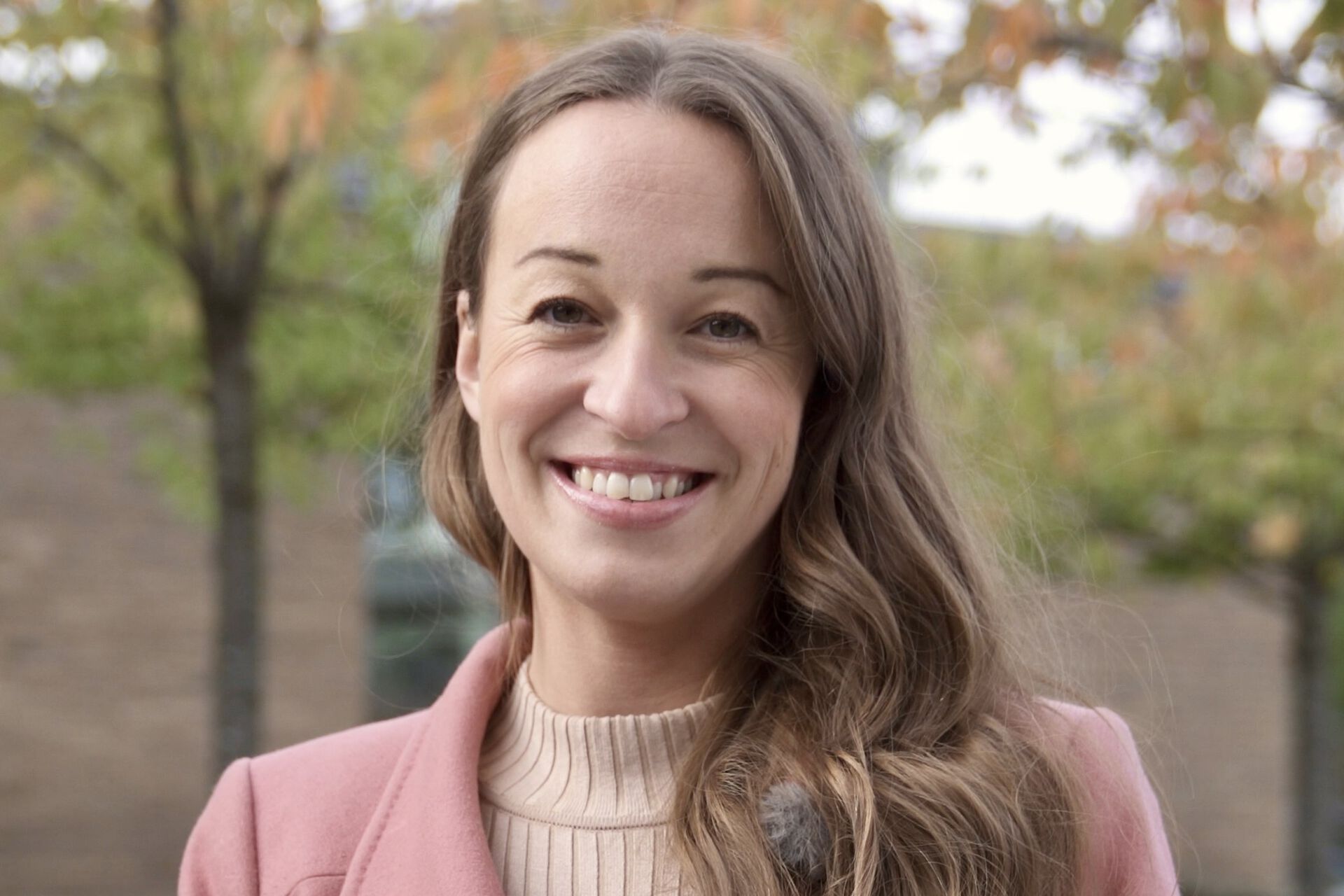
"We may tend to view Norway as a country with a high level of equality and justice, but the reality is that we also have issues with racism, discrimination, harassment and sexual assault," says Beate Goldschmidt-Gjerløw at the University of Agder.

Together with Audrey Osler from the University of South-Eastern Norway, Goldschmidt-Gjerløw is the editor of the book Nordic Perspectives on Human Rights Education.
In this book, several Nordic researchers explore how human rights education can be made more relevant and closer to reality.
The idea for the book emerged during a national conference on social studies held at the University of Agder in 2020.
"I realised that a book that brings together different perspectives from Norway and the other Nordic countries was lacking, especially one that takes a critical look at how human rights are taught," says Goldschmidt-Gjerløw.
Norwegian violations
The Nordic countries have an international reputation as champions of human rights. That makes it easy to lose sight of our own challenges, the editor says.
"If students only learn about human rights violations in other parts of the world, we may lose sight of the challenges we have at home. It’s important that teaching takes our own realities into account," she says.
An area of human rights that often goes unnoticed in Norway is the rights of indigenous peoples. The book includes a chapter on this topic.
"Many people believe that Norway doesn’t have a colonial past, but in reality, our treatment of the Sami people has strong parallels to colonialism. Sami land was seized, their culture oppressed, and their rights were systematically ignored."
Goldschmidt-Gjerløw cites the ongoing conflict over wind farms in Fosen, Trøndelag, to illustrate how the rights of indigenous peoples are being violated in Norway today.
"The Fosen case demonstrates that human rights violations still occur, even in a country that claims to champion human rights. This is a clear example of how the civil and political rights of indigenous peoples are not being upheld," she says.
Legal knowledge
Goldschmidt-Gjerløw believes that having knowledge of laws and rights is crucial for students to actively use human rights in their everyday lives.
"If students are familiar with the laws, they can better stand up for their rights."
She also points out that understanding rights can be particularly useful in sensitive cases such as sexual harassment.
"In my own research, I found that students often have little awareness of their rights, especially when it comes to sexual harassment and abuse. Without knowledge of their rights, it becomes difficult for them to speak up or take necessary action," she adds.
However, legal knowledge is not always enough. Teachers must also teach about how emotions can both drive and impede standing up for justice.
"Speaking out about human rights violations, whether it is about sexual assault or indigenous rights is never uncomplicated. Even if you speak up, you’re not always heard. Though legal knowledge can lay the foundation for resistance, it may not necessarily override all forms of power," she says.
The role of teachers
If there is one common feature of human rights education in the Nordic countries, it is the crucial role played by teachers in determining the importance given to this topic.
"The education students receive is often influenced by the background of their teachers. It is more natural for teachers with a legal background to emphasise human rights," Goldschmidt-Gjerløw says.
The book is intended to support teachers, student teachers and researchers who are concerned with social justice in education. The editor believes that human rights education needs be included as part of teacher training.
"Many teachers say that they would like to have greater competency in this area. If we give more space for it in education, we will have teachers who are confident in delving into the learning objectives related to human rights," she says.
The book Nordic Perspectives on Human Rights Education is published by Routledge.