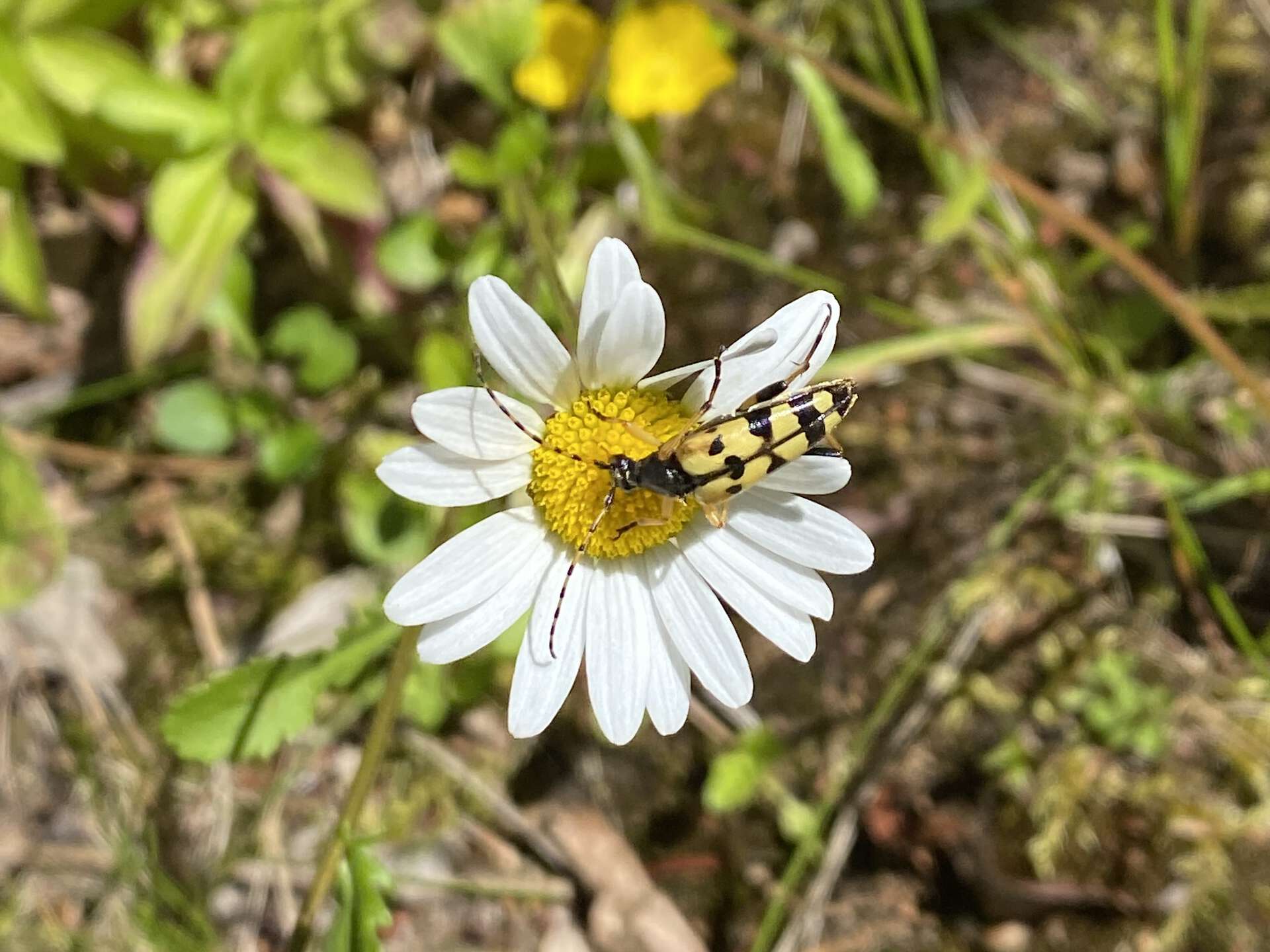
“Already in the first year, we saw the effect of the meadow being mown late in the season,” says Associate Professor Jorunn Larsen from the Department of Natural Sciences at the University of Agder.
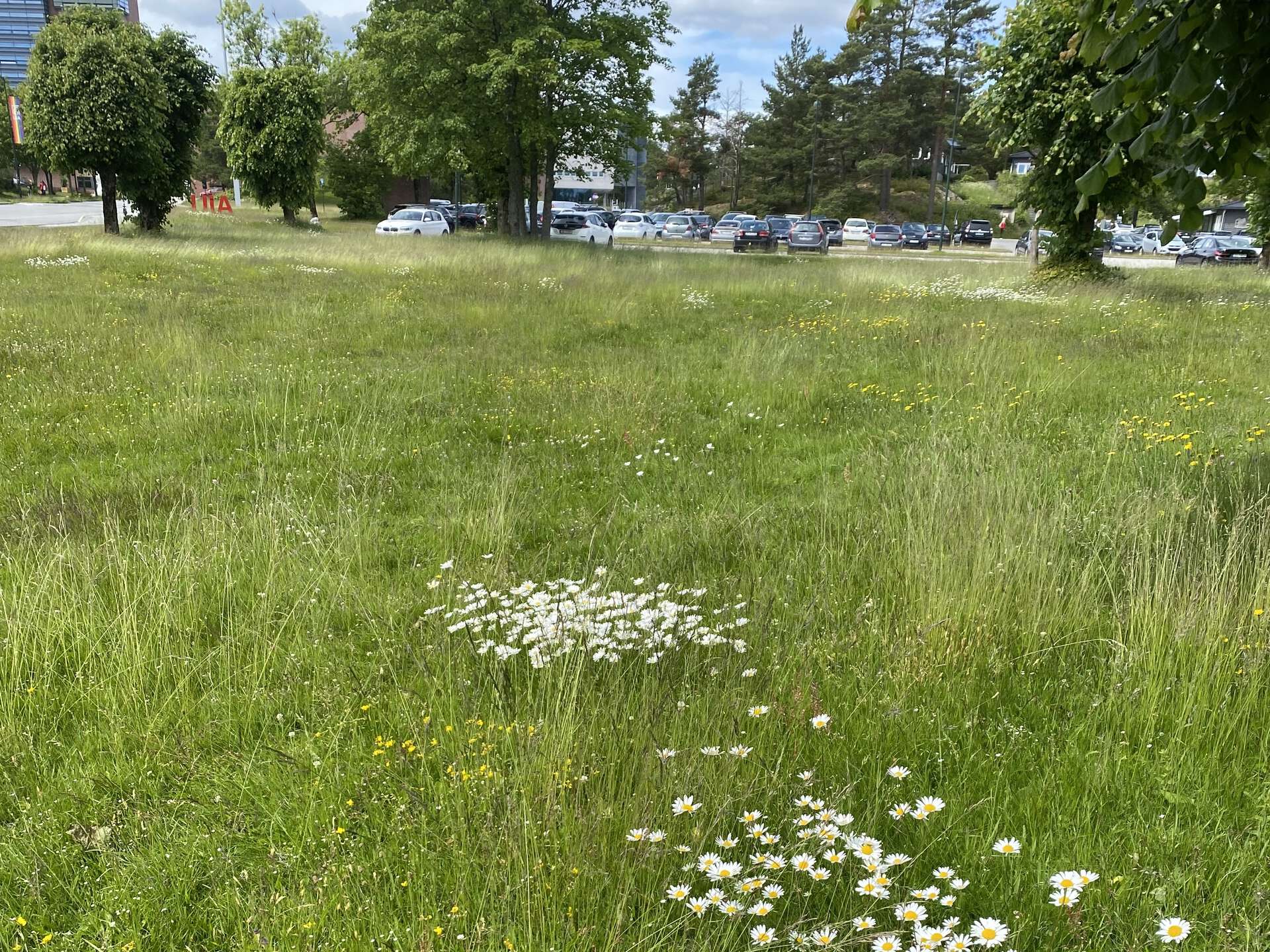
Since spring 2024, several of the lawns at Campus Kristiansand have not been cut before mid-June at the earliest. The aim is to give insects better access to pollen and nectar early in the season, and to allow plants to flower and set seed.
The initiative is one of several aimed at preserving and promoting biodiversity at the university campuses in Kristiansand and Grimstad. This year as well, lawns and meadows will be left untouched for the coming weeks.
This is the case:
- Over 50 plant species have been recorded in one of the meadows around the campus, where the grass has not been cut before August over the past two years.
- The most common species include harebell, oxeye daisy, yarrow, red clover, bird’s-foot trefoil and dandelion.
- Three new species were identified in 2025: knapweed, sheep’s sorrel and devil’s-bit scabious.
- The surveys have been carried out by associate professor Jorunn Larsen from the Department of Natural Sciences at the University of Agder.
- University of Agder’s biodiversity working group is working to preserve and enhance species diversity on and around the Kristiansand campus.
- Other measures include installing bat boxes, planting wildflower meadows, and improving conditions for hedgehogs, woodpeckers and salamanders.
🌸 More about UiA's biodiversity project
Mapped square by square
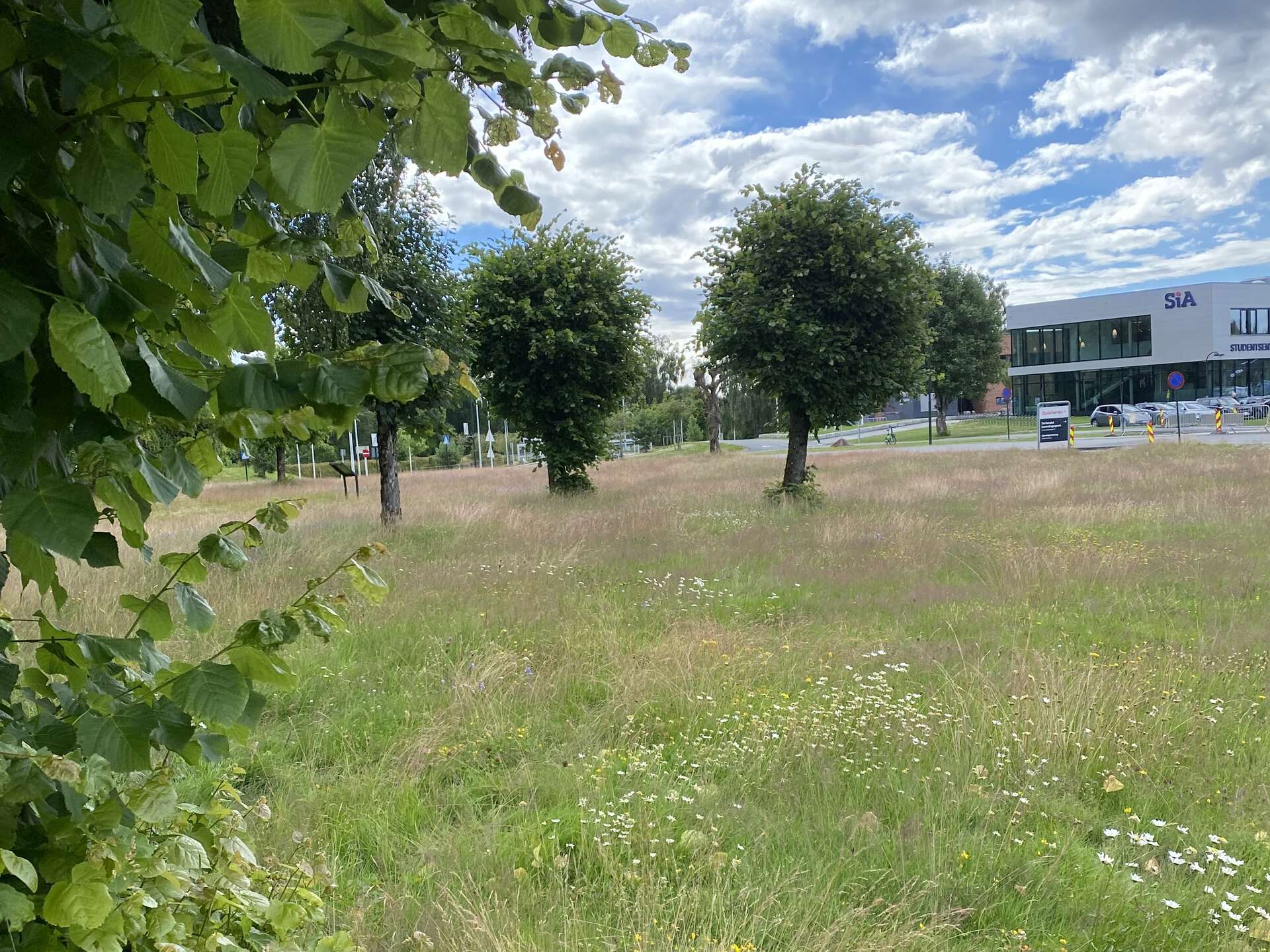
The meadow by Building 10, located at the entrance to the campus area on the right towards Jegersberg farm, has only been cut once a year, in August.
This is where Jorunn Larsen has carried out her research.
“In 2024, I surveyed 41 plots in the meadow, each measuring 1x1 metre. I identified all the plant species and estimated the coverage of each species in every plot,” she says.
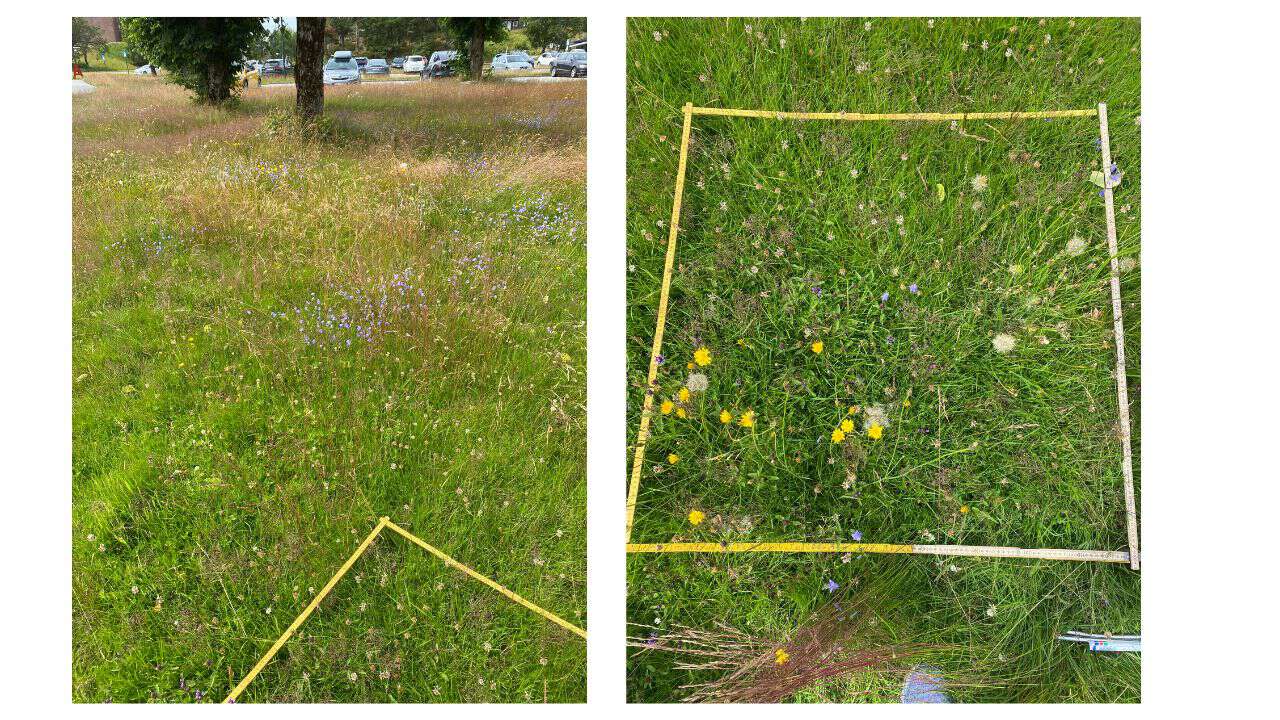
In 2025, Jorunn Larsen revisited the meadow. This time, she looked for the same species as the previous year and recorded any new ones. In total, there were now just over 50 plant species in the meadow.
Among the most common are harebell, yarrow, oxeye daisy, red fescue, common bent, ribwort plantain, red clover, white clover, bird’s-foot trefoil and dandelion.
Three new species appeared
In 2025, species were also recorded that had not been observed the previous year: knapweed, sheep’s sorrel and devil’s-bit scabious.
“It is possible that these three species were already present in the meadow in 2024, but that they were not found in the 41 plots that were surveyed, or that I simply did not notice them elsewhere in the meadow because they were not flowering,” says Jorunn Larsen.
She points out that some species need time before they can flower.
“Devil’s-bit scabious and knapweed take time to develop a leaf rosette before they can flower, and may have needed more than a year to produce flowers after mowing of the area several times during the summer season stopped in 2024,” she says.
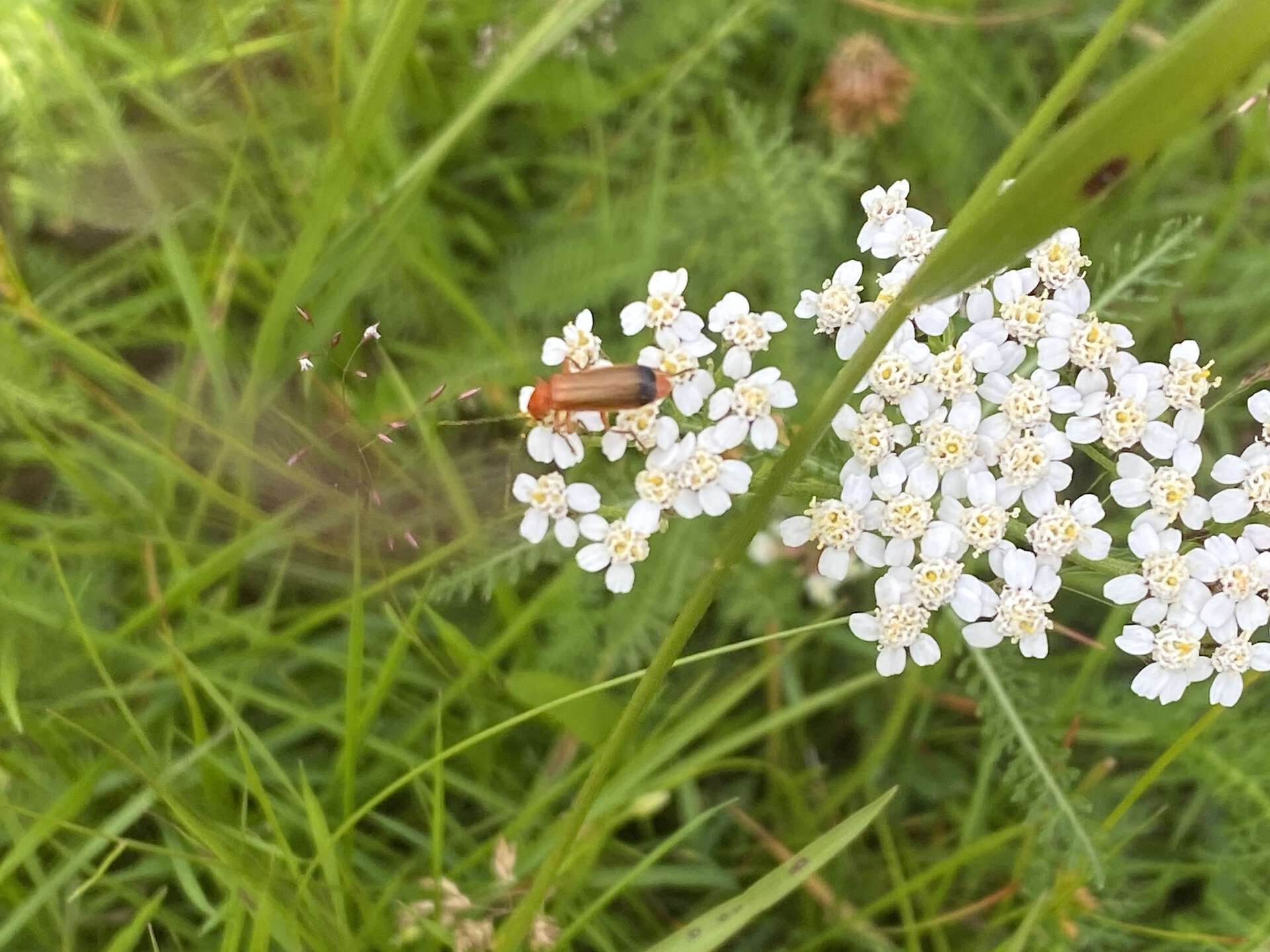
Jorunn Larsen also believes that several of the plants may have been present without being noticed. Species such as harebell and oxeye daisy may have existed in the meadow for years as a leaf rosette, a low cluster of leaves without a flowering stem, without being able to flower.
“They need time to develop flowers and set seed, and they do not get that opportunity when the meadow is regularly cut,” she says.
Some species should be removed
However, not everything growing in the meadow is equally desirable. Larsen has recorded species such as ground elder, creeping yellow loosestrife and rough hawkbit. These are among the most persistent and common plants in Norwegian gardens.
“These species spread easily and can outcompete many of the other species in the meadow. Therefore, they should be removed where possible,” she says.
She also mentions common silver moss, which thrives in areas that are frequently mown or grazed.
“It is therefore expected to become less common when the meadow is only cut once in August,” says Jorunn Larsen.
Campus areas as a living classroom
Not all grass on campus is left to grow freely. The large lawn between the faculty buildings is mown as usual.
“Skipping regular lawn mowing is a simple and effective measure to support biodiversity on campus. It provides food for insects and time for plants. It costs little but makes a big difference,” says Environmental Adviser Katharina Reionn Bjørnestøl at the University of Agder.
She leads the university’s biodiversity working group, which includes biologists, staff from the Natural History Museum, the estates department, and the Student Organisation in Agder.
Safe habitats for bats, wildflower meadow planting, and improved conditions for hedgehogs, woodpeckers and salamanders are among the other ongoing initiatives.
“The idea is also that campus areas can function as living classrooms, in addition to supporting a species-rich environment that benefits health and well-being for everyone,” says Bjørnestøl.
Good reasons to skip mowing the lawn in May
Jorunn Larsen uses the areas around the campus for teaching about insects and botany to students in the natural sciences within teacher and early childhood education programmes.
She believes the findings can also inspire others to leave grass uncut in the coming weeks, including the somewhat irritating dandelion, which is now spreading in many people’s lawns.
“The more species and the more wildflower meadows, the better. And it doesn’t take much. Our gardens have become poorer, with more decking, paving stones and artificial grass. That’s a shame, because garden plant species have actually accounted for a large share of what flowers and provides important nutrition for insects and life in nature,” she says.
Contact the researcher:

- jorunn.larsen@uia.no
- Phone
- +47 48 22 78 16