"Friction can arise when there is no established understanding of what constitutes progress", says researcher Maria Tønnessen Frivold.
She recently defended her doctoral thesis at the University of Agder. In her research for the degree, Frivold has examined the green transition and business development in various regions.
The aim was to examine how conditions in a given area can act as a driving force or a barrier to the transition.
"Businesses do not set up in a vacuum. They enter a region with a history, existing industries, expertise, culture, networks and established forms of collaboration. These regional resources can help with transition, but they can also make it more difficult", says Frivold.

The Morrow Case
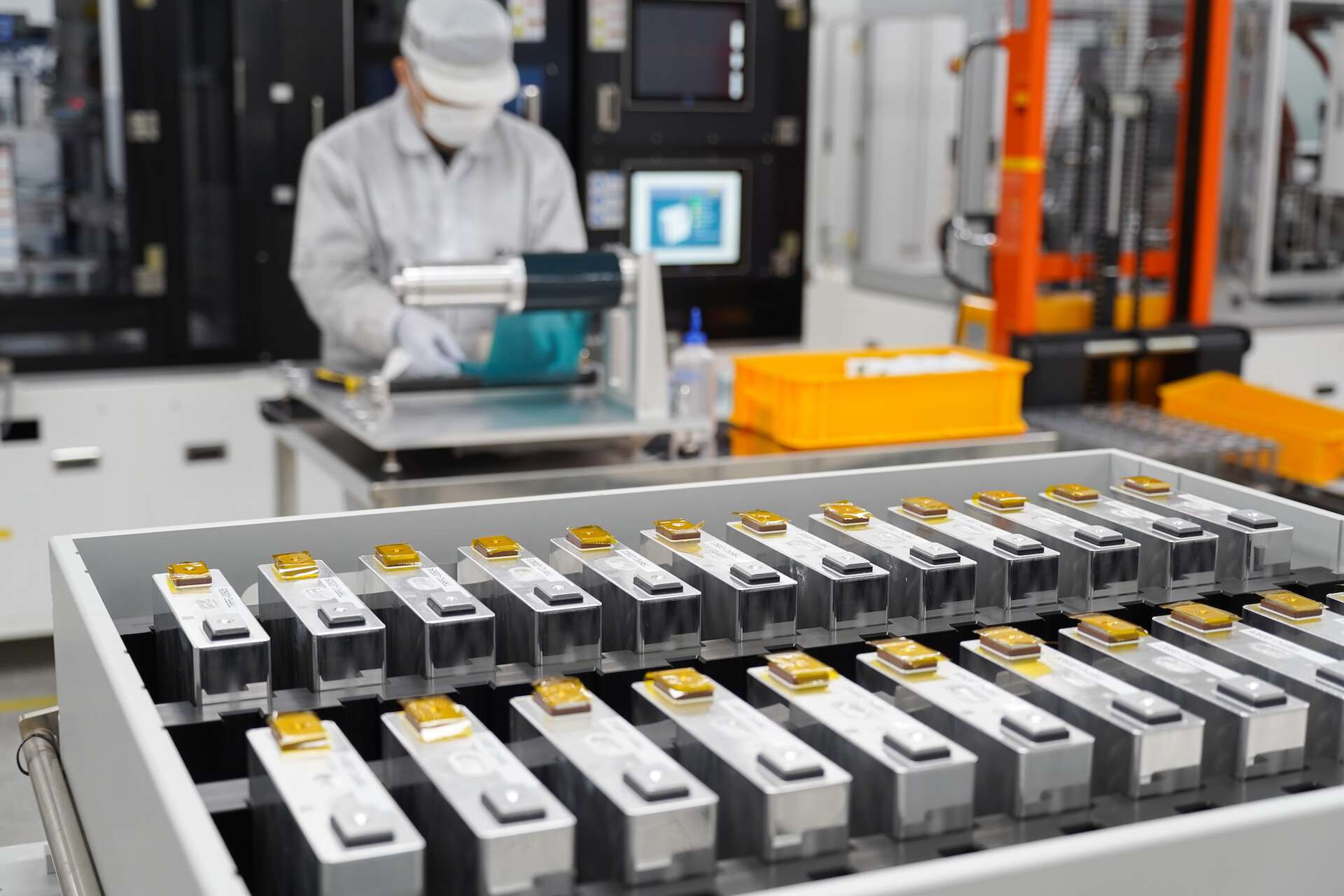
When the battery factory Morrow Batteries went into bankrupt in May, there was no shortage of people keen to express various versions of ‘I told you so’.
Norwegian battery cell production in Arendal had been a hot topic in local debate for years. Many believed that the major venture, involving investments in the billions, was a pipe dream. In an interview in January 2025, the Mayor of Arendal, Robert Cornels Nordli, expressed his frustration at the tone of the sceptics:
“We really must stop this now. We need to cheer on the things that are actually going well. Both in Arendal and across Southern Norway, because that’s what will take us forward,” Cornels Nordli told NRK.
This quote highlights some of the challenges involved in establishing new industries.
“Without shared points of reference, it is difficult to agree on when something is actually going well. Where delays are seen as normal by some, others may view them as proof that the project is not delivering,” says Frivold.
Cultural reuse
Frivold wanted to examine how varying degrees of interaction between culture within the industry and the region influence the green transition. She took three industries in Agder as her starting point: two well-established ones – the oil and gas industry and the process industry – as well as the aforementioned battery industry.
The research is based on interviews conducted as part of a broader study on the green transition in Agder. These have been supplemented by local media coverage and public reports.
The findings show that the industries with long-standing traditions in Southern Norway value many of the characteristics that also define the broader Agder culture. Among the values held in high regard are:
- Practical problem-solving
- Reliability
- Efficiency
- Predictability
- Measurable results over time
When established industries are to become greener, it is easiest to build on what they are already good at: efficiency improvements, technological development and measurable improvements.
This makes the transition easier to justify, but can at the same time make it more difficult to make major breaks with the status quo. The challenge is that gradual improvements are not necessarily enough to achieve the climate targets, says Frivold.
Through the Agder Regional Plan 2030, the county council’s aim is to reduce total greenhouse gas emissions by 55 per cent by 2030, compared with 2017 levels.
Credibility at stake
Traditional industries are accepted for going green, as long as it is in line with well-established values and methods.
The battery industry has a different starting point. Here, the common benchmarks for what counts as credible progress are less well established. Delays or changes to plans can therefore more easily be interpreted in different ways, and support for a new industry may become more contentious.
"For a completely new industry, it is not enough simply to build a factory, raise capital and develop technology. A shared understanding must also be developed of what constitutes realistic progress, which milestones actually demonstrate progress, and how risks should be assessed."
Until such benchmarks are established, a new industry may be more vulnerable to criticism and a loss of legitimacy.
Must find its place
For Frivold, the point is not that culture alone determines whether a green initiative succeeds or fails. But culture influences what stakeholders perceive as credible, realistic and legitimate, and thus also which types of transition are easier or more difficult to implement.
“We talk a lot about the more tangible prerequisites for developing new green industries: electricity, land, capital and expertise. But a new industry must also find its place in a region that already has a history and established expectations of what constitutes good business development. Cultural factors must therefore also be taken seriously when we seek to understand the green transition,” says Frivold.