Norwegian
version of this page
Society, Space, Psychosocial Health (SSPH)
SSPH is an interdisciplinary research group that focuses on the relationship between social conditions, physical environments, and psychosocial/mental health in the population.
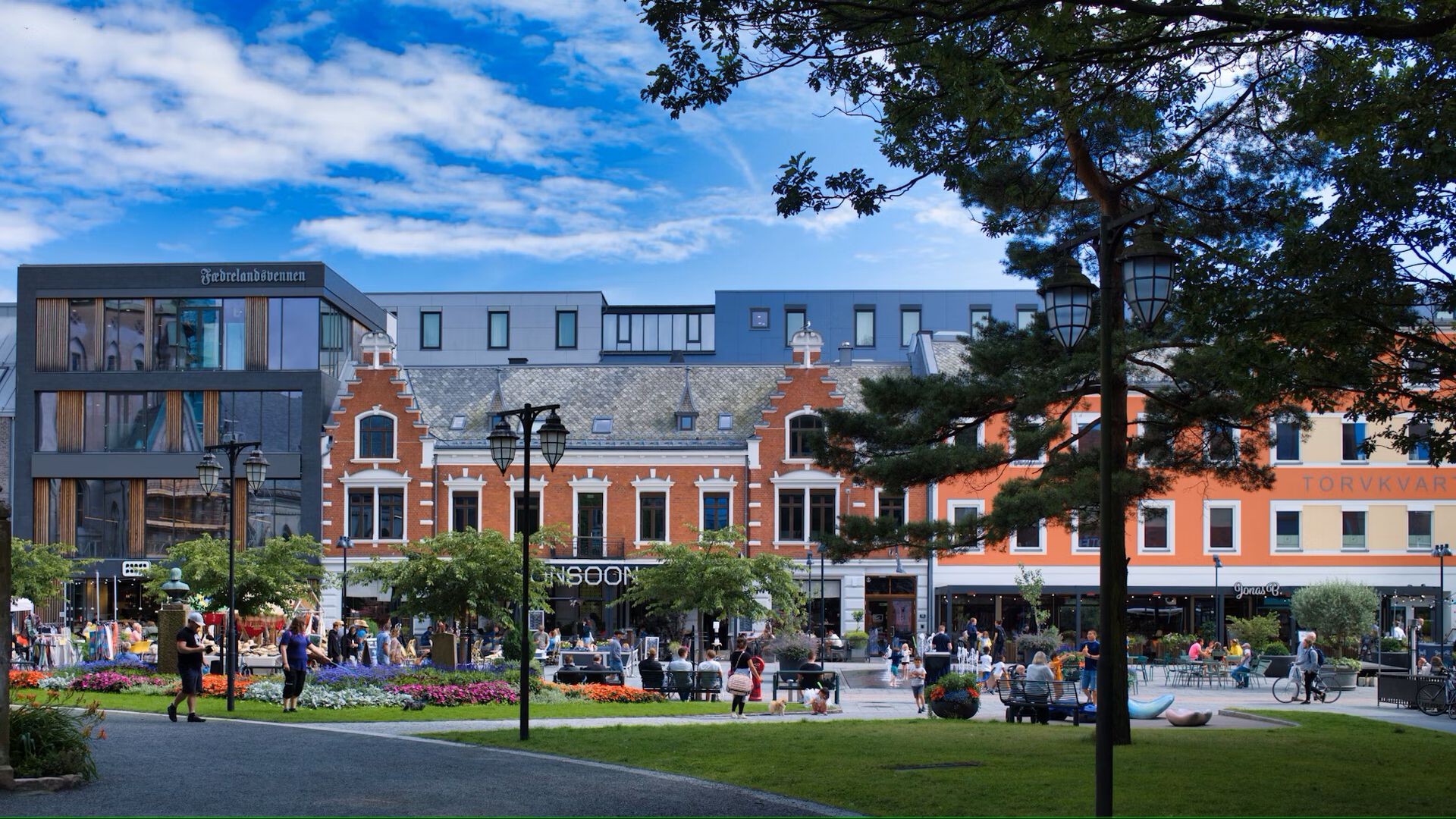
Our research focuses on living conditions and human rights. Some of the main areas of the group's research are:
- How socioeconomic factors and community structures affect people's mental health and well-being
- The significance of places, architecture, and physical environments for mental health
- How laws, policies, and practices uphold or limit people's rights related to the CRPD (Convention on the Rights of Persons with Disabilities)
- Developing and evaluating the capability approach within health and social services
We also study recovery processes for people with psychosocial challenges, as well as relevant services. Both qualitative and quantitative methods are used in the group's projects.
PhD Programme in Health and Sports Sciences
Ongoing projects
Projects:
- Discrimination and public health
- Home and outreach services
- Recovery promotion and/or hindering
PhD projects:
- Dignity and social sustainability in the new institutional landscape (PhD research fellow, Ellen Flaaten)
- Complaints on health care services (PhD research fellow, Alison Axisa Eriksen)
- Self harm study (PhD research fellow, Anne Lene Årseth)
Joint venture partners
Selected publications
Publications
-
Strømland, Monica; Larsen, Inger Beate; Fredwall, Terje Emil & Topor, Alain Pierre
(2026).
Non-Recovery Stories: Relational and Structural Constraints on Recovery.
Journal of Psychosocial Rehabilitation and Mental Health.
ISSN 2198-9834.
p. 1–16.
doi:
10.1007/s40737-026-00540-z.
Full text in Research Archive
Show summary
Abstract: Recovery research has mainly focused on optimistic, progress oriented narratives, yet such accounts often overlook experiences in which recovery is hindered rather than supported. This study examines non‑recovery stories as told by people with lived experience of recovery from mental health challenges and/or substance use in Norway. The aim was to explore how participants describe situations hindering recovery, and to develop knowledge about barriers embedded in everyday service encounters and wider welfare arrangements. The article draws on qualitative data collected in 2019 through focus groups, paired and individual interviews with a total of 29 participants. A reflexive thematic analysis was conducted. For the purposes of this paper, we selectively analysed interview segments in which participants described non‑recovery situations. Three overarching themes were developed. The first captures how medication was frequently prioritised over listening, dialogue and relational continuity. The second theme concerns encounters with professionals characterised as distant, unavailable or procedural, “like talking to a wall”, which participants experienced as invalidating and as barriers to trust, recognition and engagement. The third theme highlights how rigid welfare structures, bureaucratic demands, unstable housing and economic precarity shaped everyday life conditions, producing cycles of discontinuity, insecurity and abandonment that undermined recovery. The findings show that recovery is shaped as much by social, organisational and material environments as by individual capacities or clinical interventions. Attending to non‑recovery stories broadens understandings of recovery and underscores the need for service models that address the relational and structural conditions within which recovery is expected to unfold.
-
Topor, Alain Pierre; Bøe, Tore Dag; Hope, Øyvind Johannes; Ness, Ottar & Friesinger, Jan Georg
(2025).
The New Institutional Landscape for People with Mental Health Problems.
In Boyd, Candice P.; Boyle, Candice P.; Bell, Sarah L.; Högström, Ebba; Evans, Joshua; Paul, Alak & Foley, Ronan (Ed.),
Routledge Handbook on Spaces of Mental Health and Wellbeing.
Routledge.
ISSN 9781032385761.
p. 430–445.
doi:
10.4324/9781003345725.
Full text in Research Archive
Show summary
De-institutionalisation can be analysed as the closing of total institutions and the creation of new landscapes at the disposition of persons with mental health problems. These landscapes are everybody's landscape, the cities' cultural, social and commercial offerings, and natural places. It is also a new institutional landscape constituted of social and treatment places. Much attention has been given to the ‘landscape of despair' created in neo-liberal societies, characterised by diverse forms of abandonment. Studies have also focused on specific enabling places. However, a place's role in a person's life depends on the presence of other places. In this chapter we describe and analyse the total institutional landscape in a region of Norway, a welfare society. We found a tight network of places, including the reminiscences of total institutions, and of new social and cultural places. Together they build a rich network of potentially enabling places, but also of tight control.
-
Friesinger, Jan Georg; Flåto, Maja & Larsen, Inger Beate
(2024).
Et kritisk blikk på tekster om boliger for personer med psykisk helse- og/eller rusproblematikk: Ideen om den best egnete boligen (A critical perspective on texts about housing for people with mental health and/or substance-use problems: The idea about the most suitable housing).
Norsk sosiologisk tidsskrift.
8(5),
p. 1–16.
doi:
10.18261/nost.8.5.3.
Full text in Research Archive
Show summary
Siden begynnelsen av 2000-tallet har ulike boligløsninger for personer med psykisk helse- og/eller rusproblematikk blitt etablert i norske kommuner. I denne studien har vi brukt en diskursiv tilnærming og analysert tekster (forskningsrapporter, kommunale dokumenter og veiledere) om slike boliger. Våre funn viser at beboerne beskrives som «forskjellige fra oss», som noen som tilhører en gruppe hvor alle har «samme behov», og som trenger «unormal normalitet». Videre synliggjør tekstene at boligene plasseres på steder utenfor ordinære bomiljø, at det benyttes robust materiale i utformingen, og at boligene skal være små. På den måten tegnes det et felles boligspråk om den best egnete boligen innen psykisk helse- og rusfeltet, som kan legitimere en rigid, kommunal boligpraksis. Artikkelen konkluderer med at slike boligmodeller bidrar til stigmatisering.
View all works in NVA
Participants
Tags:
Health and social care,
social sciences
Published
Apr. 25, 2024 11:52 AM
- Last modified
Apr. 14, 2026 11:30 AM