
“It will be a grand day with mathematics at the centre for pupils, students, teachers, and staff alike,” says Martin Nordskog, PhD Research Fellow in Mathematics Education at UiA and responsible for the programme.

Nordskog makes no secret of the fact that the visit from Gerd Faltings (71) of the Max Planck Institute for Mathematics—this year’s Abel Prize laureate, the world’s most prestigious award in mathematics—is a highlight. Faltings was awarded the prize "for introducing powerful tools in arithmetic geometry and resolving long-standing diophantine conjectures of Mordell and Lang"
“For me, and for all of us working with mathematics, the visit from the Abel Prize winner, the German mathematician Gerd Faltings (71), ranks extremely high. It is simply tremendous. Faltings is one of the most significant mathematicians of our time. He is a global celebrity within the mathematical community,” Nordskog says.
See the laureate’s reaction when he learned that he had been awarded the Abel Prize.
One of the greatest mathematicians of our time
Nordskog explains that Faltings’ fundamental research in arithmetic geometry and number theory has had major implications for how the modern world functions. Without this type of foundational research, modern encryption, communication technology, and data security would look entirely different.
The Abel Prize amounts to NOK 7.5 million. It is funded by the Norwegian government, administered by the Norwegian Academy of Science and Letters, and awarded by Crown Prince Haakon at a ceremony in Oslo on Tuesday 26 May—before the laureate travels to Kristiansand and UiA three days later. There, he will give a dedicated Abel Lecture and meet mathematics interested children and young people from Agder as part of Abel Day at UiA.
Physical mathematics for ten year olds
At UiA, Gerd Faltings will be greeted by 400 ten year olds from across Agder for a day of physical mathematics activities on the Agora at Campus Kristiansand. The pupils rotate between activities developed for Year 5 and led by staff from the Department of Mathematical Sciences.
The programme is based on moving mathematics outdoors. Pupils solve logical tasks through exploration and problem solving, using their bodies to investigate geometric relationships. They will also take part in a geometric treasure hunt that challenges both reasoning and physical skills.
“We hope the programme showcases mathematics in a way that boosts motivation and confidence, especially for pupils who benefit from movement. By making theory physical and visible, pupils gain a deeper practical understanding while also practising collaboration and strategic discussion,” Nordskog says.
Selecting Agder’s best mathematics group
UiA will also welcome 200 of the region’s most dedicated upper secondary pupils specialising in mathematics. They will take part in two academic sessions: an escape room based activity developed by the department, and a programming and modelling session at the UiA Science Centre. At midday, all participants gather for lunch and a lecture by this year’s Abel Prize laureate before the groups switch activities.
In addition to academic enrichment, the groups will compete for the title of Agder’s Best Mathematics Group, awarded to the team that performs best in the day’s challenges.
Visit from the Minister of Research and Higher Education
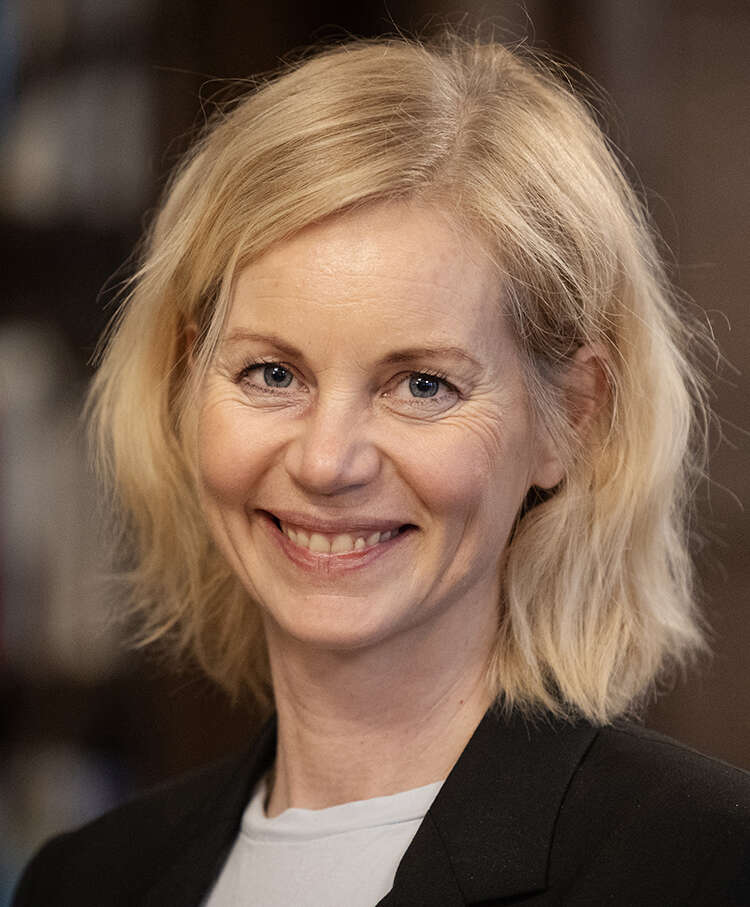
Minister of Research and Higher Education Sigrun Aasland will also visit UiA on this day. She will open Abel Day with an address to the pupils. Aasland has played a central role in the government’s new strategy for science and technology, aimed at strengthening interest and competence in mathematics and natural sciences throughout the entire education pathway, starting in 2027.
The strategy emphasises early enthusiasm for science in kindergarten, more practical teaching in schools, and increased investment in teacher professional development. It complements the upcoming admissions reform for higher education, also taking effect in 2027, in which the government retains science subject bonus points to reward pupils who choose demanding STEM subjects.