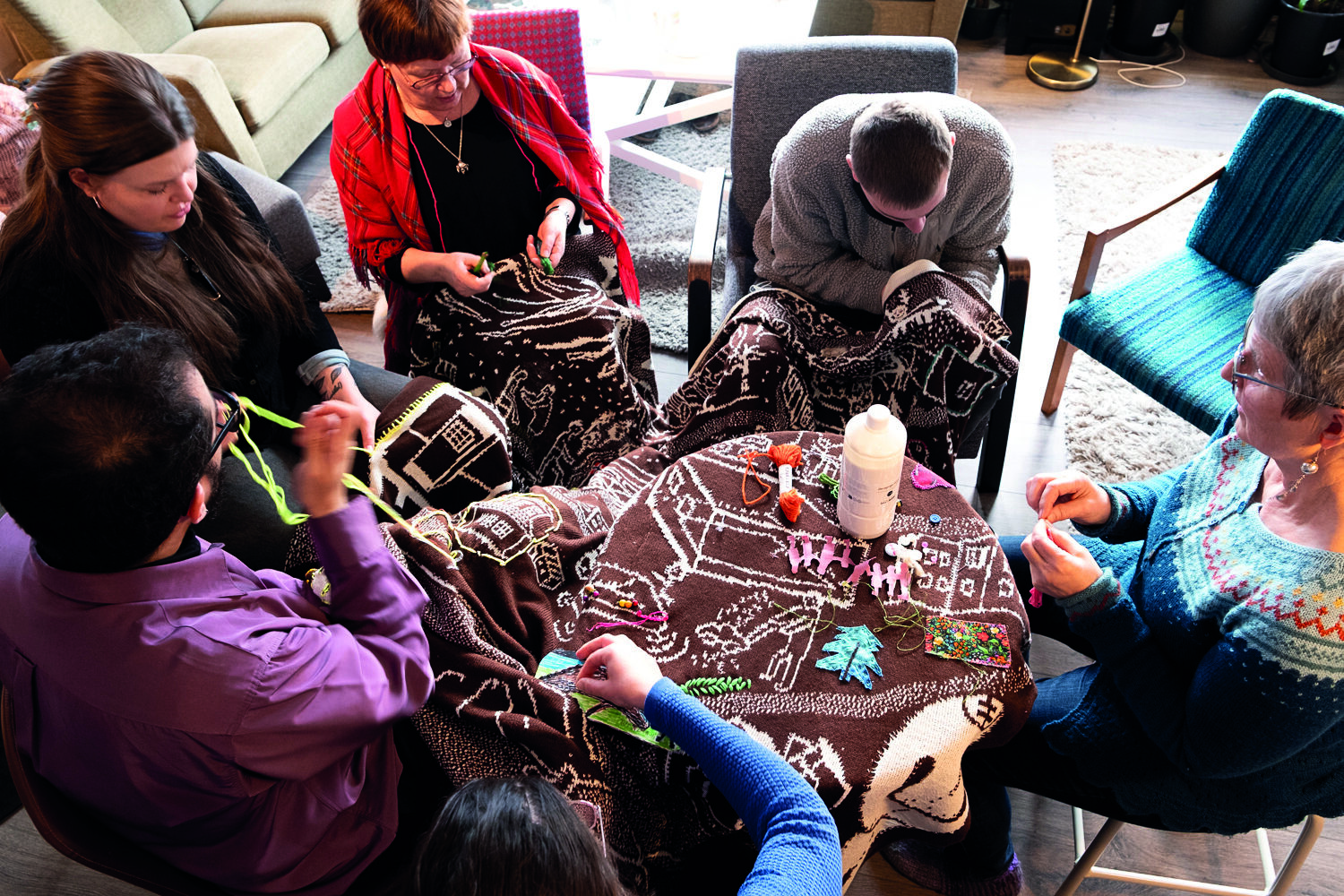
The work "Gieđa dievva ullut / A Handful Wool" is a participatory, cartographic tapestry developed by Eduardo Cassina in collaboration with Trastad Collection / National Center for Outsider Art (Sør-Troms Museum), and is exhibited at the Venice Architecture Biennale from May 10 to November 23, with the theme "Intelligence. Natural. Artificial. Collective."
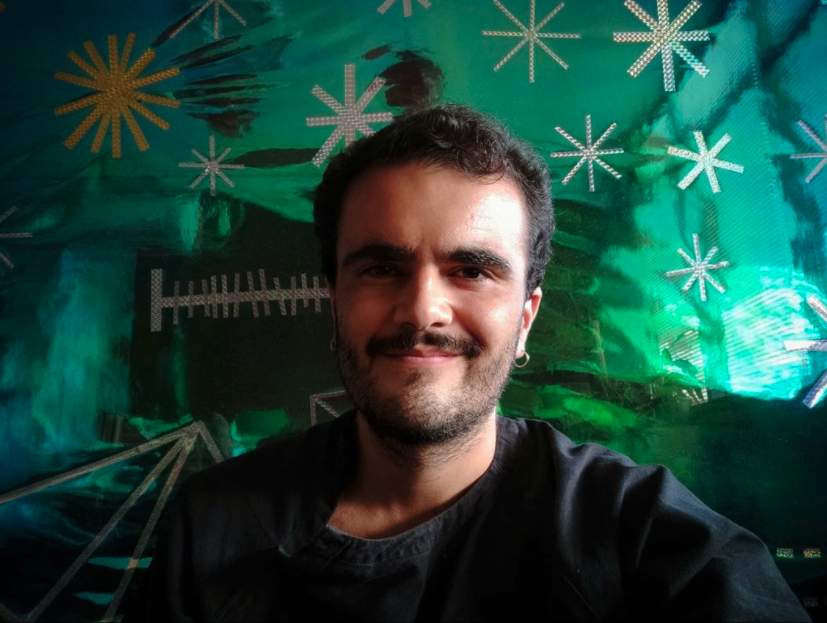
– It's a great honor to exhibit at what is one of the most prestigious platforms in the field, with over 250,000 visitors annually and global media attention. It's quite significant that work originating from UiA - and from Northern Norway - is represented there, says Cassina.
Eduardo Cassina is an urban planner, artist, and Ph.D. candidate at the Department of Global Development and Planning. In his research, he explores how artist residencies can be integrated into planning processes. He is focused on the intersections between architecture, urban sociology, and participatory planning, which is clearly demonstrated in the work "A Handful of Wool." It was curator Carlo Ratti who invited Cassina to the biennale as one of three contributors from Norway.
-and-eduardo-cassina.jpg)
The work has come into being through a collective process with contributions from many individuals. It is co-authored by Ragnhild Petrikke Gressnes, Anna Kristiansen, and Simone Romy Ritter. Other co-authors include Frode Eldevik, Eirik Eriksen, Vidar Eriksen, Anne Gerd Lehn, Ågot Hammari, Arne Johan Johansen, Nina Johanne Nupuk Johansen, Arve Kristiansen, Torstein Nilsen, Per Harald Pettersen, Mykola Pozhar, Tove Schjelderup, Mary Schrøder, and Anne Semb.
The stories of former residents and staff at Trastad Gård form the foundation for the motifs displayed on the tapestry.
Asked for "a handful of wool" to spin tapestries
The work explores the complex history of Trastad gård, formerly known as Nord-Norges Åndssvakehjem. The farm was a care institution for people with intellectual disabilities, established in 1954 following a grassroots campaign led by the rights advocate Margarethe Wiig. The campaign, which among other things requested "a handful of wool from each sheep in Hålogaland," collected 17 tons of wool that contributed to financing the construction.
Over the decades, Trastad became a place for educational experimentation and artistic creativity, eventually housing what is now Trastad Samlinger - Norway's National Center for Outsider Art, still located on-site. Following Norway's HVPU reform in 1991, the institution was abruptly closed, and many of the buildings fell into disrepair. Today, some have been transformed into a refugee reception center, an artist-driven activity center, or municipal storage, while others remain unused.
Today, Trastad Samlinger - Norway's National Center for Outsider Art is part of the Sør-Troms Museum. It showcases art created by former residents and an exhibition that depict the conditions both before and during the period when Trastad gård was an institution.
.-it-included-former-residents-nurses-doctors-and-teachers-(1).jpg)
Created collaboratively
The tapestry was crafted at Trastad through a series of collaborative workshops with former residents, retired staff, local caregivers, recently arrived refugees, and community workers. Participants drew, voted on, and embroidered personal and collective memories onto a map of Trastad, which was knitted using wool and glow-in-the-dark yarn - reflecting the original wool donation campaign and symbolizing enduring hope and resilience.
-(1).jpg)
The installation is mounted on a specially designed aluminum frame with integrated UV light, developed by co-author Eirik Eriksen. The work combines natural materials with technological innovation, aligning with the biennale's exploration of different forms of intelligence influencing the design of our built environments.
Exhibition details: Gieđa dievva ullut / A Handful of Wool
The 19th International Architecture Biennale in Venice: Intelligence. Natural. Artificial. Collective.
Arsenale, Venice, Italy
May 10 – November 23, 2025