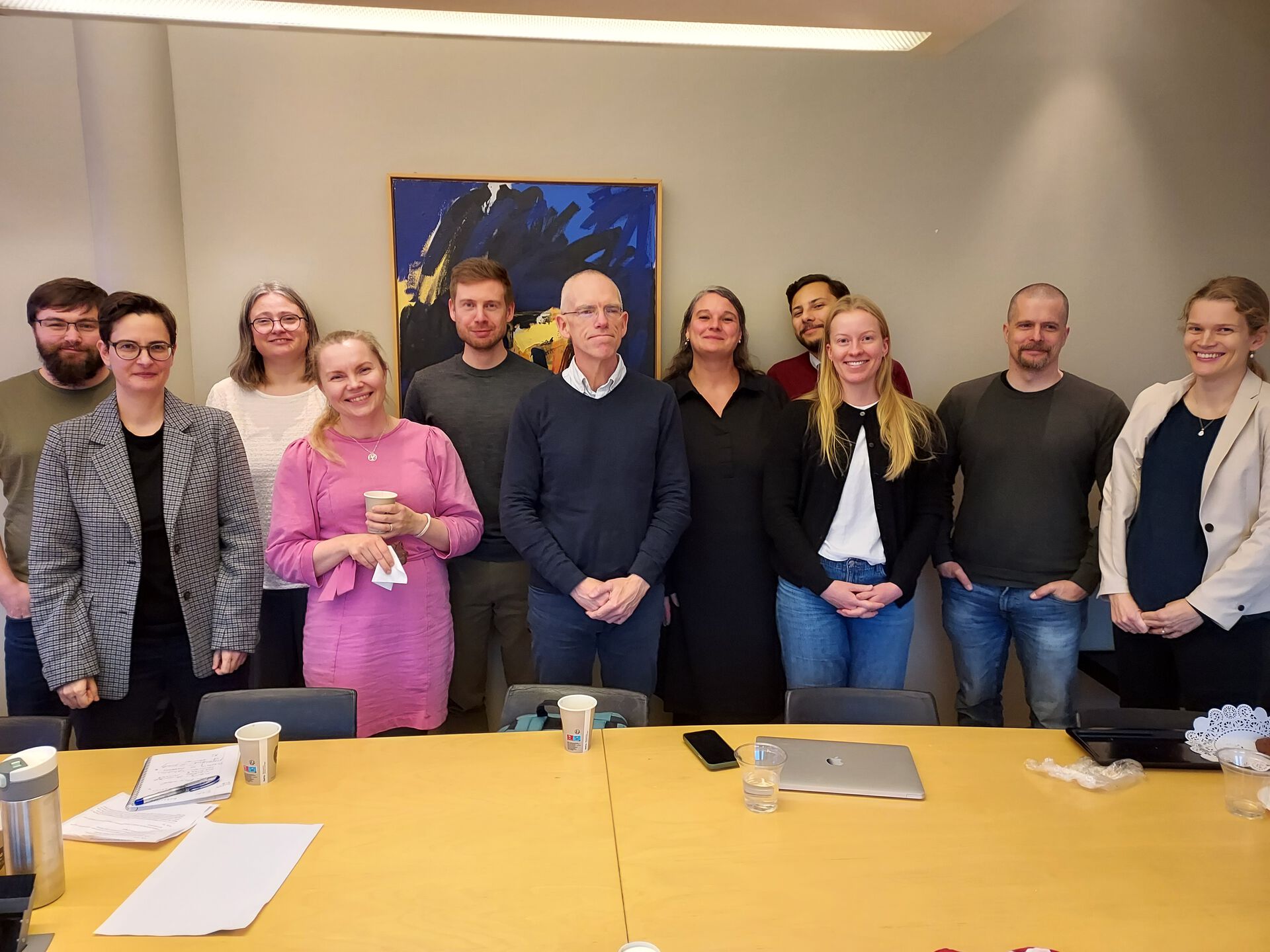
Tuesday November 11th, she and Anna-Liisa Rafael from the University of Helsinki visited the annual Claimed Pasts seminar, to discuss the current state and future of biblical studies. After a decade of critical theory and deconstruction, are the current changes in political and academic climates leading to a return to traditional, confessional biblical research?
Not really, but maybe somewhat, was the predictably multifaceted and conditional answer they reached together with local colleagues also from the research group Holy Scriptures and Authoritative Texts.
– Biblical studies have not shifted as much as expanded, Rafael explains. – And with that expansion comes differences.
Both her and Gudme see the current challenges to liberal academia and the humanities, but are hesitant to blame it on a conservative trend among scholars. Rather, Gudme argues, the threats to biblical studies as we know them come from declining student numbers and funding cuts.
Hence, both she and Rafael hold that it is more important to support the field, than to define too strict rules on how and what to do.
Text and photo: Nils H. Korsvoll