PhD-thesis
Supporting first-year nursing students’ learning experiences in nursing home placement – a qualitative study
- Trial lecture starts at 10:15
- Public defence starts at 12:30
Title of trial lecture: Discuss the benefits and limitations of collaborative models for learning in nursing students’ clinical placements.
Will be held in Norwegian: Diskuter muligheter og begrensninger ved samarbeidsmodeller for læring i sykepleierstudenters praksisstudier.
Read the thesis in AURA
Disputation chair: Associate Professor Dag Tomas Sagen Johannesen, Head of Department of Health and Sport Science, University of Agder
Assessment committee:
- First opponent: Professor Samuel Edelbring, School of Educatiom, Culture and Communication, Division of Special Needs Education, Mälardalens University, Sweden
- Second opponent: Professor Bodil Tveit, Institute for Nursing, Centre for Diaconia and Professional Practice, VID Specialized University
- Chair of the evaluation commetteee: Associate Professor Bård Bertelsen, Department of Psychosocial Health, University of Agder
Supervisors in the doctoral work:
- Main supervisor: Associate Professor Emerita Else Mari Ruberg Ekra, Department of Health and Nursing Science, University of Agder
- Co-supervisors:
-Professor Kristin Alstveit Laugaland, Department of Quality and Health Technology, University of Stavanger
-Professor Mariann Fossum, Department of Health and Nursing Science, University of Agder
Summary of thesis
Nursing homes are traditionally nursing students’ first place of clinical placement, introducing them to the nursing profession and the student role in placement. Clinical placements currently account for 50% of nursing education in Norway and are a central learning arena in the programme. During their placements, students apply theoretical knowledge, practical skills, clinical judgment, and ethical competence in interactions with patients, relatives, and healthcare professionals. In nursing homes, students gain both basic and specialised nursing competence for a growing group of elderly patients.
In my doctoral thesis, I researched the learning experiences of first-year nursing students in clinical placements in nursing homes. I also examined how supervision and assessment meetings between the student, nurse mentor, and nurse teacher (tripartite meetings), as well as a digital educational resource adapted to the placement period, can support students' learning. The aim of the thesis is to contribute new knowledge about clinical placements in nursing homes as a learning context in nursing education.
The knowledge in the thesis was generated through participatory observations, interviews, and group interviews with first-year nursing students at three nursing education institutions in Norway. The findings highlight the importance of being prepared before nursing home placements. Reflection is emphasised as an important tool for learning nursing in clinical placement. The students experienced developing nursing competence and professional identity by reflecting on patient situations in nursing home placements. Reflection in placement facilitates active learning and supports the development of lifelong learning competence.
Supervision and assessment with feedback serve as valuable pedagogical tools to support and confirm students' learning and development throughout the placement period. Tripartite meetings can be valuable learning situations in themselves. Students are often confronted with strong emotions in nursing homes and therefore need emotional support in addition to academic and professional support. The findings show that all involved must actively participate in students' learning, both in everyday placement, in tripartite meetings, and in the use of digital educational resources.
The thesis recommends utilising the learning opportunities in nursing home placements. The uniqueness of what students learn in nursing homes and the learning experiences that clinical placements offer must be recognised. Given the expected increase in demand for nurses in nursing homes, it is crucial to provide nursing students with positive experiences in placement, as this can influence their future career choices. At a policy level, national quality standards for clinical placements should be established to support students' learning in practice and ensure the quality of nursing education. There is also a need for more knowledge about digital learning resources and other pedagogical tools that can enhance learning in placement. Different ways of organising clinical placements, including various supervision models, should also be further explored.
About the candidate
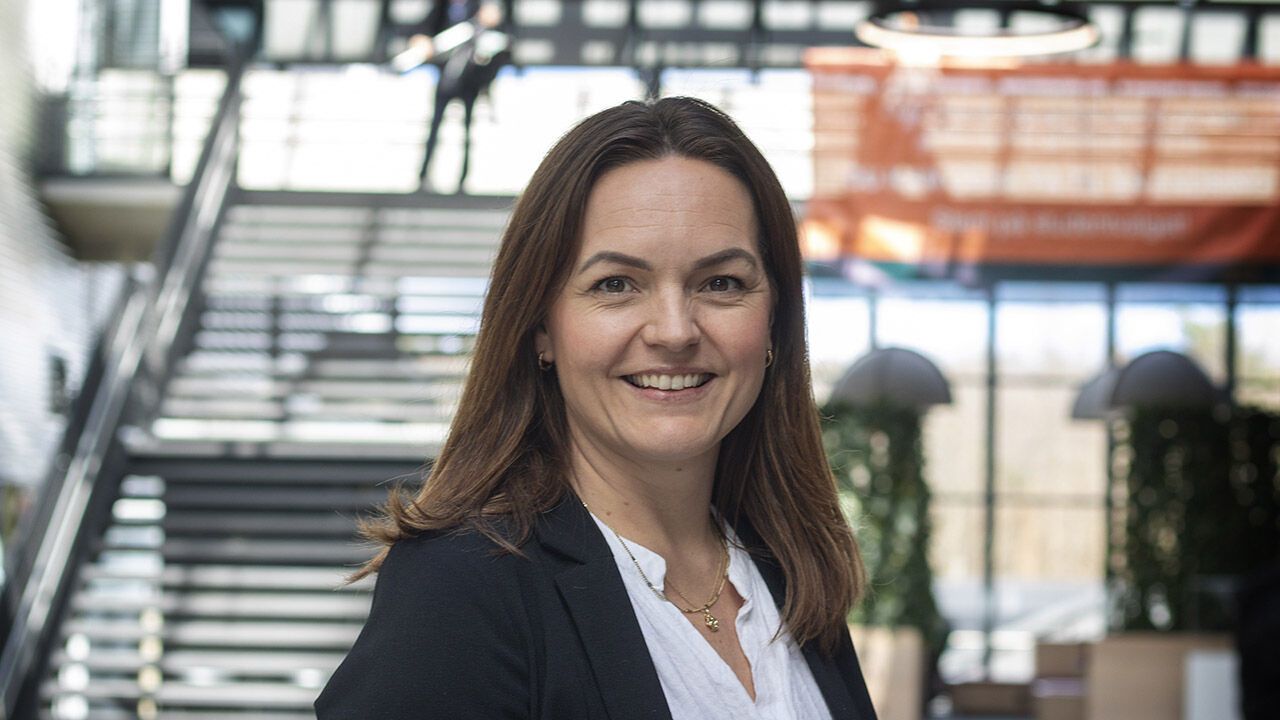
Ingrid Espegren Dalsmo (born 1981) graduated as a nurse from Trøndelag University College (now NTNU) in 2004. Dalsmo has worked as a registered nurse at St Olav's Hospital in Trondheim and Sørlandet Hospital HF Kristiansand. At the latter, she also worked as a specialist nurse and assistant department manager. Furthermore, Dalsmo worked with upper secondary education in health subjects at Lillesand Upper Secondary School. She has further education in basic pedagogy, pedagogical supervision and practical pedagogical education (PPU). Dalsmo holds a master's degree in clinical health science from the University of Agder in 2018.
Dalsmo was appointed senior lecturer at the Department of Health and Nursing Science at the University of Agder (UiA) in autumn 2019, where she currently teaches. In parallel with teaching, from October 2019 she has been following the doctoral programme at the Faculty of Health and Sports Sciences at UiA. Her doctoral project has been associated with the NFR project ‘Aiming for Quality in Nursing Home Care: Rethinking Clinical Supervision and Assessment of Student Nurses in Clinical Studies’ (with the acronym QUALinCLINstud).
What to do as an online audience member
The disputation is open to the public. To follow the trial lecture and the public defence online, register on Zoom.
We ask online audience members to join no earlier than 10 minutes in advance. After these times, you can leave and rejoin the meeting at any time.
Opponent ex auditorio:
Deadline for the public to pose questions is during the break between the two opponents. Questions ex auditorio can be submitted to disputation chair Associate Professor Dag Tomas Sagen Johannesen, copy PhD-adm. Eli Andås.