
As healthcare systems face increasing pressure – both in Norway and globally – it is becoming ever more important to develop solutions that combine technological and medical expertise. At the University of Agder (UiA), close collaboration between faculties has laid the foundation for innovation in response to today’s and tomorrow’s health challenges.
Faculties working together for future solutions
The partnership between the research group for Artificial Intelligence, Biomechatronics and Collaborative Robotics and the Department of Health and Nursing Science demonstrates how interdisciplinary collaboration can lead to concrete and innovative outcomes.
“This collaboration is a perfect example of how interdisciplinary work can lead to meaningful progress in education and healthcare,” says Professor Filippo Sanfilippo, who leads the research group on the technology side.
A key outcome is the project ImmersiveSurgicalEdu, which uses virtual reality (VR), augmented reality (AR), and haptic technologies to enhance surgical education in a safe, simulated environment.
“By involving students from both technical and medical fields, we are fostering a new generation of professionals who can seamlessly bridge these domains,” Sanfilippo adds.
Student insights help shape better technology
Nursing students at UiA also play an active role in the development work. Many are highly interested in technology and quickly see how it can be used to improve both patient care and their own workday.
“Our nursing students spend 50% of their studies in clinical placements, where they gain valuable insight into the medical and social challenges faced by both healthcare professionals and patients,” says Terje Håkon Kvarsnes, head of the Simulation and Clinical Laboratory.
“They are now sharing that insight with technology students – asking questions, offering suggestions, and contributing ideas for new solutions,” he adds.
Strong academic foundation for innovation
The collaboration is further supported by the interdisciplinary master's course MAS511 in Biomechatronics. Here, students gain hands-on experience with technological applications in health contexts and work on real-world challenges in the healthcare sector.
“MAS511 is designed to prepare students to tackle real challenges,” says Sanfilippo. “By emphasising both technical and medical aspects, the course ensures that students are well positioned to contribute to innovative solutions in healthcare.”
Support from MIL
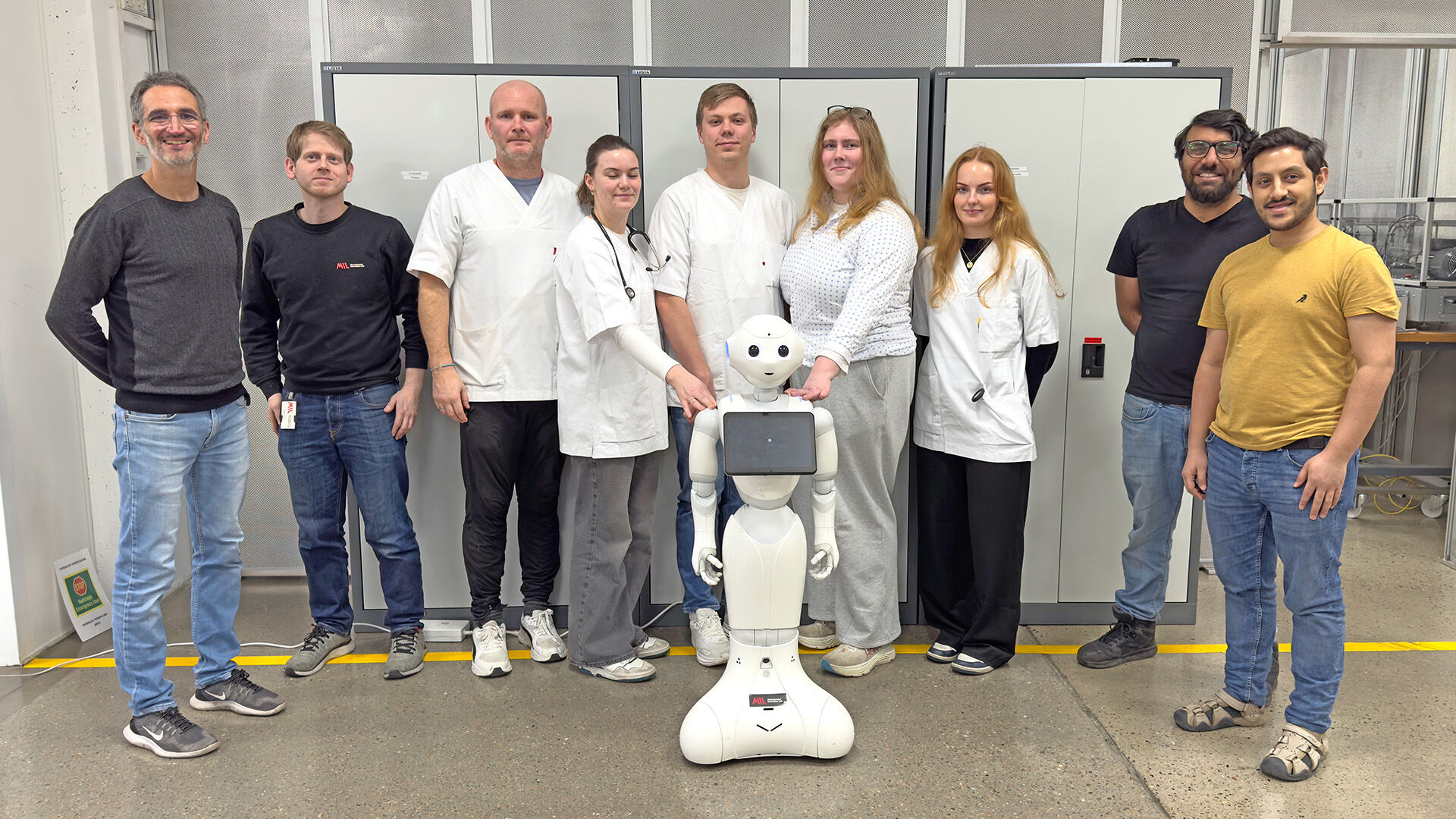
UiA also collaborates with Mechatronics Innovation Lab (MIL), giving students access to advanced technology and facilities. In addition, the project Service Robots as Work Support in Municipal Health and Care Services, led by Professor Mariann Fossum, explores how service robots can support healthcare staff in municipal settings.
Prepared for future challenges
The long-term goal is to create sustainable, flexible solutions that meet society’s health needs – now and in the future. With Norway’s ageing population and growing demand for health technology and skilled professionals, such collaborations are increasingly important.
“The integration of health technology into education is critical,” says Sanfilippo. “By working across disciplines, we prepare students to lead the healthcare systems of the future.”
Kvarsnes and Sanfilippo view the collaboration as just the beginning – a model for how education, research, and practice can be linked to address complex societal challenges.
Contact persons

