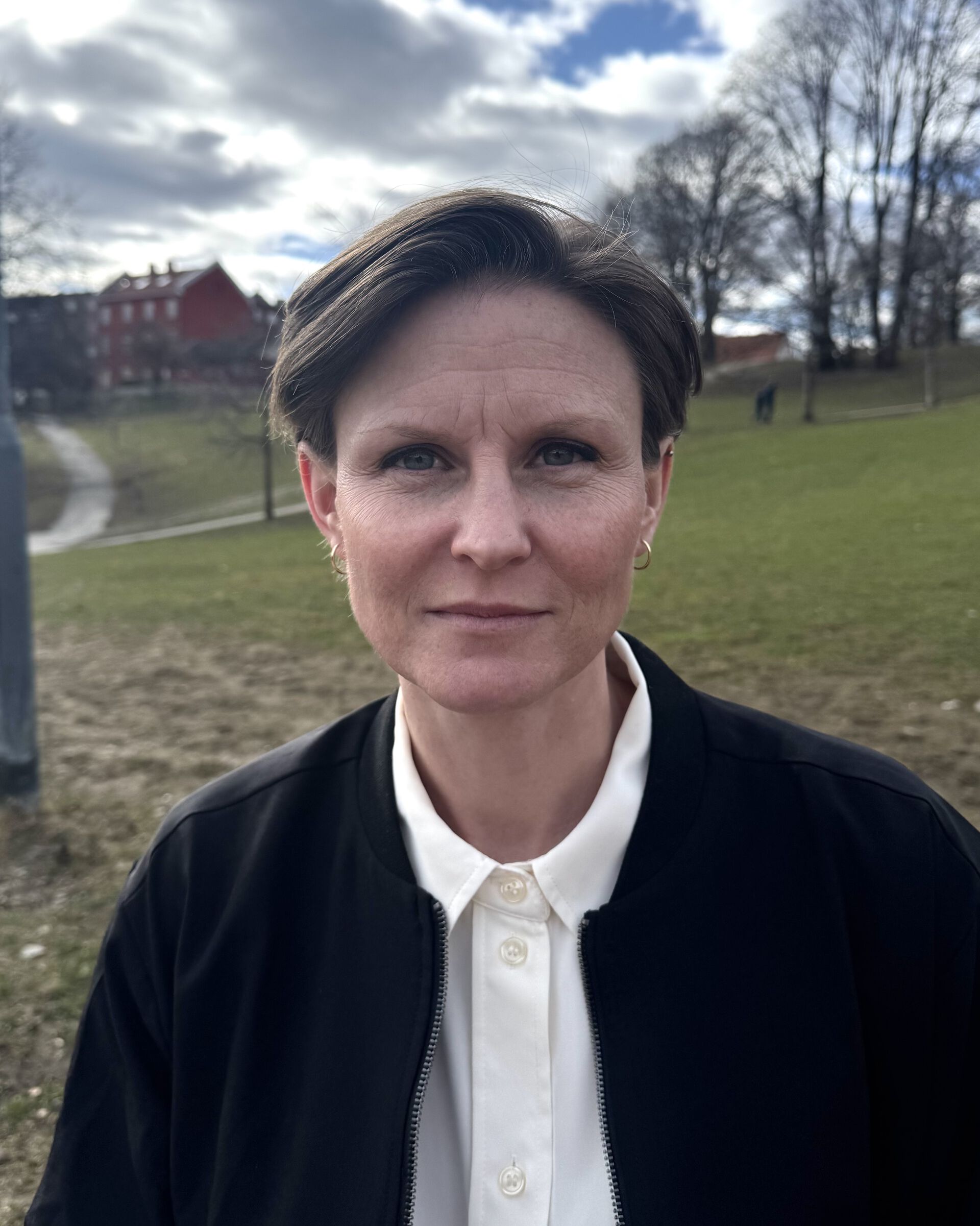
- Trial lecture starts at 10 am
- Public defence starts at 12 noon
Title of trial lecture: Will be made known 10 days before the trials
Read the thesis in AURA here: https://hdl.handle.net/11250/3188150
Disputation chair: Vice Dean Professor Anne Haugland Balsnes
Assessment committee:
- Committee Chair Hege Merete Bjørnestøl Beckmann, Associate Professor, Department of Classical Music and Music Education
- Opponent Bjørn Konrad Rasmussen, Professor Emeritus, NTNU
- Opponent Ida Krøgholt, Associate Professor, School of Communication and Culture Dramaturgy, Aarhus University
Supervisors in the doctoral work:
- Associate Professor Tormod Wallem Anundsen, University of Agder
- Professor Wenche Torrissen, Volda College of Higher Education
Summary of thesis
In her doctoral dissertation, Siri Skar explores meaningful moments, participant experiences, and creative processes within psychodrama practice.
Psychodrama is understood both as a dramaturgy and art form (Nolte, 2020; Moreno, 1972/1994; Moreno, 1953/1993), and as a form of creative arts therapy (de Witte et al., 2021) and can be positioned as part of the applied theatre field. While current psychodrama research often emphasizes clinical effect studies, Skar adopts a qualitative research approach inspired by arts-based methodologies. A central methodological tool is the concept of “stop moments” (Fels, 1999, 2012), grounded in body-phenomenological perspectives (Merleau-Ponty, 1945/2014).
In the empirical part of the project, Skar collaborated with two psychodrama directors, drawing on work with two separate psychodrama groups. Within these groups, she participated as a participant-observer, while the directors led the sessions. The research design combines qualitative interviews with participants' poems and drawings to explore experiential dimensions and meaning-making processes related to meaningful moments in psychodrama practice.
The dissertation follows an article-based format and includes an exegesis and four peer-reviewed, published articles. One article offers a dramaturgical analysis of a psychodrama process; another, co-authored, uses thematic analysis, incorporating theories of eudaimonic well-being (Ryff, 1989, 2016), as well as a participant’s poem and drawing.
The main research question guiding the dissertation is: How are meaningful moments created in psychodrama practice? This question is explored through three sub-questions:
- How can meaningful moments in psychodrama practice be researched methodologically?
- How is meaning created for participants in moments in psychodrama practice?
- How can drama- and theater-specific aspects of psychodrama as practice be understood from such meaningful moments?
The dissertation draws on psychodrama theory, drama pedagogy, and drama and theater studies. It also connects psychodrama practice to immersive theater, a contemporary theatrical form (Machon, 2013). The concept of immersion is used in the exegesis as a theoretical framework for examining the drama- and theater-specific aspects of psychodrama through participants’ meaningful moments. The work aims to contribute to a deeper understanding of core elements in participant experience and creative processes in psychodrama.
Key concepts in the final chapter include immersion, immersive experiences, immersive interactor (Machon, 2013), and immersive dramaturgical strategies. The concept of dramatic-aesthetic learning processes (Liset & Wiik, 2023) is also used to shed light on the ongoing processes and to emphasize the inherent drama- and theater-based qualities of psychodrama.
A key finding in the dissertation is that a central aspect of participant experience and creative process lies in the ability to let go and immerse oneself in the playful, creative flow. Other findings concern recognition of lived experiences between participants through the various work processes in the psychodrama group and the community and acceptance that are developed through this.
The dissertation situates its inquiry within the fields of theater studies and the interdisciplinary area of arts and health. The findings are relevant not only for psychodrama and drama therapy but also contribute to broader discussions within arts and health research, particularly in understanding interdisciplinary connections.
What to do as an online audience member
The disputation is open to the public. To follow the trial lecture and the public defence online, register on Zoom.
https://uiano.zoom.us/j/68659160694?pwd=QZYTIY1HFdshGn7JjaqKFxPSIzYfhh.1
We ask online audience members to join no earlier than 10 minutes in advance. After these times, you can leave and rejoin the meeting at any time.
Opponent ex auditorio:
Deadline for the public to pose questions is during the break between the two opponents. Questions ex auditorio can be submitted to disputation chair Vice Dean Professor Anne Haugland Balsnes.