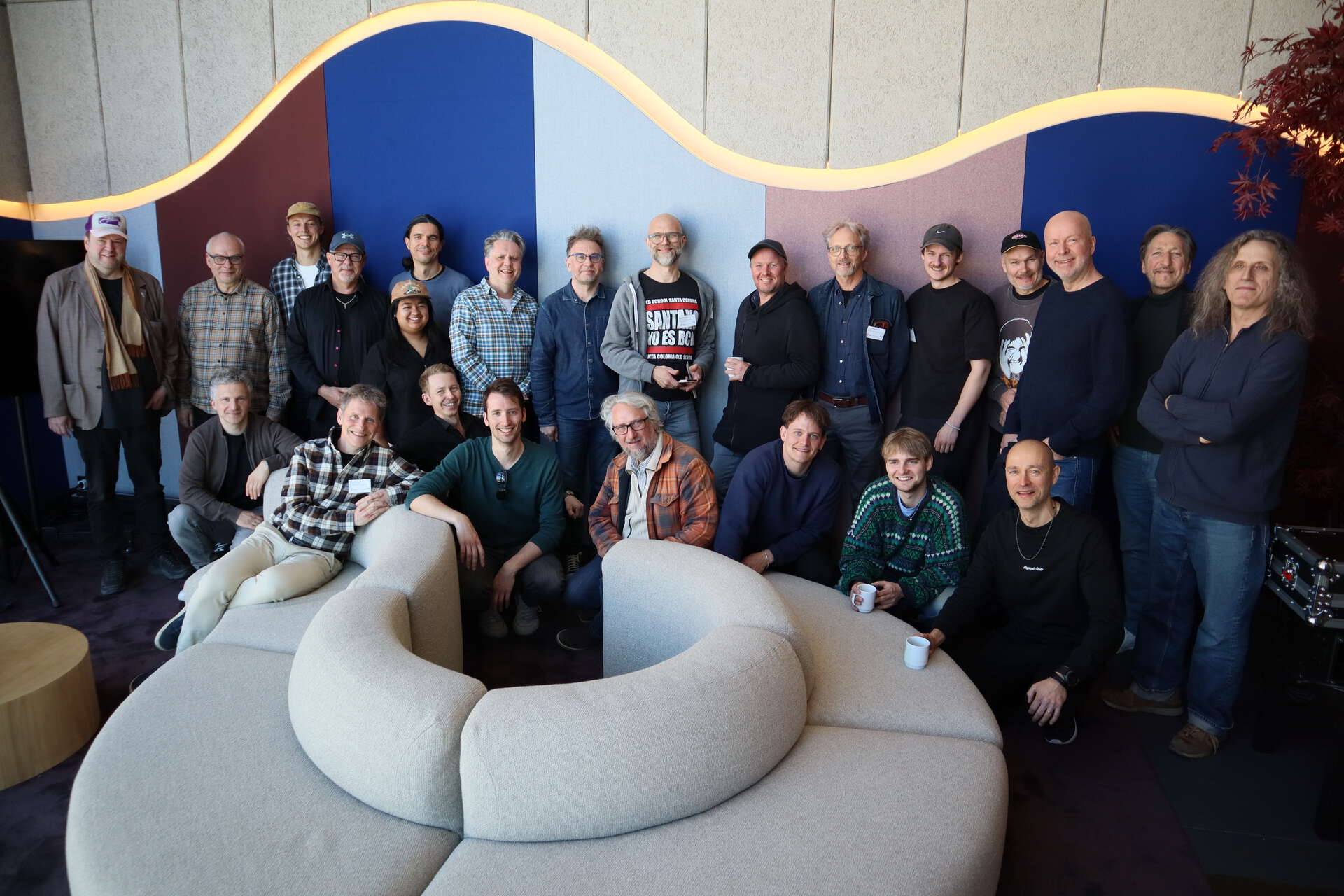
“Thank you so much for an incredible conference! This was pure bliss from beginning to end. The music, the people, and the organization were all amazing! Hope to see you all soon.” — Risto Toppola, Sibelius Academy & Savonia UAS
“A big thank you to all the participants … your energy and enthusiasm — it was a pleasure sharing music with you all.” — Ulf Bandgren, University of Gothenburg
A first edition at UiA
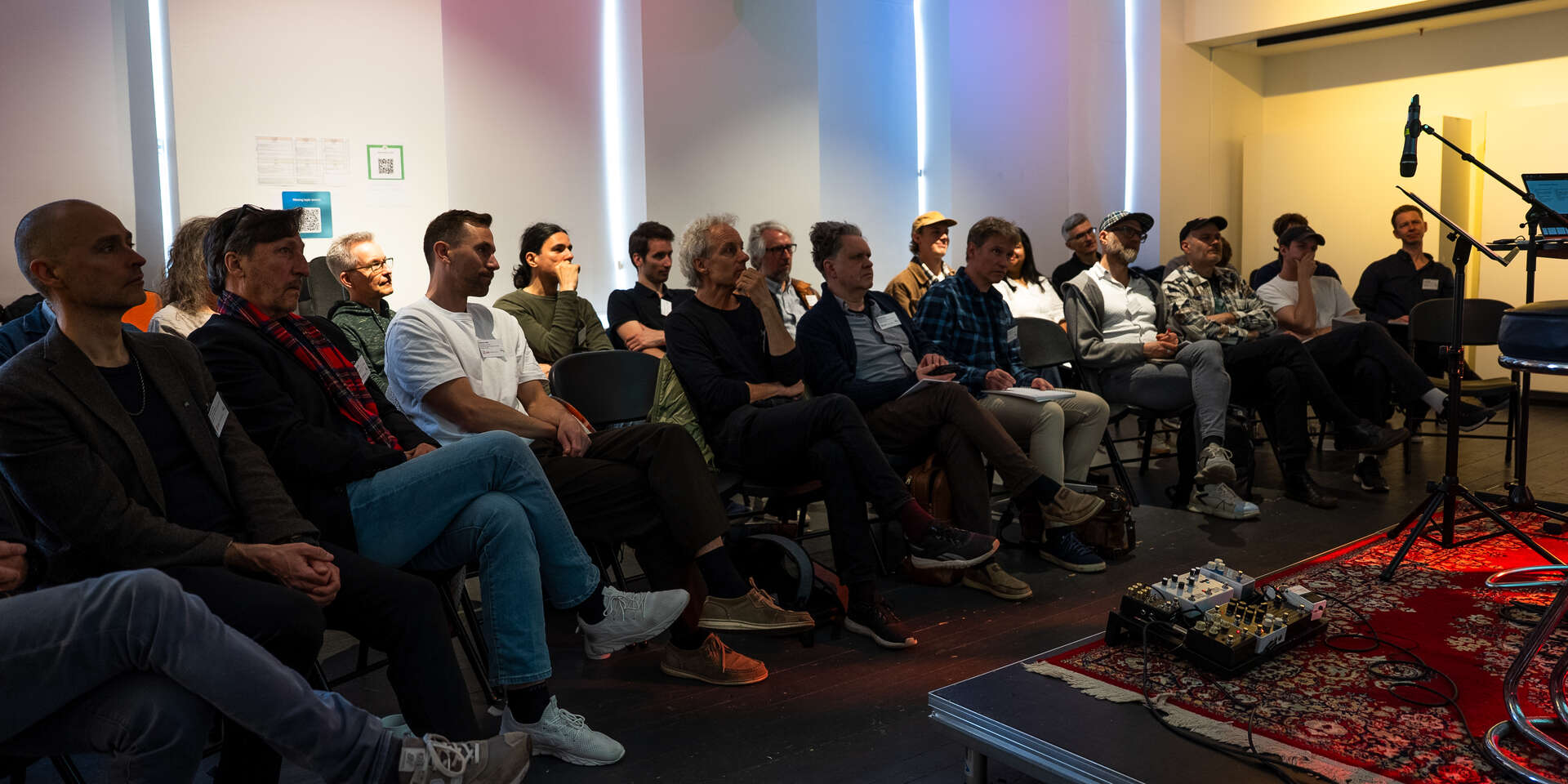
The latest edition of Guitar Maestro T.E.A.R.S. — initiated by Martin Granum at the Royal Academy of Music and funded by Nordplus Music — followed earlier symposiums held in Aalborg in 2019 and 2025, and was the first to be hosted at UiA. The programme moved between two homes: the student house BARE in the city center, and Sigurd Køhns Hus on UiA's campus, the four-storey building that houses the university's popular, electronic and classical music performance programmes. Participants presented teaching approaches, joined open discussions, and listened to a student panel drawn from UiA, RAMA and the University of Gothenburg. Professor Rolf Kristensen (UiA) opened the programme with the question that framed much of what followed: does our education reflect the needs of today's guitar students?
“I think it's really important to get to know what is going on inside the classrooms. To know each other's mindset in teaching, and also to challenge each other's mindsets.” — Martin Granum, Associate Professor, Royal Academy of Music (DK)
A shared question: function and freedom
The conference theme — Mastering (the space between) Function and Freedom — was more than a slogan. It named a genuine dilemma that surfaced in almost every session: how to give students the craft a working guitarist needs ("function") while also awakening the artistic self that makes a musician worth hearing ("freedom"). In his opening talk, Rolf Kristensen set out the landscape today's students navigate — real-life band playing, institutional study, and an endless supply of online tutorials — and argued that the sheer volume of available material has made the teacher's guiding role more important, not less.
Too much information, he suggested, can leave students busy but scattered. As a teacher, he describes the dilemma of being expected to hand over new perspectives and exercises every week, while the student actually needs more time to internalize less material, better.
Marius Igland (UiA) took the theme further, drawing on educational philosophy to ask what a "world-centered" guitar education might look like — one that turns students neither into servants of the tradition nor into self-branding stars, but into subjects able to meet the music, the audience and each other on their own terms. Crucially, he argued, function and freedom are not a sequence in which artistry is postponed until after the craft is mastered; they have to be cultivated together from the start.
The craft: time, reading and the fundamentals
A recurring conviction across the teaching sessions was that the true foundations of guitar playing — rhythm, time-feel and command of the fretboard — are too often under-served, with students returning late in their studies to fill the gaps. Several presentations tackled these head-on. Richard Smith (USC Thornton School of Music) devoted his session, Groove, Lock, Pocket and Crack!, to what guitarists can learn from drummers about making music feel good — playing behind the beat, leaving space, and treating rhythm as the engine of every style.
Reading music proved one of the liveliest strands. Øyvind Nypan (UiA) opened it with a deceptively simple question — do we still need sight-reading in 2026? — and the sessions that followed described different methods for enhancing that skill: Jarmo Hynninen (Metropolia UAS) shared the structured examination system used in Helsinki; Mart Soo (MUBA & EMTA) tied reading to thinking harmonically rather than one note at a time; and Ulf Bandgren (University of Gothenburg) spent his session on triplets and the feel of where a phrase sits against the beat. Jens Christian Kwella (RAMA), offered a practical answer to the perennial complaint that reading feels disconnected from real playing: he founded a guitar ensemble at RAMA in which students read parts — complete with dynamics, capo and coda — inside a real band setting, learning to listen and blend rather than merely decode notes. Miroslav Mirosavljev (JAM Music Lab, Vienna) rounded out the craft strand with creative, systematic ways to practise scales across the whole neck — and a reminder, via a clip of Leonard Bernstein rehearsing, that even a two-octave scale can be made deeply musical.
Improvisation, motif and the artist's voice
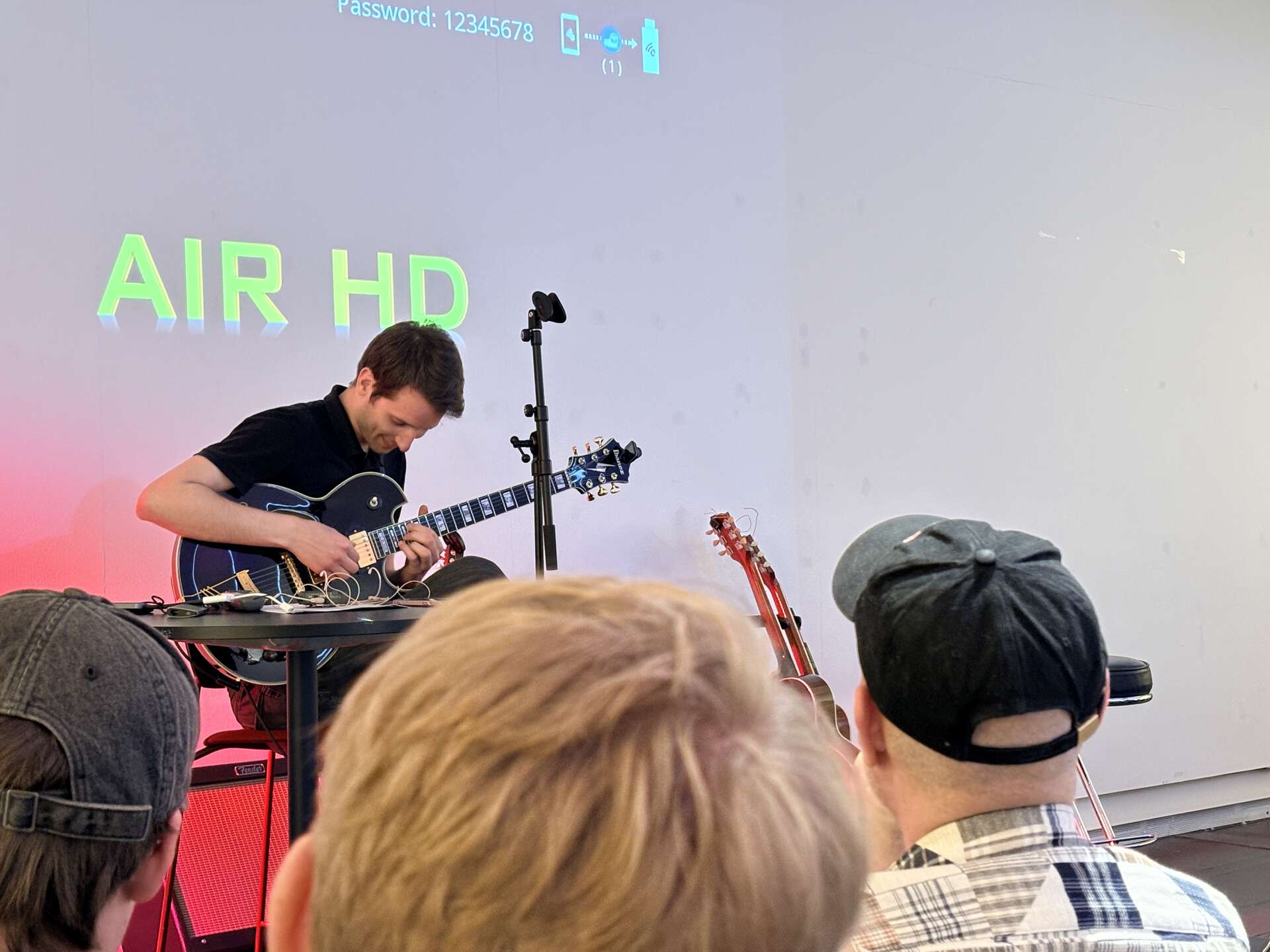
If the craft sessions asked what to teach, another cluster asked how to open the door to creativity. Steinar Jeffs (UiA & Ansgar) presented what he satirically called "the world's most boring improvisation" — an exercise that fixes the notes of a scale and drills only phrasing, on the principle that constraint is what sets a player free. Martin Hultén (Ingesund) built improvisation up from bodily pulse and call-and-response imitation, aimed at musicians new to improvising, while Hans Balstedt (Örebro University) taught motif development — repetition, inversion, augmentation — techniques he traced back to a formative six-hour meeting with the late Jim Hall.
The artistic self was most vividly present in the keynote by Bjørn Charles Dreyer, an UiA alumnus and the programme's first guitar PhD, who traced his own migration from in-demand session player to independent artist working with soundscape, effects and studio technology. The same question — what does it mean to sound like yourself? — came just as powerfully from the students, several of whom described the search for their own voice as the heart of their education.
“Music and guitar playing is just as much, if not more, about personality and being authentic — because if it was just about being the best, then we would all only listen to the same guitarist.” — Oscar Meyer-Ottosen, student, Royal Academy of Music (DK)
Playing together
Against the guitar's reputation as a sometimes exhibitionistic, ego-driven instrument, a strong current of the conference argued for playing together. Richard Smith, Jens Christian Kwella, and Øyvind Nypan presented guitar ensembles as central pedagogy. David Stackenäs (Ingesund) taught listening through improvisation "game pieces" borrowed from the free-improvising drummer John Stevens, including one in which players take turns to "take the silence." Marek Talts (Tartu Viljandi Culture Academy) led a discussion on how teachers prioritise and connect the many things a student must learn, and Jakob Henriques (Örebro) — a classical guitarist among the jazz and pop players — shared daily warm-up exercises built on the principle that if you cannot do the small movements, you cannot do the big ones.
“Music is a team sport.” — Richard Smith, Professor, USC Thornton School of Music (US)
“The most important thing is trying to build the guitar community at the campus and at our school — to make it a good place for guitar players to study, and to connect with our instruments.” — Øyvind Nypan, Associate Professor, University of Agder (NO)
The student perspective
A highlight that many participants singled out was the student panel. Six students from UiA, RAMA and the University of Gothenburg spoke first about their own journeys — arriving with gaps to fill, learning to trust their own artistic expression, wrestling with comparison and the pressure to always know the answer — and later returned, on the final day, with a structured comparison of how guitar is taught at their three conservatoires. They did not shy away from a provocation, putting to the room of teachers the very question haunting higher education in the age of online tutorials and AI: if all of this is available for free, why do we need you? The exchange that followed — on what a teacher can offer that an algorithm cannot, from seeing the individual student to curating the overload into a path — was among the most memorable of the three days.
“Why should we go to the school if we can learn basically anything you teach on the internet or through books? Why do you think we need you?” — Student panel, closing dialogue with the teachers
Who is not in the room?
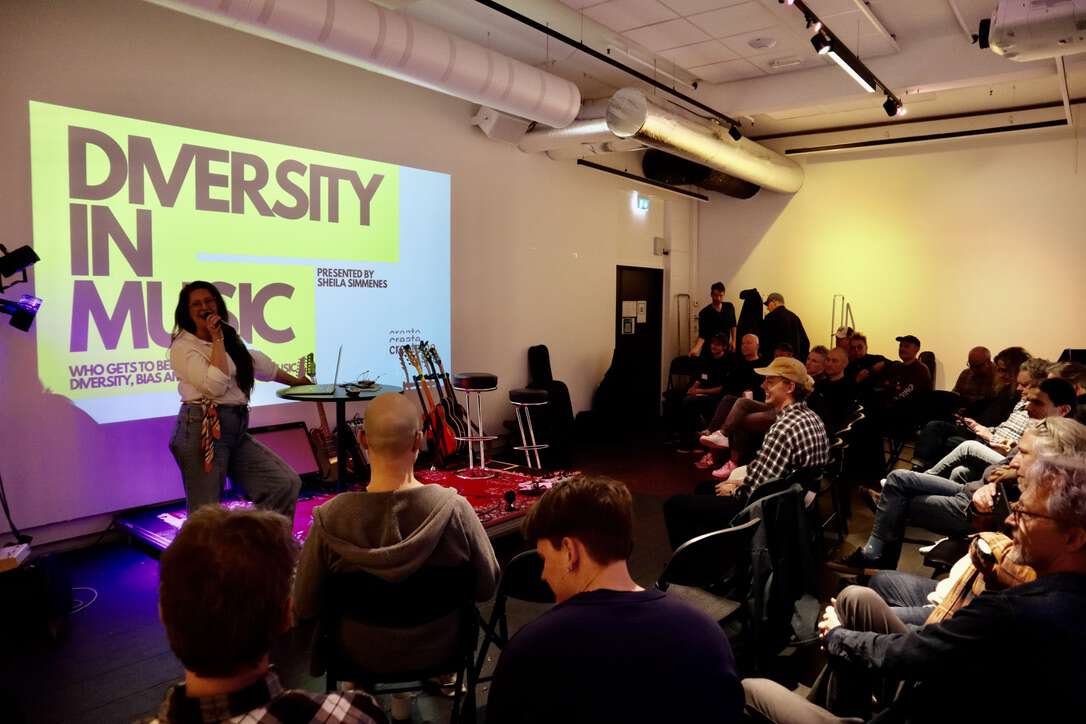
The final keynote turned the lens back on the profession itself. Artist and producer Sheila Simmenes presented the Nordplus-funded Diversity in Music (DIMM) project and its practical toolbox, and asked a room of all male guitar teachers to notice who was — and was not — present. With roughly 98% of Norwegian guitar graduates being men, she argued that many barriers form long before higher education, that belonging shapes whether students participate and stay, and that meaningful change often lies less in grand gestures than in culture, role models and small, deliberate adjustments — and in regularly asking students what the teacher cannot see. The discussion was frank and genuinely contested, including a student's account of how the assumption that she had been admitted "because she was a girl" had nearly driven her to quit.
“The whole thing about opening up to a broader inclusion in the classrooms and in higher music education is that we have to ask who is not in the room.” — Sheila Simmenes, keynote speaker (NO)
Learning together, not in isolation
Behind the theme stood a tagline more direct in its ambition: Let's stop teaching in isolation and start learning together.
“Across earlier editions, we have developed friendships and a sense of community that brings us out of isolated teaching and toward an international sharing practice.” — Marius Igland, conference organiser, University of Agder
The post-conference evaluation suggests the ambition was met. Asked what they took away, participants returned again and again to the same vocabulary: community, network, inspiration, perspectives, and the diversity of teaching styles encountered. Several singled out the level and reflections of the students as a particular highlight.
“It is an exceptional chance to meet colleagues from all over the Nordic countries. I think all instruments should have a gathering like this.” — Jaak Sooäär, Professor & Head of Jazz Studies, Estonian Academy of Music and Theatre (EE)
“… so far we've had two speeches, and already my mind is reflecting upon the open questions regarding our roles as teachers in this day and age.” — Rasmus Birk, Associate Professor, Royal Academy of Music (RAMA), Denmark
The 2026 edition brought together participants from Austria, Denmark, Estonia, Finland, Lithuania, Norway, Sweden and the United States — the largest gathering in the project's history. CreaTeME contributed with academic perspectives, venue support, logistics and additional funding, building on the Nordplus framework that has carried the initiative since its first edition.
“It was tremendously effective at expanding and sharing knowledge.” — Conference participant
Relive the three days
The full story is best told in motion. Watch the conference aftermovie for a sense of the music, the discussions, and the community that filled the room across the three days.
▶ Guitar Maestro T.E.A.R.S. 2026 — Aftermovie
Guitar Maestro T.E.A.R.S. returns 22–24 April 2027, hosted by the Academy of Music and Drama at the University of Gothenburg with continued funding from Nordplus Music.
Interested in taking part? Contact Martin Granum // magr@musikkons.dk
Photos: Marius Igland and Hadle Kloster