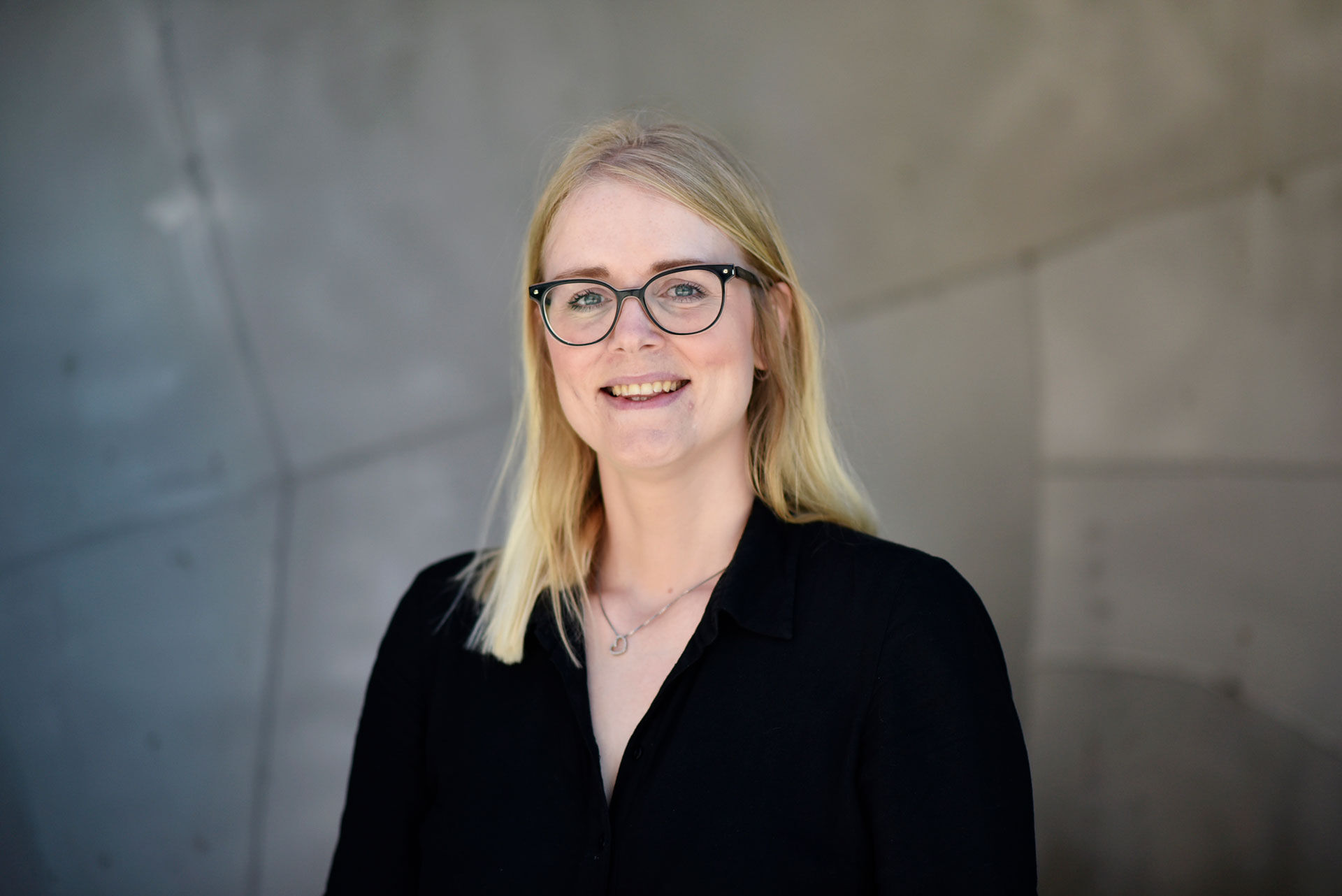
Linn Flaten has followed the PhD Programme at the Faculty of Engineering and Science, with Specialization in Mathematical Sciences, Scientific Field Mathematics Education.
- Trial lecture starts at 10:30
- Public defence starts at 12:30
Title of trial lecture: Recommendations for reform in school mathematics and challenges to their realisation: Theoretical and practical perspectives
Disputation chair: Ingvald Erfjord, Department for Mathematical Sciences
Assessment committee:
- First opponent: Professor Raymond Bjuland, University of Stavanger, Norway
- Second opponent: Professor Camilla Björklund, University of Gothenburg, Sweden
- Chair of Assessment Committee: Professor Jeppe Skott, University of Agder
Supervisors in the doctoral work:
- Main supervisor: Professor Martin Carlsen, University of Agder
- Co-supervisor: Associate Professor Per Sigurd Hundeland, University of Agder
Summary of thesis
This thesis reports from a qualitative research study that provides insights into what characterises second graders’ mathematical reasoning when they participate in playful inquiry-based mathematics activities at the lower primary school level. The study is framed within a cultural-historical perspective on learning. The context of the study is a primary school in an urban area of Norway where the empirical material has been generated through video observations and field notes on several occasions spread over the course of a school year. Following a reflexive thematic analysis, two teachers and their respective second graders’ use of language and different semiotic means to reason are examined. A multimodal approach is taken to qualitatively investigate what characterises the students’ reasoning within a playful inquiry-based context.
By focusing on the students’ verbal and nonverbal communication, the study contributes with insights into the context in which the students’ reasoning occurs, the interplay between different modes of communication, and how the different semiotic resources characterised the second graders’ reasoning as they solved the mathematics problems presented to them. When interacting and communicating with others in guided play activities, the study demonstrates that the second graders were given the opportunity to use mathematical language to reason and explain their mathematical thinking. The excerpts presented in the three empirical studies exemplify situations where the students’ previously appropriated mathematical number concepts were applied in new situations and being actualised through the use of semiotic means in joint activity with peers and the teacher. The study shows that the second graders reasoned in a multimodal manner when they explained, argued, and expressed their thinking with others. These efforts occurred in several phases of their problem solving as they practiced their mathematical reasoning and problem-solving skills. The most prominent semiotic resources used in the analysed data were speech, gestures, and the use of artefacts.
The study further contributes to existing research by exemplifying what playful inquiry-based learning may look like in lower primary school. The playful inquiry-based mathematics activities, the design principles and the implications for practice that are drawn, may be valuable for other researchers and educators who are considering implementing a playful inquiry-based approach to the teaching and learning of mathematics in their classrooms. The mathematics teacher has an important and challenging role in teaching mathematics through student-centred, playful approaches, e.g., to balance their own and the students’ participation to provide the students with opportunities to mathematise elements of their play. The study also exemplifies how the teachers were functioning as important dialogue partners when co-playing along with the students in the context of the playful inquiry-based mathematics activities.
What to do as an online audience member
The disputation is open to the public. To follow the trial lecture and the public defence online, register on Zoom.
We ask online audience members to join no earlier than 10 minutes in advance. After these times, you can leave and rejoin the meeting at any time.
Opponent ex auditorio:
Deadline for the public to pose questions is during the break between the two opponents. Questions ex auditorio can be submitted to disputation chair Ingvald Erfjord.
Contact person

- victoria.belous@uia.no
- Phone
- +47 38 14 23 46