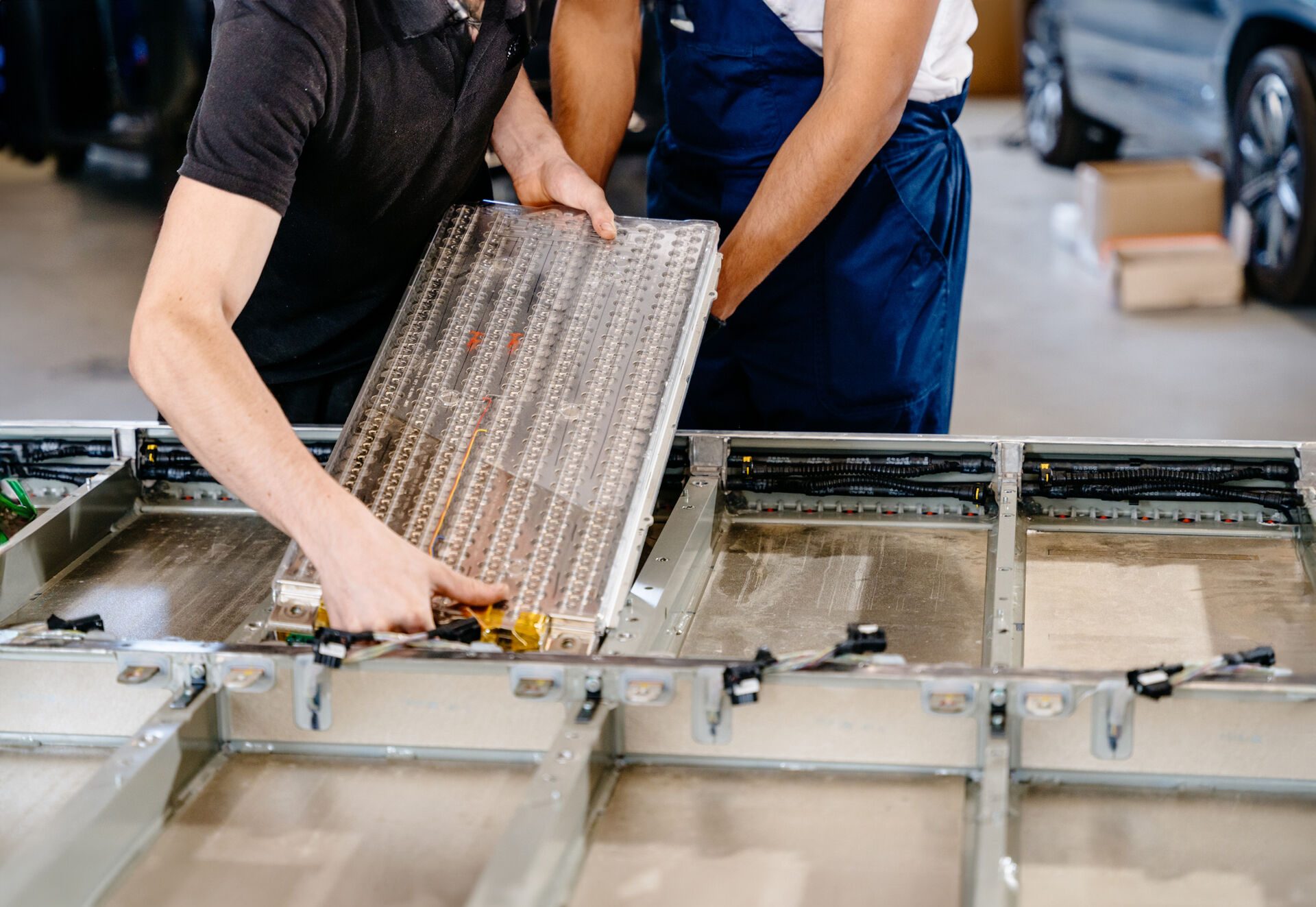
The RESTORE project officially started in Barcelona in January, bringing together 20 partners from seven European countries. Researchers will develop new methods for recycling batteries from electric vehicles and other lithium-ion batteries. The EU Horizon Europe programme is funding the research with nearly €8 million.

"Batteries are crucial for the electrification of the transport sector to meet climate goals. At the same time, accessing critical raw materials for battery production is becoming more challenging. This makes efficient battery recycling extremely important," says Associate Professor Martin Choux, who leads the project for UiA.
From textiles to batteries
Among other things, UiA will further develop technology for the automatic disassembly of batteries. A new sensor technology will make it easier to identify and sort different parts.
"We will build on our experiences from the ISORTX project, where we automate the sorting of textiles before recycling. We will now adapt this technology for battery recycling," Choux explains.
The researchers will also explore both gentle and more destructive methods to dismantle battery packs and document the advantages and disadvantages of each approach.
Another important focus for UiA in the RESTORE project is to make work with batteries more energy-efficient through using smarter machinery.
"We are developing systems that can make decisions directly within the integrated circuits. This reduces the need for external data resources, which require lots of energy. In addition, cybersecurity is very important to us here," says Choux.
May make recycling profitable
UiA is already involved in several battery projects, including the RHINOCEROS project, which began in 2022. This project aims to automate 75 per cent of the disassembly of electric car batteries, with minimal adjustments needed for handling new battery types.
The RESTORE project
- RESTORE stands for 'Automated sorting and safe pre-processing of end-of-life batteries with novel smart and fast dismantling, and separation technologies for direct reuse of high purity materials in energy storage application.'
- The project receives €7,999,189.50 in funding from the EU Horizon Europe programme.
- The project period is 2025-2029.
- You can follow the project on LinkedIn.
The RESTORE project goes even further. Researchers aim to develop a comprehensive process that not only makes recycling more efficient but also allows valuable materials, currently being lost, to be directly reused in battery production.
"At the moment, recycling batteries is not profitable in Europe. We hope this project will help companies involved in recycling efforts meet the EU’s new battery regulation while making the process economically sustainable," says Choux.
He also sees possibilities beyond battery recycling:
"The methods we’re developing for smart, automated battery disassembly can be transferred to other products. This could contribute to better recycling processes overall and a more circular economy."
The RESTORE project spans four years and is coordinated by the research institute LEITAT in Spain. The partners include both leading research institutions and major industry players.