"The whole team was incredibly excited when we found out the results. I am so proud that we managed to hold our own against strong universities and achieve such a great result — that would not have been possible without the solid academic foundation provided by our teachers and the excellent teamwork during the preparation of our business pitch."
Those are the words of Alena Kurepina, academic esports student and member of the team that travelled to Sydney.
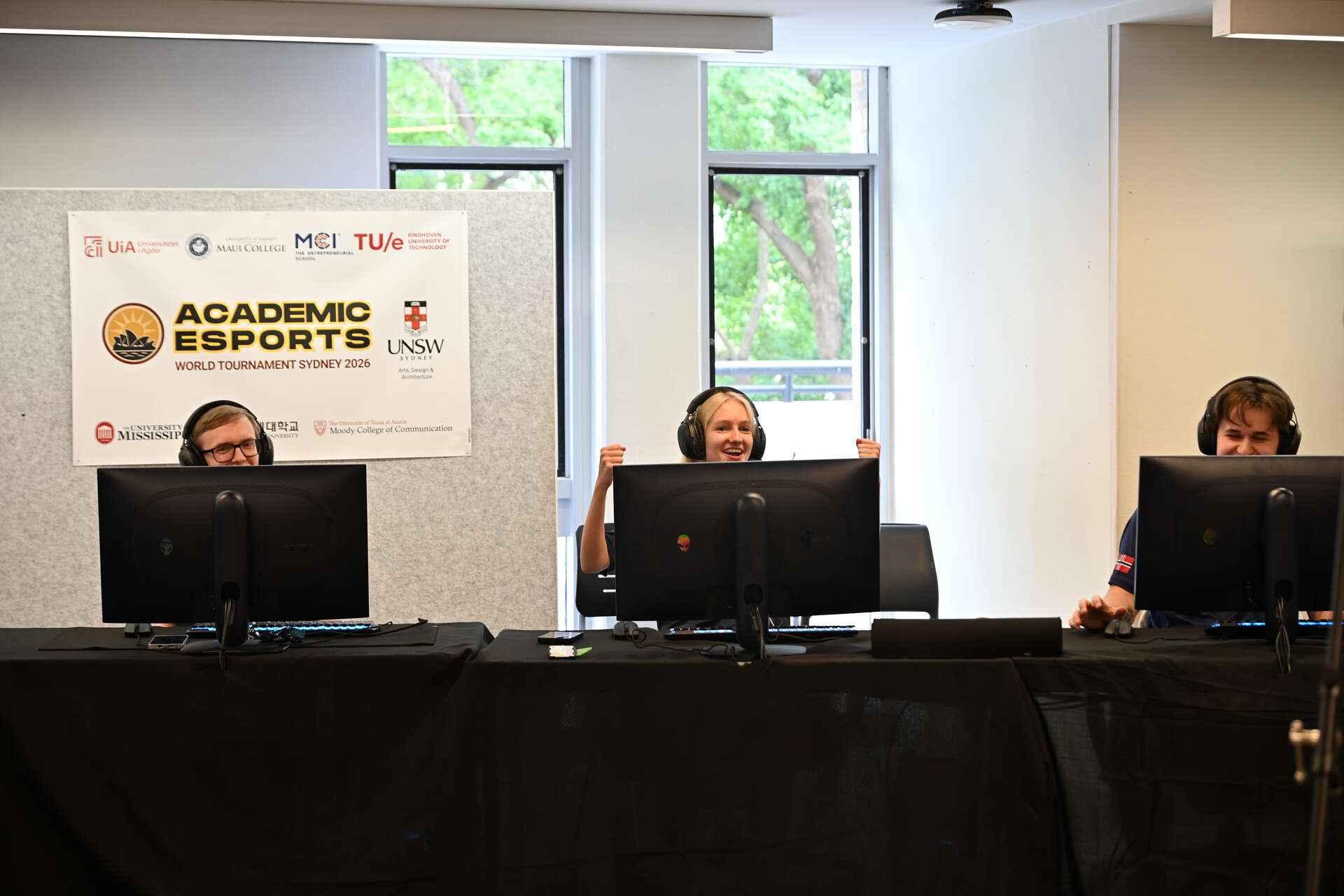
The competition was part of the Academic Esports World Tournament (AEWT) 2026, hosted by the University of New South Wales in Sydney, Australia.
More than 80 students from universities across Europe, Asia, North America and Australia took part. Alongside esports matches in games such as League of Legends, VALORANT and Rocket League, students participated in academic challenges. These required them to present innovative solutions, design original games, and debate esports as a phenomenon in the digital society.
"Being part of the tournament meant a great deal to me. I was so happy when I was selected for the team and felt that my efforts had been noticed. At the same time, it was a great responsibility to represent the university, so it was not without pressure — but it was a truly valuable experience to have," says Kurepina.
The Discord challenge
One of the highlights of the tournament was the Business Challenge task, sponsored by the communications platform Discord. Teams were asked to develop esports-inspired communities capable of functioning as inclusive digital "third places" — that is, spaces outside the home and formal institutions where people build belonging, identity, skills and social bonds.
The concepts were required to be sustainable and responsible, with a focus on governance, inclusion, wellbeing and long-term value creation, as well as being innovative.
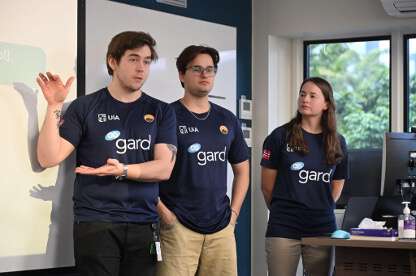
The UiA team presented their concept, Discord Education, in which features from learning platforms such as Canvas could be integrated directly into Discord — a platform many students already use on a daily basis.
"We wanted to show that learning tools can be intuitive and engaging. When pedagogical structures are connected to the spaces students already use to communicate with their peers, the learning process can feel more natural, social and motivating, while remaining organised and inclusive," says Kurepina.
Reflecting the skills of the future
The AEWT tournament format is built around a straightforward idea, according to Tobias Scholz, who teaches academic esports at UiA. He explains that esports is not solely about performance in a game, but also about the skills students develop through play.
"This year's tournament demonstrated how a competitive environment can be combined with academic rigour. Students learn everything from strategic thinking, communication, resilience and teamwork to leadership, creativity and much more," he says.
Throughout the tournament, students alternated between esports matches and academic formats that mirrored real working life: operating under time pressure, presenting to expert judges, and collaborating across disciplines and cultures.
Support from Gard in Arendal
For the second consecutive year, the event was supported by Arendal-based Gard, which sees clear value in the forward-looking competencies these students develop, including creativity, collaboration and digital skills.
"This is precisely the kind of capability that companies like Gard will need in the years ahead," says Scholz.
Gard also made it possible for the UiA team to participate, having supported and sponsored the team for several years.
Cathrine Hopstock, SVP and Head of Technology at Gard, is pleased that students are given a platform on which to develop skills relevant to their future.
"They learn everything from creative thinking to collaborative problem-solving. These are capabilities we also value highly at Gard," says Hopstock.
Esports as a learning arena
UiA's involvement in the tournament is closely linked to its research centre in academic esports, the Future Lab for Academic Research in Esports (FLARE), which explores esports as a platform for education and innovation.
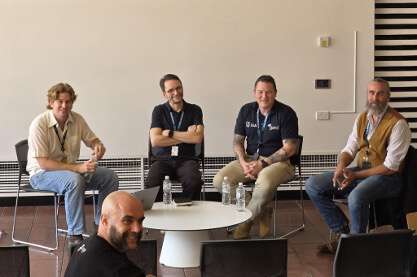
Associate Professor Rune Andersen accompanied the students to Sydney. He is the programme coordinator for academic esports at UiA and took part in a research workshop on esports in higher education held during the tournament.
"Academic esports offers a unique combination of competition and learning. At AEWT, students are tested not only on their gameplay, but also on their ability to think critically, collaborate across disciplines and translate ideas into real-world concepts. That combination is highly relevant to their future professional lives," says Andersen.