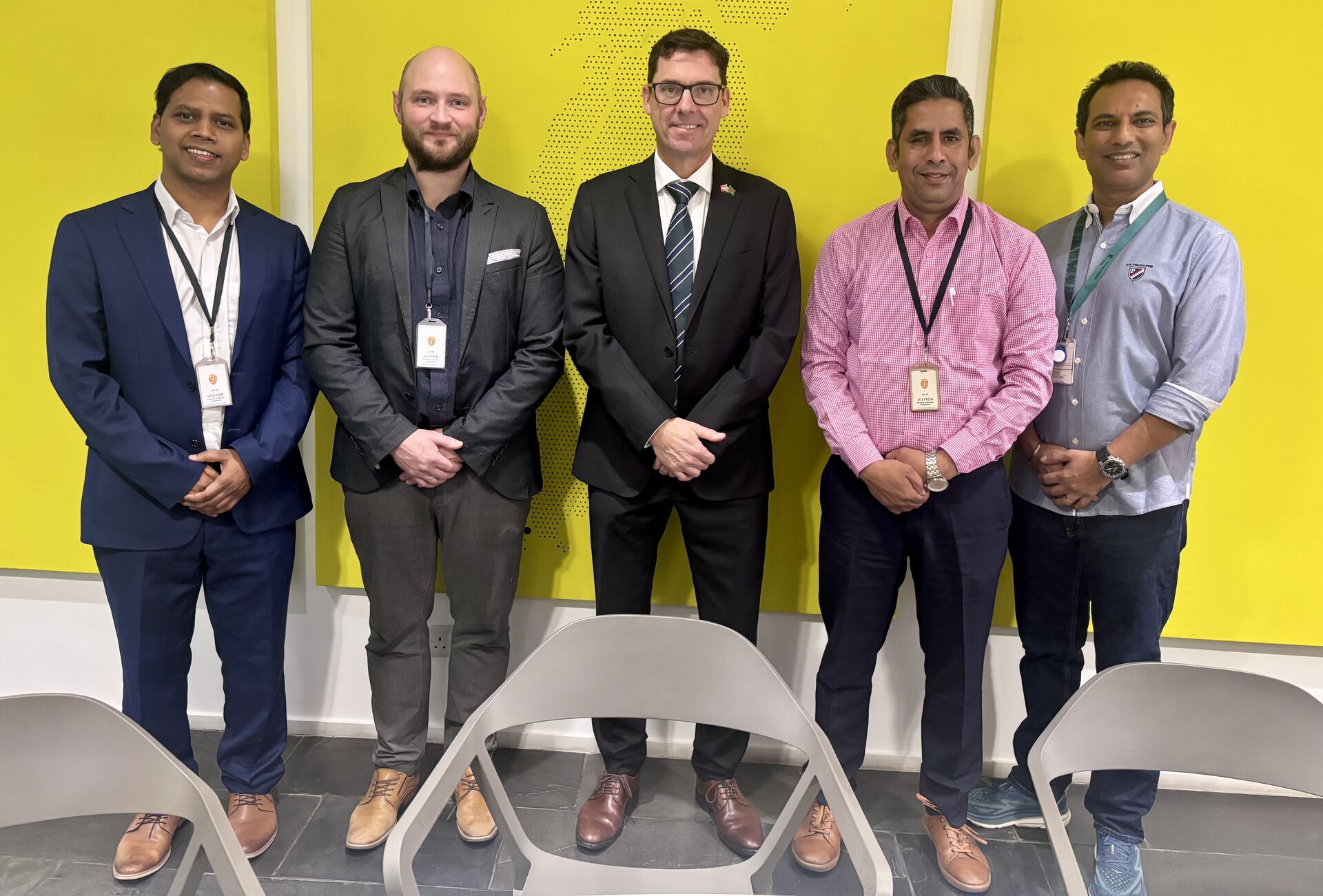
“Bangladesh needs to improve the quality of its educational systems in the fields of renewable energy and climate change. The country must keep pace with a rapidly expanding industry and an increasing demand for energy. Norway and UiA have long-standing experience in this area. The CARE project brings together the strengths of both countries,” says Professor Souman Rudra at UiA.
He heads the educational cooperative project CARE (Collaborative Action for Improving Educational Capacities in Renewable Energy to Mitigate the Climate Crisis), which is developing renewable energy education at Chittagong University of Engineering and Technology (CUET) in cooperation with UiA. Its aim is to support Bangladesh in transitioning from fossil fuels to renewable energy solutions.
Met ambassador and industry representatives
In December 2025, Professor Rudra and his colleague Associate Professor Tore Sandnes Vehus travelled to Bangladesh. In Dhaka, they met the Norwegian Ambassador to Bangladesh, Håkon Arald Gulbrandsen. Together, they discussed how Bangladeshi and Norwegian industry could become more actively involved. They also explored the idea of establishing a renewable energy hub in the country.
“The idea of creating a renewable energy hub in Bangladesh reflects our shared ambition to connect Norwegian and Bangladeshi expertise in research, education, and industry. By bringing together universities and industrial partners, we aim to build a strong platform for developing practical and sustainable energy solutions, while also strengthening long term cooperation between Norway and Bangladesh”, says Professor Rudra.
The delegation also visited Berger Paints Bangladesh, where they discussed how renewable energy could meet the factory’s power needs.
Shared their experience and expertise
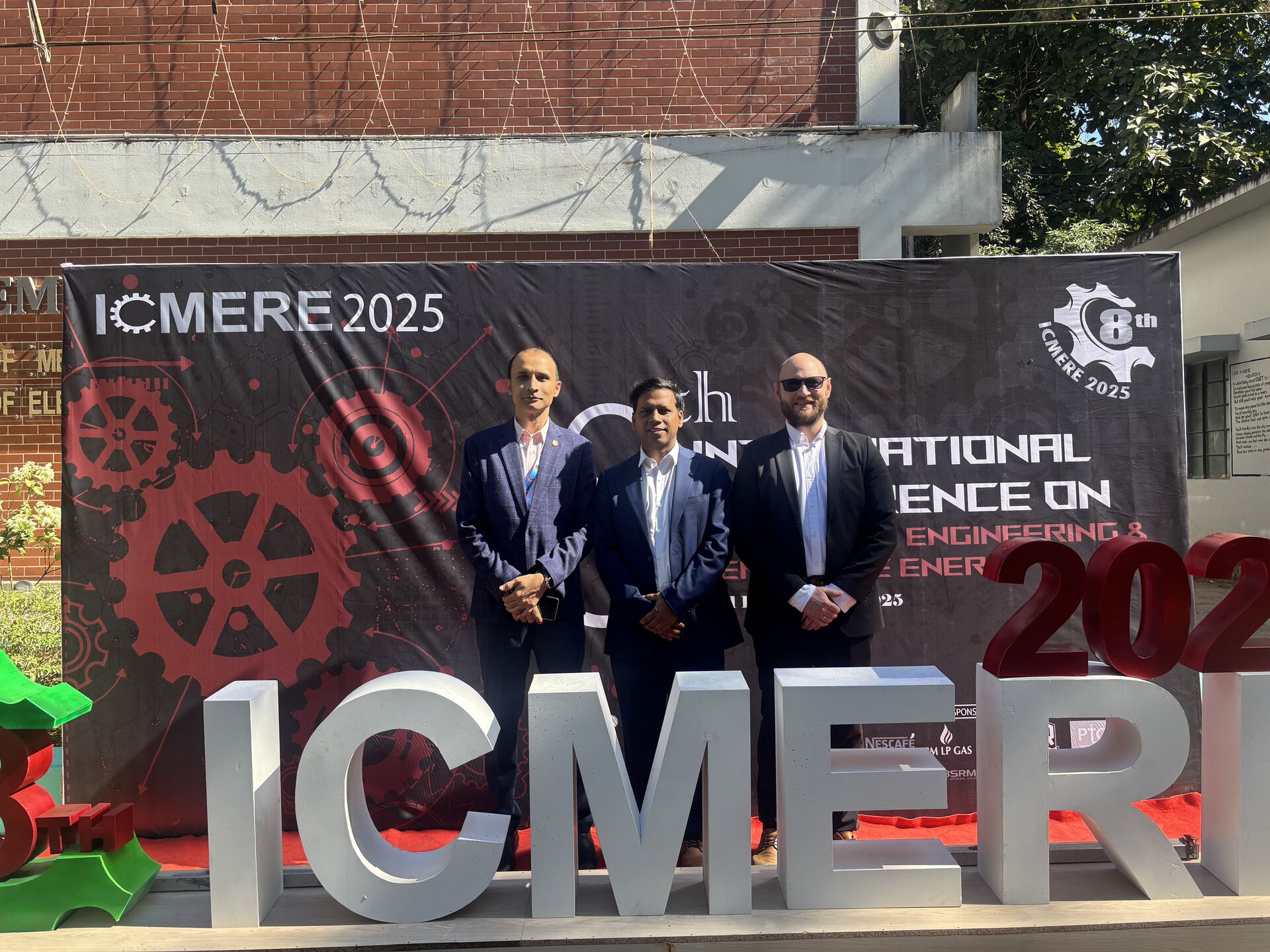
At CUET, the UiA researchers participated in the international conference ICMERE 2025. Professor Rudra also delivered a keynote lecture on techniques for separating biomass into biometals, while Tore Vehus shared his experience and expertise on indoor air quality.
“Our contributions highlight both global research challenges and specific needs in Bangladesh. In our presentations, we demonstrated how the collaboration between UiA and the university links international research with local relevance, creating knowledge that can support sustainable technologies and improved living conditions in the region,” says Professor Rudra.
Completing a joint laboratory
Tore Sandnes Vehus explains that operating costs in Bangladesh are low. The partners have therefore chosen to build and operate shared laboratory facilities at the university in Bangladesh. These are expected to be completed in 2026 or 2027. The facilities will enable students and staff to carry out joint experiments and research projects.
“It is more cost effective to build and operate the facilities here. Together, we can test renewable energy solutions on a larger scale,” says Sandnes Vehus.
“This is a practical model for long term collaboration. Both parties contribute their respective strengths,” says Sandnes Vehus.
The CARE project began in 2021 and is funded through the end of this year. The project group is working to secure continued support and to build on the work already initiated in Bangladesh.
About the CARE project:
- CARE (Collaborative Action for Improving Educational Capacities in Renewable Energy) is an international education and capacity building partnership between the University of Agder (UiA) and Chittagong University of Engineering and Technology (CUET) in Bangladesh. It started in 2021 and is (currently) funded to 2027.
- The project combines Norway’s long experience in renewable energy and Bangladesh’s growing industrial and educational ambitions and strengthens education and research in renewable energy to support Bangladesh’s transition away from fossil fuels.
- It focuses on strengthening Bangladesh’s ability to educate engineers and specialists in renewable energy by developing new study programmes, training academic staff, and establishing shared laboratory facilities where students and researchers from both countries can work together.
- It matters because Bangladesh faces rapidly increasing energy needs and significant climate related challenges. CARE helps build the expertise needed.
- The project also strengthens ties between the two countries through research collaboration, student mobility, and shared infrastructure.