.jpg)
"The main purpose of the forum is to facilitate dialogue, the exchange of experiences and to promote international cooperation between researchers from Europe and China who teach human rights at the university level."
According to Shults, an Associate Professor and Director of the Centre for Gender and Equality at the University of Agder (UiA).
The Euro-Sino Forum on Human Rights Education was held in Oslo. This was the second time the forum was held, following the first meeting in Beijing in 2025.
The forum is based on a partnership between the Norwegian Centre for Human Rights at the University of Oslo (UiO) and the China University of Political Science and Law.
Representatives from other Norwegian and Chinese universities, as well as researchers from several other countries, also took part. The main themes were artificial intelligence and human rights, institutional barriers, course development and teaching methods.
Presented a UiA course
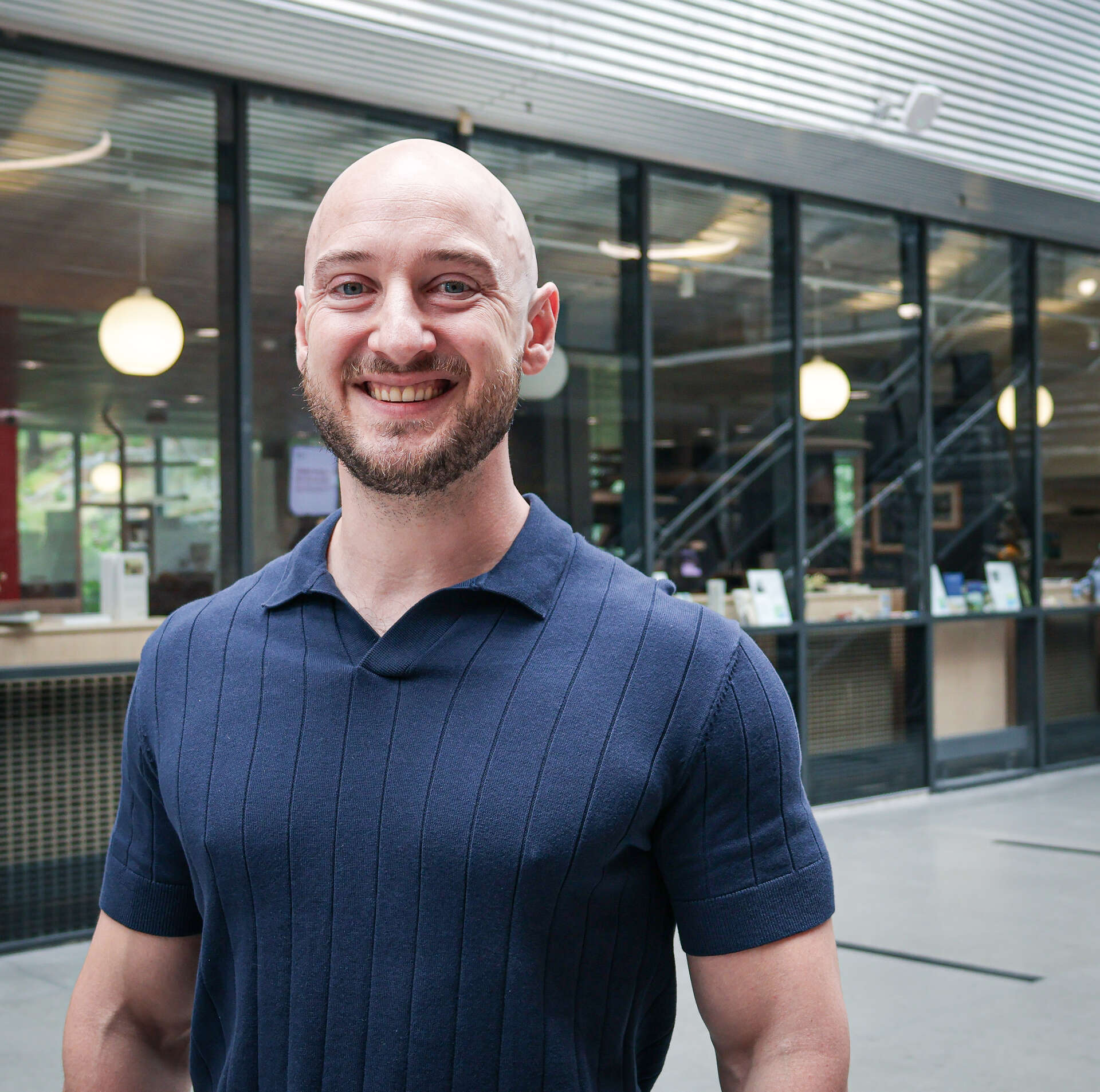
This year's forum placed particular emphasis on researchers who teach courses related to gender.
Shults attended in his capacity as Director of the Centre and was invited to present a course on feminist philosophy of science that he teaches himself. The course, SV-159 Feminist Epistemologies, is part of the Gender, Power and Diversity programme at UiA.
"Equality is central to teaching about human rights. The problem is that equality can come to be seen as something that has nothing to do with human rights. When people view equality as a left-wing agenda, rather than as a set of rules that safeguards everyone's needs, it leads to polarisation" he says.
According to Shults, this is precisely the greatest challenge in the field today.
He points to the debate surrounding the guidelines issued by Bufdir (the Norwegian Directorate for Children, Youth and Family Affairs) to public employees on how to accomodate trans people and others within the LGBT+ community who deviate from traditional gender norms.
"It shouldn't be controversial for public employees to have access to knowledge about how to engage a marginalised minority group on its own terms. Equality work is about treating others as human beings, regardless of whether a person is just like you or not," he says.
Hopes for further collaboration
Shults describes the forum as a source of mutual inspiration.
"All the participants are passionate about their work, and fortunately there is a great deal of innovation happening in the field. Educators need to be flexible in the face of new challenges relating to gender and human rights, but also when it comes to artificial intelligence," he says.
He hopes that taking part in the forum may lead to further collaboration, for example in the form of guest lectures or joint publications.
Open for enrolment in the spring
Shults encourages anyone interested in these topics to enroll in SV-159 Feminist Epistemologies in the Spring. The course can be taken entirely online, but weekly discussion seminars are also offered for those who prefer to attend in person.