.jpeg)
On behalf of the government, the Centre for Gender and Equality at the University of Agder (UiA) contributed to the OECD’s (Organisation for Economic Co-operation and Development) review of Norwegian gender equality policy. The Centre took part in interviews, shared its expertise and provided insights into local and regional gender equality challenges.
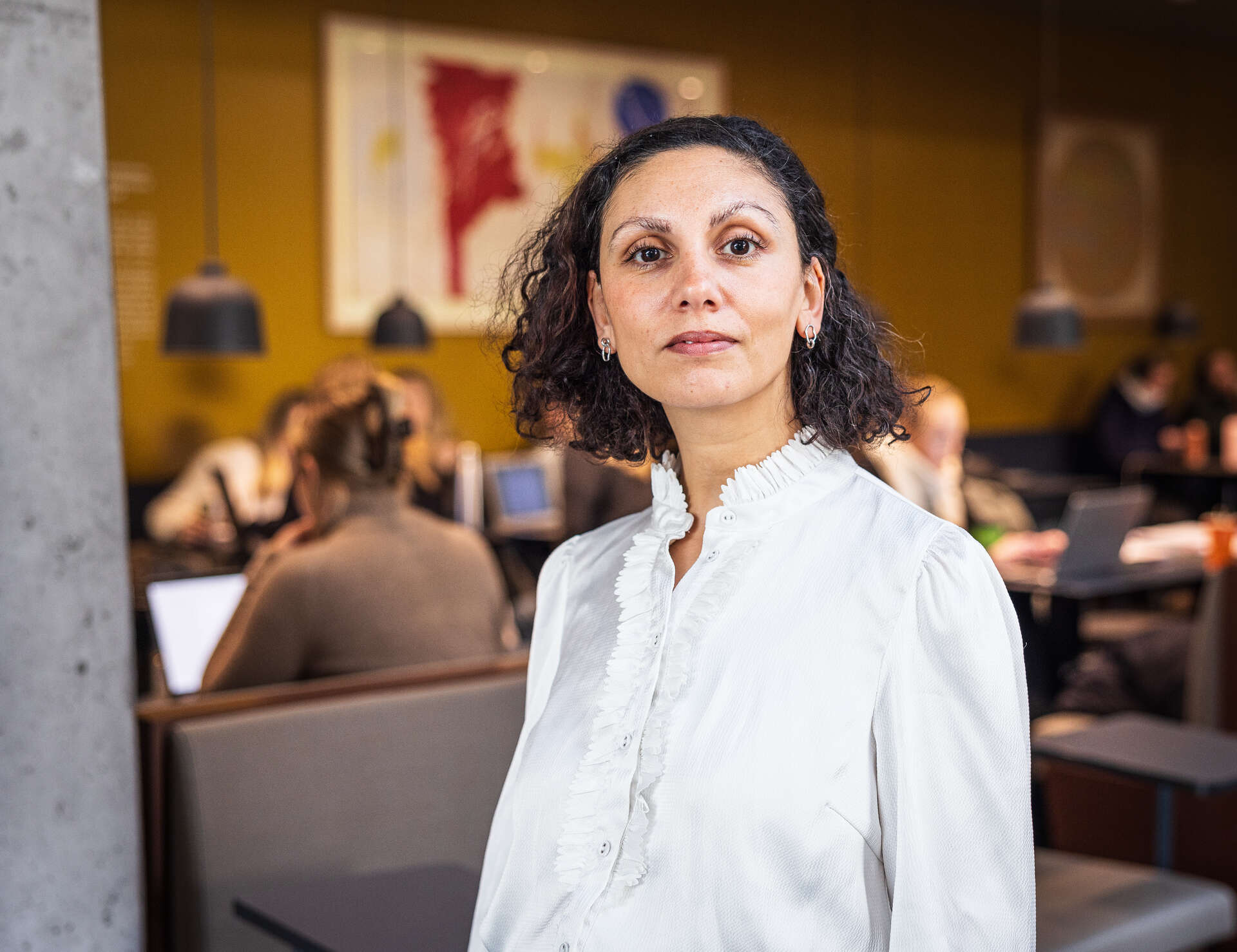
Senior Adviser Rasha Abdallah from the Working Life and Equal Services section represented the Centre in this work.
“We contributed as part of the Norwegian gender equality apparatus to provide insight into organisation, work and cooperation at local, regional and national levels,” says Abdallah.
What is the OECD?
OECD stands for the Organisation for Economic Co-operation and Development. It is an international organisation with 38 member countries. Its aim is to strengthen the economy, improve people’s standard of living and increase trade between countries.
The OECD discusses important economic and social issues. This is intended to help create better policies to ensure growth and security for citizens.
Recently, the government presented a new OECD report on how public authorities, such as local authorities, county councils and central government, are working on gender equality.
Source: Store norske leksikon, The Norwegian Government
Calls for greater commitment
The report highlights that Norway now has the scope to position itself for the economy of the future in a world characterised by green and digital transition.
“If we succeed in putting gender equality at the centre, the benefits will be significant,” says Abdallah, emphasising:
“If we are not mindful of the gender equality perspective, there is a potential risk of perpetuating and reproducing inequalities.”
When asked which of the OECD’s recommendations are most urgent to follow up on, Abdallah replies without hesitation: Gender equality must become a clear shared goal in policy and in national plans.
“This will help bridge the gap between ambitions and real change,” she says.
The report also recommends that ministries be given a common framework for measuring and evaluating their own gender equality work.
Key findings of the OECD report
- Norway has high ambitions, but struggles to put them into practice
- Ministries do not collaborate enough on gender equality
- A labour market that remains increasingly segregated by gender, and a prevalence of part-time work
- We lack a common system for measuring whether gender equality measures actually work
- The global green and digital transition gives Norway a rare window of opportunity and a position to take action now
Confirms the centre’s national standing

Rasha’s involvement in international work confirms the centre’s role as a credible expert body, according to Adriana Ruiz, administrative assistant at the UiA Centre for Gender and Equality.
“It shows that our analyses and recommendations are considered valuable both by the Norwegian authorities and in international forums,” says Ruiz.
She describes the centre as a bridge between research and policy, and believes that its participation demonstrates that the centre can contribute relevant knowledge at all levels.
Ruiz hopes that the recommendations in the report will now be followed up – by the government, ministries and local authorities alike – and that this work will lead to closer cooperation on concrete measures.