Zoological Collection
Zoology is the study of animals and their lives. The zoological collection consists of specimens from the animal kingdom.
--beskjert.jpeg)
Zoological collections are important
Natural History Museum collections document the world's biodiversity, and are as such increasingly essential as life on Earth is dwindling.
Collections are valuable references to species' distribution and evolution. Specimens are stored to last for centuries, and have as such ever increasing scientific value.
Collections at the museum
The zoological collection at the museum consists mainly of on terrestrial vertebrates, with birds, mammals and bird eggs. The permanent exhibitions at the museum display a selection of mounted mammals and birds.
The collection includes around 1100 mammal skins, 900 bird skins, and 1650 skulls. In addition, approximately 1600 birds and mammals are stored frozen for future preparation. Since several research projects at the museum focus on owls, we have many skins and fragments of owls.
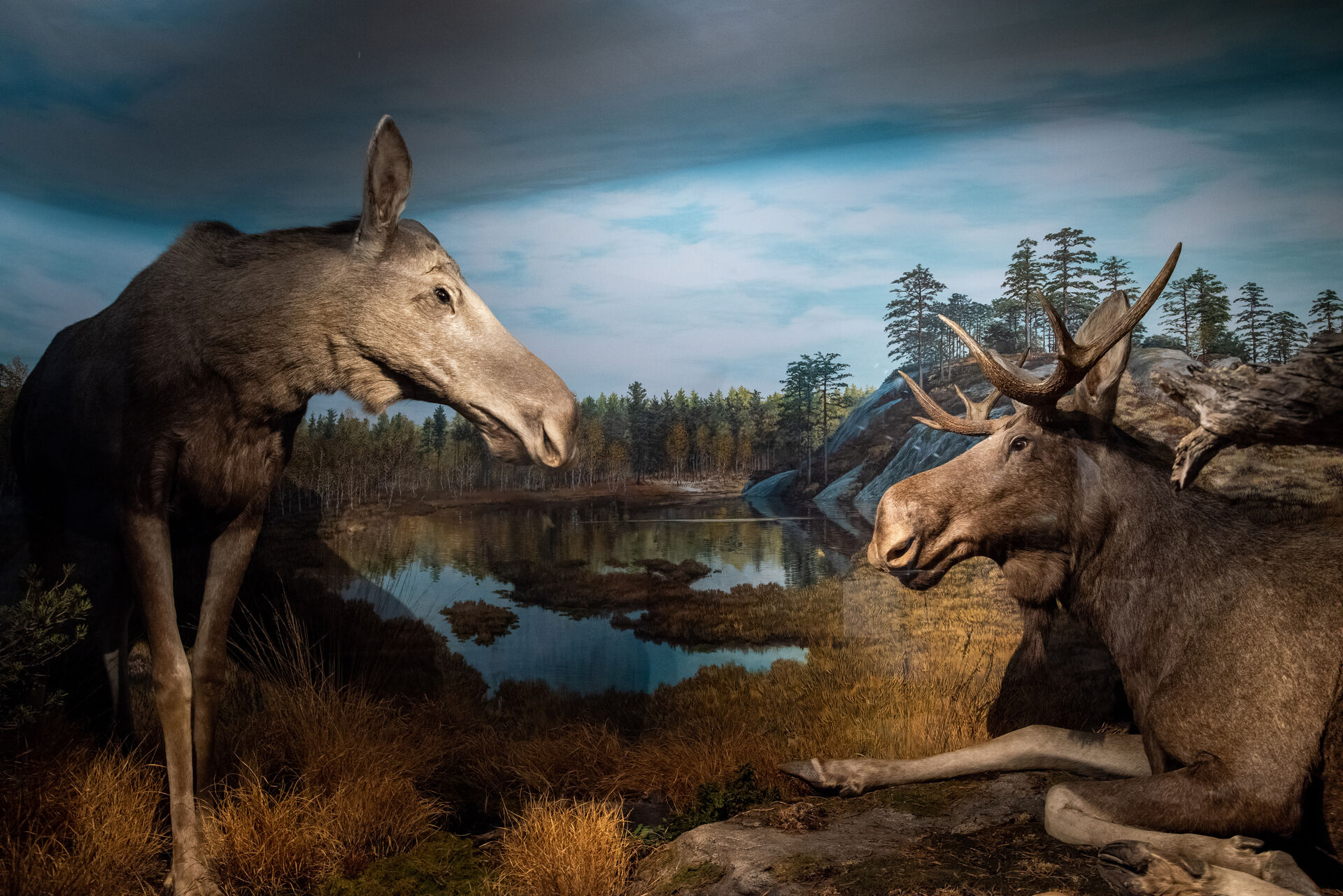
Collection
The museum no longer collects vertebrate specimens by actively killing animals. This so called passive collecting is however executed very actively, relying on contributions from the public, authorities and other scientific institutions.
There is a wide variety in the material collected for the zoological collections. A dead snowy owl, a road-killed snake, shed snake skin, or bird eggs from unsuccessful nesting are just a few examples.

Conservation
Dead mammals and birds are temporarily stored frozen, before being skinned and cleaned.
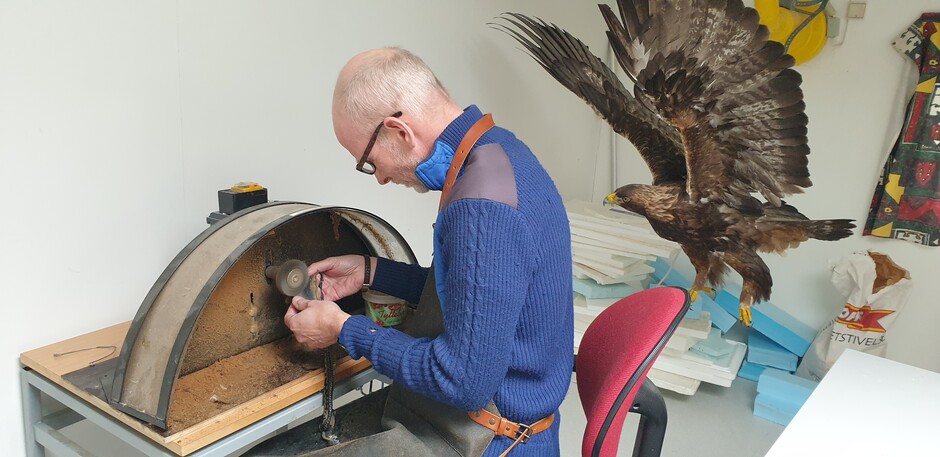
Mammal skins are prepared as flat specimens, while bird skins are conserved with an artificial body inside, resembling a dead bird.
One wing is usually mounted loose for molt studies. Specimens are labelled with relevant collection data. When available, mammal crania are also cleaned and labelled together with the skin.
Tissue samples are collected as pieces of muscle stored frozen in alcohol. These may later be used for DNA analyzes, and tracing residues of pollutants like pesticides and harmful chemicals.
Fieldwork
Collecting data in the field is part of the tasks performed by the museum's zoologists. Such fieldwork may include, for example, measuring the weight and length of snakes, collecting DNA samples, recording the number of successful bird hatchings, or mapping the distribution range of a population using GPS.
Often, specific permission is required to collect data. This is to ensure the welfare of the animals.
.jpg)
.jpeg)
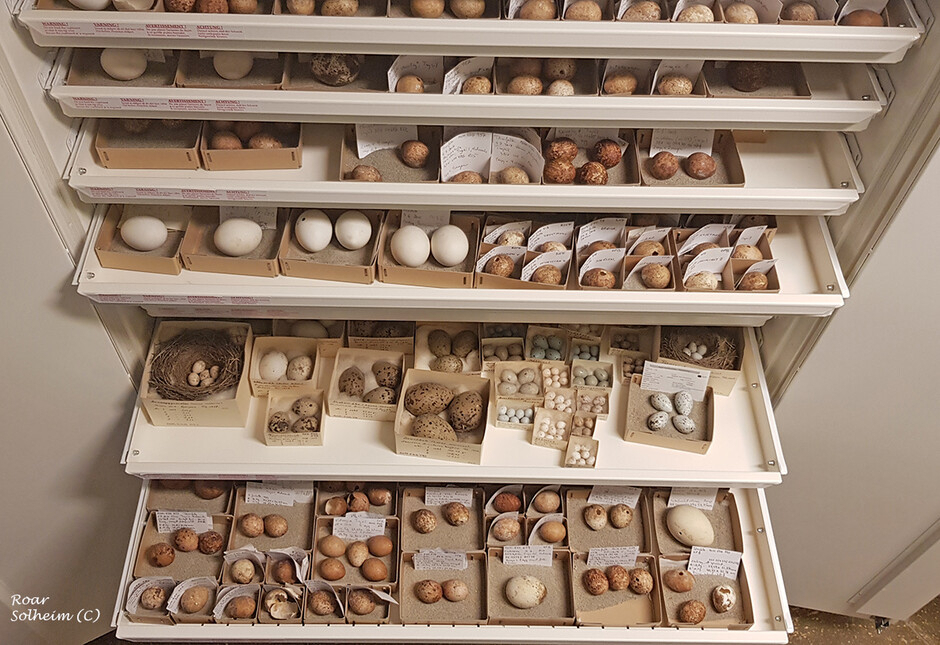
Part of the museum's collection includes bird eggs. The eggs are collected from failed breeding attempts.
Photo: ©Naturmuseum og Botanisk Hage, UIA/Roar Solheim
-beskjert.jpeg)
Pins are used to hold the skin in place on an artificial body while the glue dries.
Photo: ©Naturmuseum og Botanisk Hage, UIA/ Lisbeth Breland
.jpeg)
The museum collects dead animals. We do not go out and kill animals for the collections. Research sometimes requires multiple individuals of the same species, which is why we receive specimens from all over the country.
Photo: ©Naturmuseum og Botanisk Hage, UIA/ Lisbeth Breland

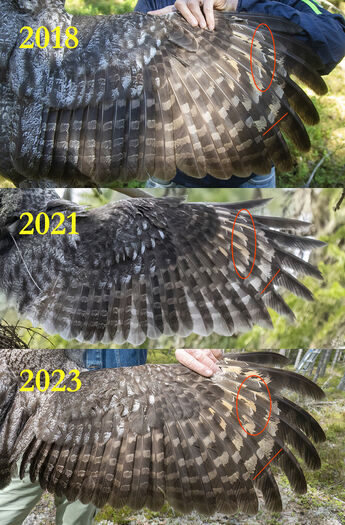
In the field, we can use live individuals for research purposes. One example is photography and GPS tracking of birds. Wing patterns on owls can be used to identify individual birds, which gives us valuable information about the distribution of owls.
Photo: ©Naturmuseum og Botanisk Hage, UIA/Roar Solheim
.jpeg)
Photo: ©Naturmuseum og Botanisk Hage, UIA/ Lisbeth Breland
.jpeg)
The museum has a large collection of eggs.
Photo: ©Naturmuseum og Botanisk Hage, UIA/ Lisbeth Breland
.jpeg)
Snowy owl chicks from an unsuccessful breeding attempt.
Photo: ©Naturmuseum og Botanisk Hage, UIA/ Lisbeth Breland
.jpeg)
Photo: ©Naturmuseum og Botanisk Hage, UIA/ Lisbeth Breland
.jpeg)
Photo: ©Naturmuseum og Botanisk Hage, UIA/ Lisbeth Breland
.jpeg)
The zoological collection also includes skulls and craniums.
Photo: ©Naturmuseum og Botanisk Hage, UIA/ Lisbeth Breland
.jpeg)
The museum does not kill animals. These bird specimens have been collected from unsuccessful breeding attempts.
Photo: ©Naturmuseum og Botanisk Hage, UIA/ Lisbeth Breland
.jpeg)
Snowy owl chicks from an unsuccessful breeding attempt.
Photo: ©Naturmuseum og Botanisk Hage, UIA/ Lisbeth Breland
.jpeg)
Photo: ©Naturmuseum og Botanisk Hage, UIA/ Lisbeth Breland
.jpeg)
Photo: ©Naturmuseum og Botanisk Hage, UIA/ Lisbeth Breland
.jpg)
The collection also includes skins.These birds are not "stuffed", they are not mounted on an artificial bodys.
Photo: ©Naturmuseum og Botanisk Hage, UIA/ Roar Solheim
-beskjert.jpeg?alt=thumbnail)
.jpeg?alt=thumbnail)
.jpeg?alt=thumbnail)
.jpeg?alt=thumbnail)
.jpeg?alt=thumbnail)
.jpeg?alt=thumbnail)
.jpeg?alt=thumbnail)
.jpeg?alt=thumbnail)
.jpeg?alt=thumbnail)
.jpeg?alt=thumbnail)
.jpeg?alt=thumbnail)
.jpeg?alt=thumbnail)
.jpg?alt=thumbnail)
Contact persons
${include:contact url=[/om-uia/ansatte/roars/index.html?vrtx=vcf] contact=[true] title=[Researcher and senior curator, Zoologist]}
Contact Roar regarding the zoological collection, conservation, and curation. Roar primarily researches birds, especially eagles and owls.

- beate.johansen@uia.no
- Phone
- +47 38 14 24 73
Contact Beate regarding the collection of amphibians and reptiles. Beate researches reptiles, amphibians, hedgehogs, and badgers. Among reptiles, she primarily works with smooth snakes.