Live Electronics
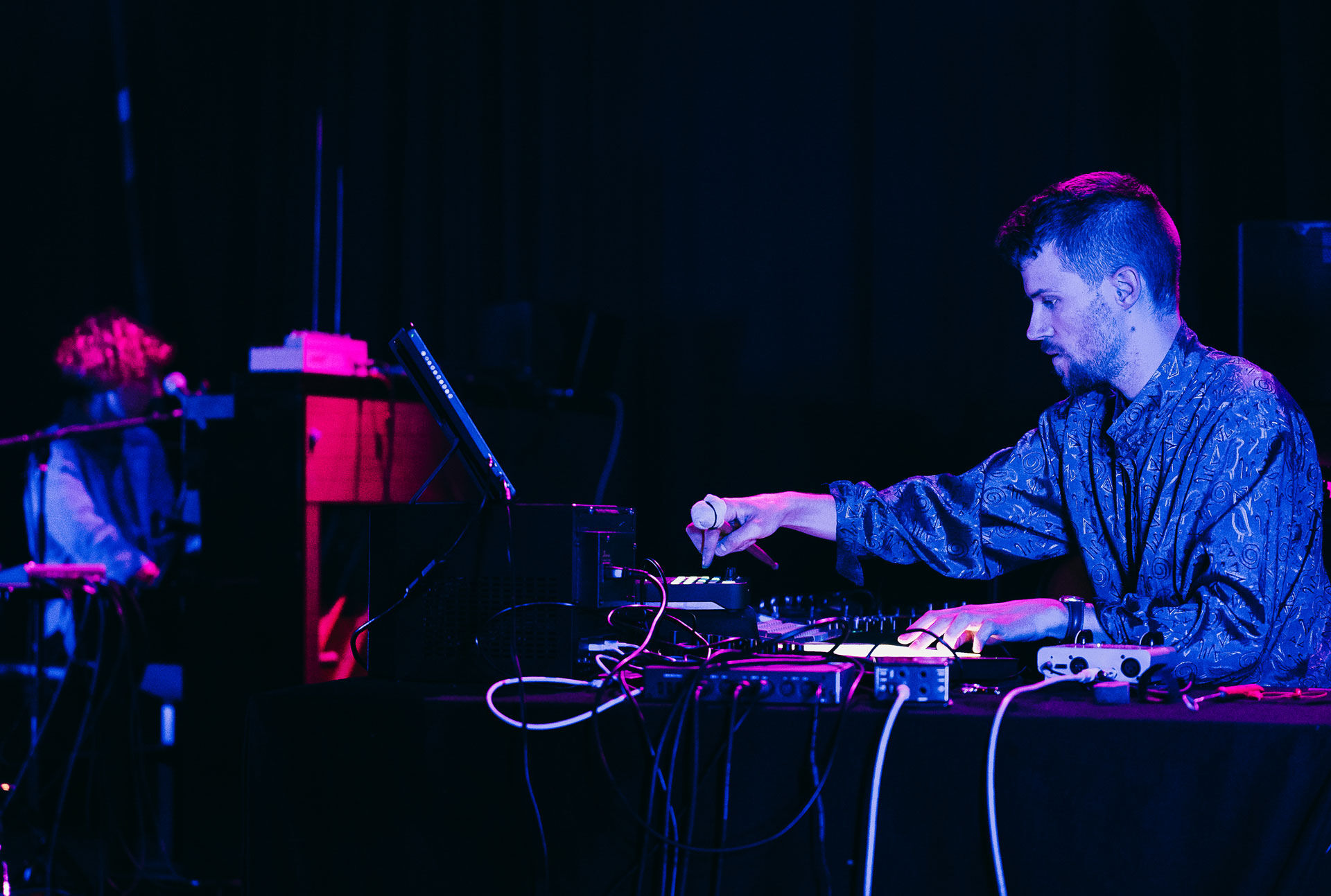
KristiansandAre you interested in creating music using live sound and innovative technology? Live Electronics offers a hands-on experience in improvisation and performance, both solo and in collaboration.
Facts about the program
- ECTS credits:
- 60
- Duration:
- 1 year
- Mode of study
- Full-time
- Semester:
- Autumn 2027
- Application deadline:
- 1 Dec/1 March
- Student places:
- 15
About the programme
Live Electronics is relevant for both musicians trained with a main instrument as well as ‘laptop’ musicians that rely solely on electronic interfaces to make and perform their music. We also welcome composers, songwriters and producers that seek to develop and perform their artistic project in a concert setting.
If you play an acoustic instrument, you will learn how to creatively expand your sound using music technology. If you come from a production background, this is an opportunity to transform your studio skills into a live performance setup, turning your gear into an expressive instrument on stage.
There will be no written assignments during the course— music is at the center, your focus will be playing, thinking, listening, analyzing, experimenting and evolving your ability to integrate electronics into your performance.
We strongly encourage musicians with a classical background to apply if you are curious about hybridizing your practice into more contemporary and electroacoustic territories.
Different musicians and teachers will lead the workshops, each bringing their own way of playing and sharing their personal strategies. In the previous editions we have had the chance to work with musicians such as: Bugge Wesseltoft, Eivind Aarset, Nils Petter Molvær and Alva Noto, Hilde Marie Holsen, Mariam Gviniashivili, Øyvind Brandtsegg, Anja Lauvdal, Michele Rabbia, and others.
We strive for a wide range of instruments, skills, and backgrounds in our study. Students from electronic, classical, jazz, and popular music come together to find new ways of making and performing music.
What will you learn?
Through teaching and mentoring by international leading artists and professionals, we seek to educate students that hold international standards relating both to the nature of their artistic project and the manner of which this is conveyed in a concert setting.
- You develop your skills within music technology and performance under individual guidance
- You learn different strategies for using music technology creatively
- You acquire various techniques to process and treat your own main instrument
- You develop your competence to express your own musical ideas in interaction with others
- You become better at making aesthetic assessments related to the use of music technology
- You gain in-depth knowledge of various techniques for improvising and composing with your main instrument through music technology
- You learn to incorporate existing compositions into your improvisation
- You learn about how to configure a custom setup to process your main instrument
- You acquire knowledge about developing, planning, and carrying out concerts associated with your artist project, where the use of music technology and collaboration with other musicians are central
Teaching methods and facilities
Workshops are a central part of the program and introduce you to various aesthetic and creative possibilities. We offer industry standard facilities for both performance and production, all through an innovative pedagogical framework.
Student life
Read more about student life in Southern Norway and what to expect here.
Career prospects
The one-year programme in Live Electronics gives you necessary skills for choosing professions with various tasks related to the performance, production, and dissemination of music.
Further studies
The one year programme can be used in or as a supplement to other bachelor's education.
Admissions
Application period
- Non-EU/EEA international applicants: From 1 November to 1 December
- EU/EEA applicants: From 1 February to 1 March
- Nordic citizens and applicants with a permanent or renewable residence permit in Norway: From 1 February to 15 April
Admission requirements
a) The general basis for admission to universities and university colleges in Norway is called Higher Education Entrance Qualification. You may find what is considered university entrance qualifications from your country in the 'GSU' list. This list states the basic requirements for admission to higher education in Norway. Please download the latest version of the 'GSU' list from this website.
b) Successful completion of entrance examinations on your main instrument.
Overseas (non-Norwegian) applicants who are not able to attend in person for the entrance examinations can be offered digital assessments. The audition can be carried out by sending a verified audio-visual recording of a performance by the candidate (performing repertoire of their own choice), and interviews can be conducted on a digital platform.
Applicants must pass the entrance exam to qualify for admission.
c) Entrance requirements are Higher Education Entrance Qualification for international applicants and certified language requirements in English, see a).
Recommended prerequisites
Good knowledge and skills are required in the main areas of performance practise, production and composition to pass the entrance audition.
How to apply
How to apply to degree programmes
The Section for Admissions at UiA can answer questions about the application process. For questions about the programme itself, please contact your faculty. See the contact details at the bottom of this page.
Contact the Section for Admissions
Phone: +47 38 14 15 64
Phone hours: Monday - Wednesday - Friday 9:00 - 11:00
Tuition fees
Tuition fees are applicable to international students with citizenship from outside the EU/EEA or Switzerland.
Contact

- lars.bogen@uia.no
- Phone
- +47 38 14 22 85

- alessandra.bossa@uia.no
- Phone
- +47 38 14 13 31

- pia.goul@uia.no
- Phone
- +47 38 14 24 12