The historical impact of technology
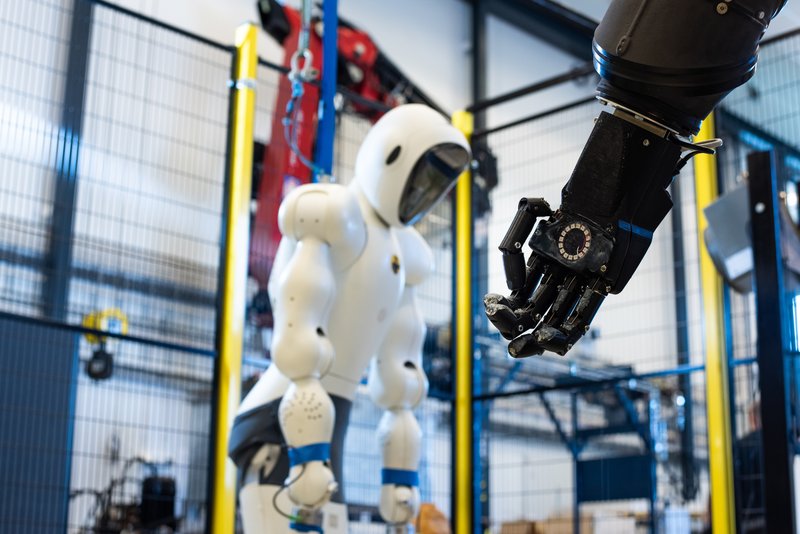
In the future of work, humans will lose their jobs as they compete with robots. However, when looking at history, we can see that technology has always created new employment opportunities. To better understand the future, we can learn from the past. This video provides a brief introduction to how work has changed throughout history and how it has shaped our society.
What will our jobs look like in the future?
In this video, we follow a group of young people from Dahlske Secondary School who question whether the future of work will be exciting or daunting. Research shows that new technology will inevitably lead to some jobs and work tasks disappearing, while others emerge. The students investigate whether robots can replace humans and what role human beings will play as technology continues to take up more space in the workplace. Learning about research and the world of work, brings these young people closer to finding answers.
How will we work in the future?
As technology continues to develop and change at a rapid pace, we will need to be adaptable and ready to acquire new skills. In this video, the young people explore what kind of skills will be important for the future and how we can interact with technology.
Join us to gain a better understanding of how the health and care sector will change. Gain more insight into what businesses will need in the future and see an example of what a flexible workplace could look like.
How do we want work to be?
There is an emerging demand for a sustainable society. This will reshape the dynamics of the workplace and can manifest in different ways. In this video, the young people talk about the much-discussed concept of sustainability and visit workplaces that prioritise sustainability, diversity and inclusive workplaces. They explore what this actually means and how the future of work can look like when we make the most of local resources.
Facts about GI-NI
- GI-NI is a European research project that studies changes in the world of work.
- The research focuses on three main trends: technological progress, globalisation and migration. These trends are expected to shape which skills and knowledge will be in demand in the job market.
- The acronym GI-NI represents 'Growing Inequalities'. A main goal is to prevent an increase in social inequality.
- GI-NI has received funding from the EU Horizon 2020 programme.
- The Research Council has funded a Norwegian sub-project called GI-NI+ and the production of videos for young people.
Website: gini-research.org
Facts about the videos
- In the videos, you will meet four young people from Dahlske Secondary School who are seeking answers to questions related to the future of work.
- Researchers from the GI-NI project present their research.
- Others contributing to the videos are Mechatronics Innovation Lab (MIL), Eide Elementary School, I4Health, Raufoss Secondary School, Hapro Electronics, Lillesand Hub, the Norwegian Confederation of Business and Industry (NHO), Røyland Farm, the NCE Manufacturing Cluster, IDT Solutions, Elkem, and the Chamber of Commerce in the Kristiansand Region.