Objective
The overall aim of the project is to promote inclusion, belonging, self-efficacy, growth and mental health for children and youth, and at the same time prevent exclusion, mental ill-health and marginalisation throughout the childhood and teenage years and onwards. The project focuses on children, youth and families who struggle due to neurodivergence (ADHD, Autism and Tourette’s) and adjustment difficulties in school and their everyday lives.
Strategies
In the Where Wild Things Grow-project, various strategies are implemented across three arenas: (1) Outdoor therapy – Friluftsterapi – in health care services, (2) Outdoor learning – Friluftslæring – in schools, and (3) Outdoor life – Friluftsliv – as leisure activities.
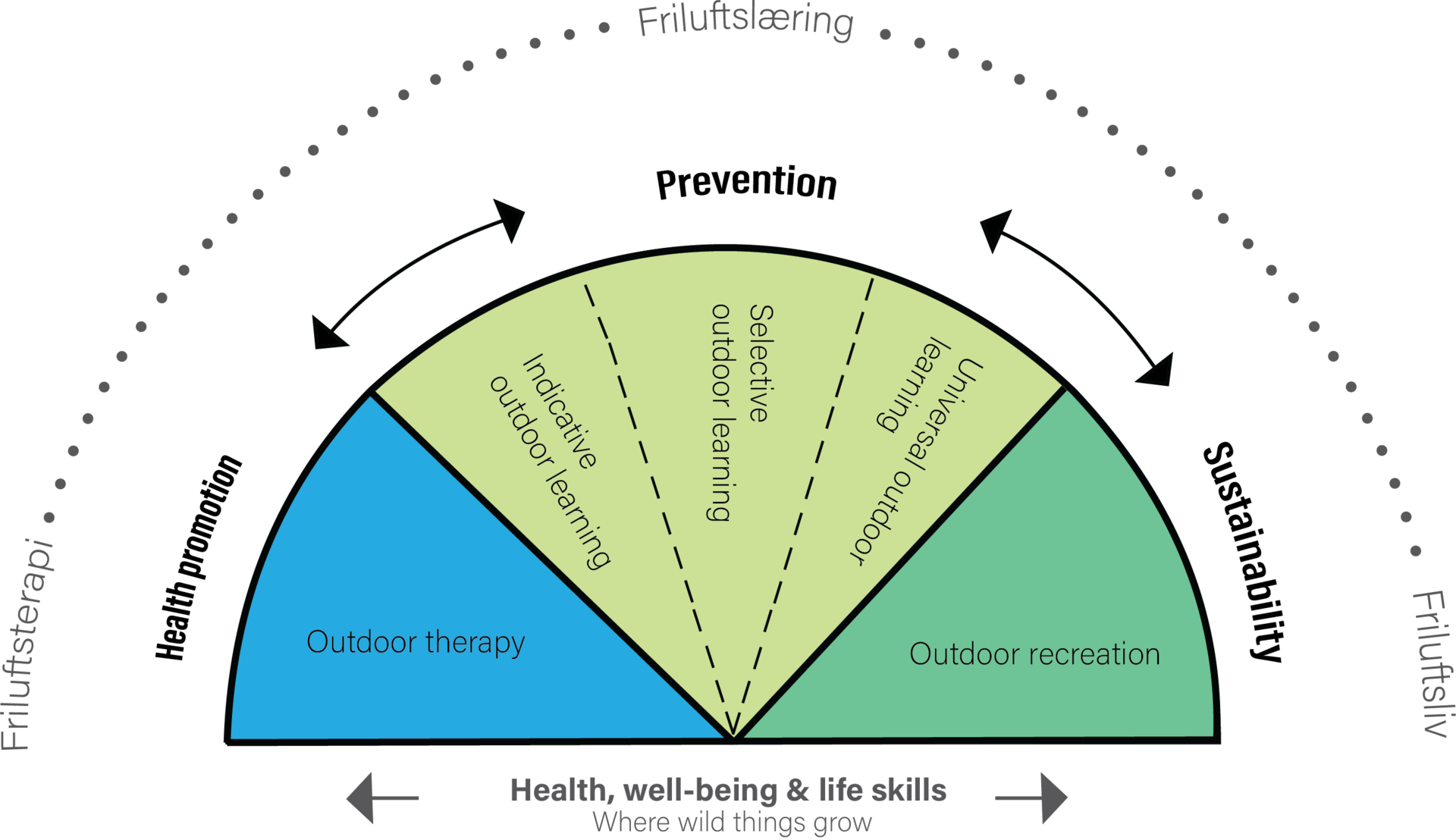
The strategies are developed, implemented and evaluated continuously through a close collaboration between project partners and the project group through action research. You can learn more about the various interventions and work packages below.
Project description
The Where Wild Things Grow-project comprises four «work packages».
Prevention: Outdoor learning in Schools
In the school arena, we implement three variants of what we call – Friluftslæring – outdoor learning in English. Outdoor learning combines learning activities, community and time in nature as a health promoting environment.
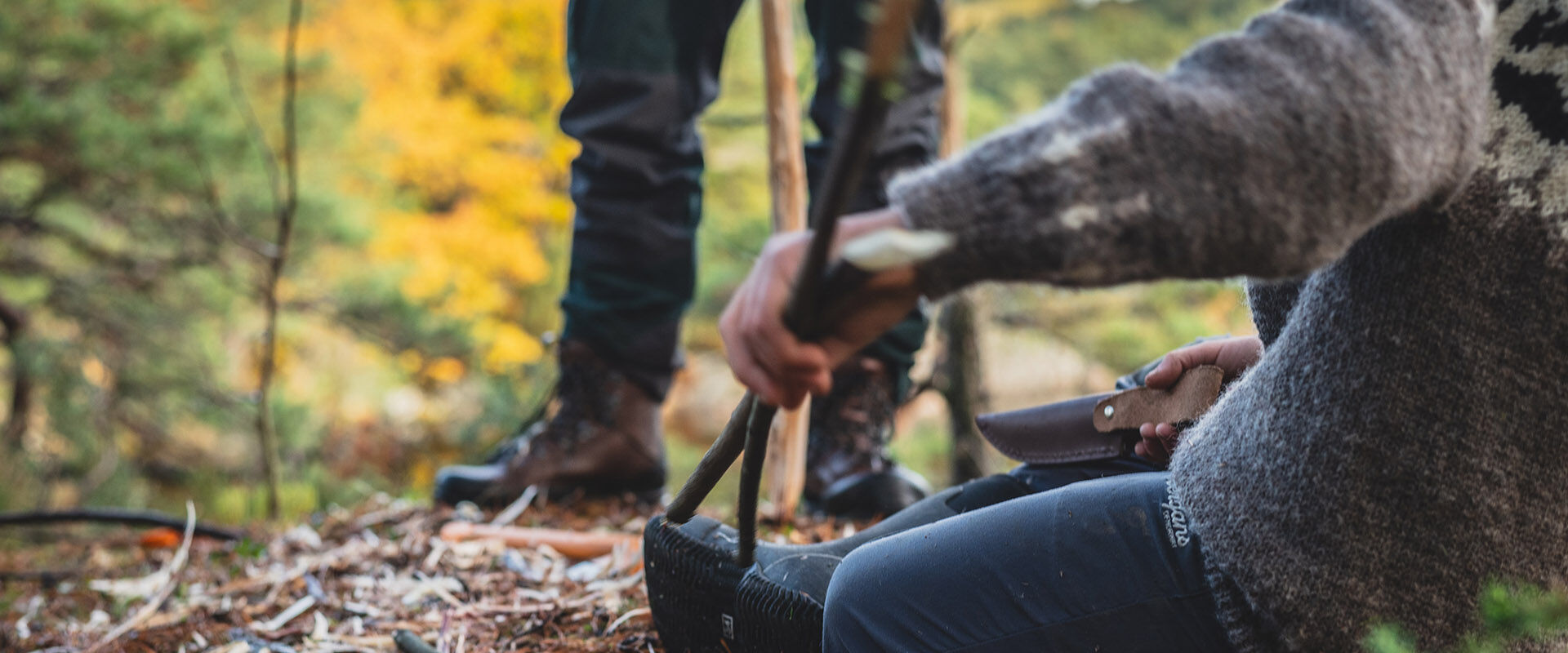
Friluftslæring takes place outdoors in nearby nature close to the schools over a time period of minimum twelve weeks of each school semester where each session has a duration of minimum three hours. The three variants of outdoor learning are:
Universal outdoor learning
In the universal variant, an entire school year/class participates. This makes it easier to combine learning activities that takes place outdoors with what happens in the classroom.
Selective outdoor learning
The selective variant comprises smaller groups of around 8- 10 children from different years/classes from the same school. The children themselves choose to take part in the group due to various reasons, often times related to discomfort or lack of motivation at school. The selective variant focuses on the core curriculum that focuses on human dignity, identity and cultural diversity, critical thinking and ethical awareness, the joy of creating, engagement and the urge to explore, environmental awareness and respect for nature, democracy and participation, and finally health and life skills.
Indicative outdoor learning
The third variant is indicative outdoor learning, which either takes place in each school or in collaboration with school partners, who offer alternative learning arenas for children who struggle with absenteeism. The goal is to have the chance to be part of a community of peers, experience mastery, learning through outdoor and experiential activities, mainly focusing on the core curriculum of social learning and development, focusing on practical and concrete learning experiences, as well as health and life skills, adjusted to each individual child’s interests, motivation and constitution.
Health Promotion: Outdoor Therapy for Youth
Within health services, we implement two variants of nature- and experience-based dag programmes for youth in municipal and specialist mental health services. Both day programmes run as a ten-week group intervention with weekly sessions.

Basecamp
Basecamp is a nature-based day programme that takes place in nearby nature, and each session lasts four hours. The groups comprise 6- 10 participants between 12- 18 years of age, and 2- 3 therapists/facilitators. Each participant makes their own individual goals. The group intervention is guided by a practice handbook, in which each session has a designated theme. Each session follows a structure consisting of a group check-in, shared outdoor activities, outdoor cooking together, and a group check-out. The participants co-create the sessions to ensure engagement and self-determination.
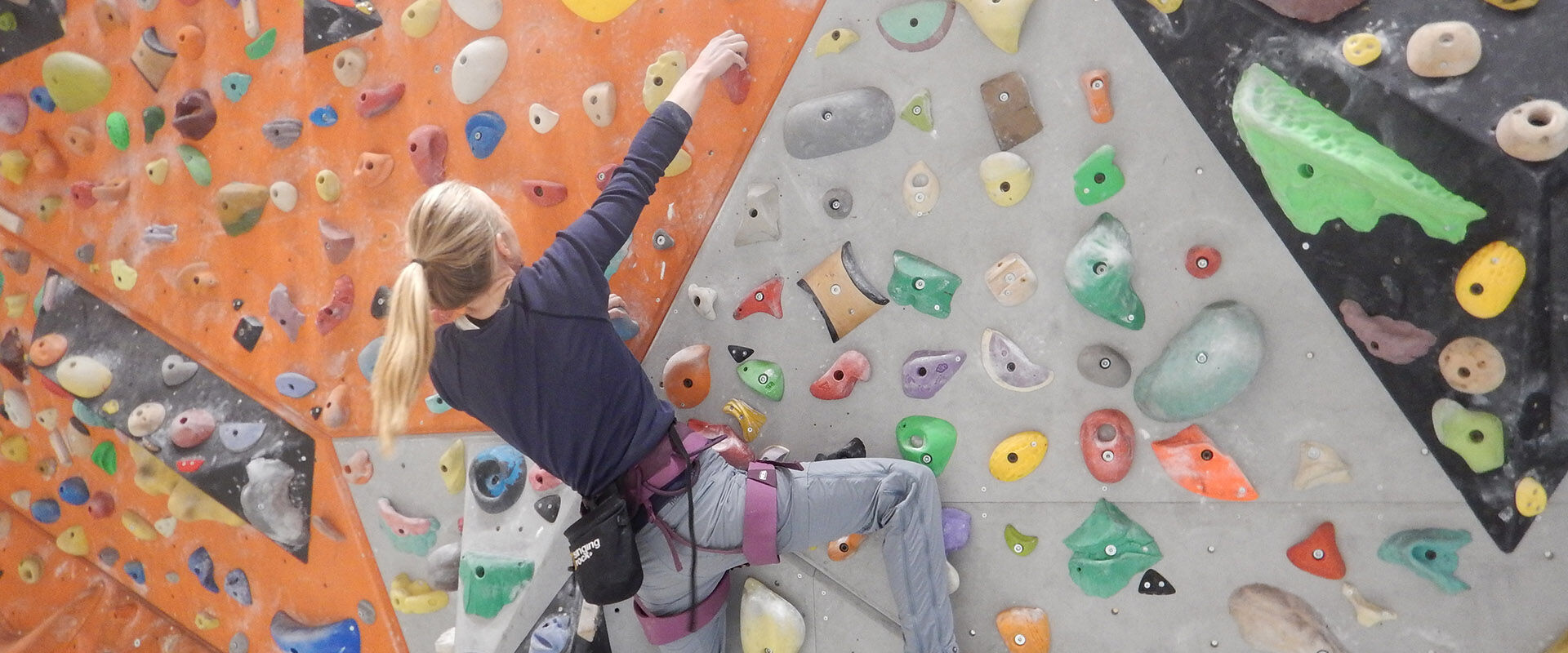
Climbing therapy is an experience-based day programme that takes place in a climbing hall, and that combines climbing activities with techniques from cognitive behavioural therapy. The sessions lasts 1,5 hours and the groups comprise 4- 6 participants between 12- 18 years of age, accompanied by 2- 3 therapists/facilitators with climbing expertise. Each participant makes their own individual goals. The group intervention is guided by a practice handbook, in which each session has a designated theme. Each session follows a structure consisting of a group check-in, a warm-up activity, climbing activities and group exercises, and finally a group check-out.
Health Promotion: Outdoor Therapy for Families
Within the health sector and community-based family services, we implement two variants of nature- and experience-based interventions for families. These are both multi-family intervention, where either the entire family participates, or the dyadic variant, where a parent (in this case the father) participates with one child.
UTFAM
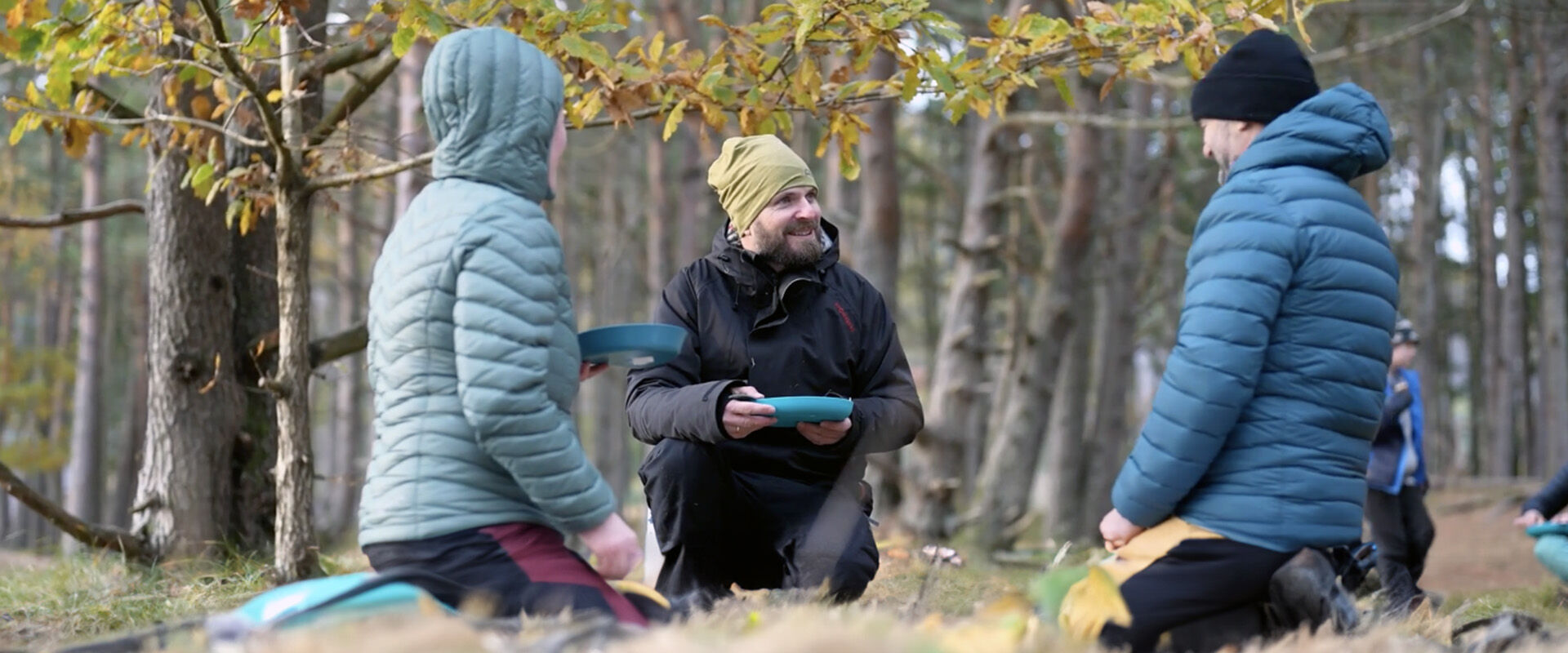
The multi-family intervention where entire families participate is developed in a previous collaborative project, called UTFAM (which also means UT= Out and FAM= short for family), so we kept this name. The UTFAM intervention comprises an initial parental course, where only parents/guardians participate. Following this introductory course, the multi-family day sessions begin where parents/guardians participate together with their child(ren). Within child and adolescent health services, this means both the referred child together with siblings. The main teacher(s) of the referred child can also be invited to participate in a school guidance session and the closing ceremony at the end of the intervention, where each child is provided an individual certificate of participation and an honouring speech from the lead therapist.
The multi-family intervention is guided by a practice handbook, in which each session has a designated theme. Each session follows a structure consisting of a group check-in, outdoor activities, free play, outdoor cooking together, and a group check-out. The day sessions normally last 4- 5 hours and the closing ceremony 2,5 hours.
Father-son/child
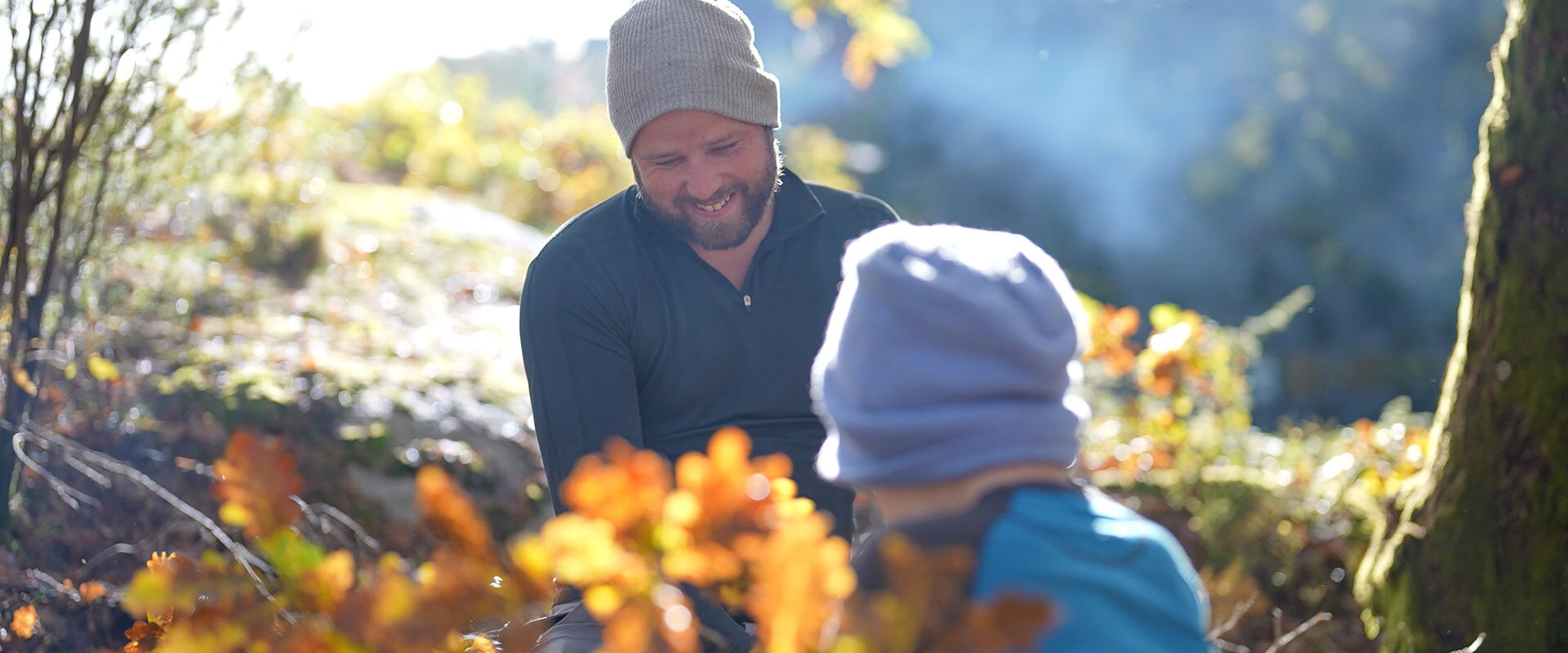
Father-son/child is a dyadic multi-family intervention that is particularly developed to strengthen the father-child relationship and increase fathers’ involvement in their child’s life. The background of this particular intervention is the tendency that fathers are not involved in therapy or their child’s health care, or that the father-child relationship could be enhanced through spending quality time together. The group intervention also provides a community among fathers.
The father-son/child group intervention can either be facilitated as an intensive variant of five-day duration in a single week or as weekly day sessions over six weeks. The intervention is guided by a practice handbook, which as opposed to the UTFAM handbook has a dyadic focus – a one-on-one approach between father and a single child.
Sustainability: Outdoor Recreation as Leisure Activities
In the leisure sector, we collaborate with municipal leisure unit, NGOs and outdoor associations such as the Norwegian Trekking Association South and East-Agder Trekking Association in facilitating outdoor recreation for children, youth and families.
-1920x800.jpg)
Here we can mention multi-family groups and outdoor activities for youth that are facilitated by the leisure unit in Kristiansand municipality. Another wonderful initiative is “Young Nature Talents” by the Norwegian Trekking Association (DNT), which is a one-year training course for youth aged 15- 17 years of age. DNT also facilitate a wide network of family-run “Turbo clubs” for children aged 4- 12 years of age and their parents. Community-based climbing groups for youth are also offered. For more info: The Norwegian Trekking Association
Further, BUA (Barn:Child, Unge: Youth, Aktivitet: Activity) offer free rental of outdoor equipment from different locations in the Agder region: For more info: [website only available in English].
Sustainability
In this context, sustainability is not only linked to environmental awareness, but also to sustaining and enhancing psychosocial health through the availability of community-based outdoor recreation and leisure activities in the communities where children and youth grow up.
The activities shall contribute to inclusion, participation, mastery and public health, whereby sustaining positive development, social interaction and outdoor recreation in their everyday life.
Timeline
Preparatory phase (2023), pilot phase (2024-2025) and main phase (2026-2029).
Affiliation
The Where Wild Things Grow-project is lead by the Department of Child and Adolescent Mental Health (ABUP) at Sørlandet Hospital Trust and affiliated with the Department of Sport Science and Physical Education and the Department of Psychology at the University of Agder.
Results
Three PhD-projects and several substudies make up the research in Where Wild Things Grow. Over the next few years, several scientific articles will be published. Therapeutic and pedagogical practice handbooks are also developed.
Publications


.jpeg?alt=thumbnail)