"There are many studies on adaptive teaching but few that show how it's practised within sports and outdoor subjects in higher education," says sports researcher Aron Laxdal from the University of Agder (UiA).
He recently published a study on adaptive teaching for students with disabilities. The study is based on interviews with four teachers.
Together with two other researchers, he examined how four university teachers tailored teaching for a visually impaired student. What insights did they gain from this?
The visually impaired student was studying for a bachelor's degree in health sciences and chose the one-year outdoor recreation programme as part of her studies.
Activities throughout the year
Blind students are uncommon in a subject like outdoor recreation. The subject is physical and is also largely about visual experiences.
"It was a great experience for both the teachers and students to have the blind student participate," says Laxdal.
He believes both the teachers and students learned as much from the blind student as she learned from them.
A lot of preparation and a lot of weather
It required a significant amount of preparation to involve a blind student in skiing and building snow caves. But if you choose outdoor recreation as your specialisation, skiing in snowstorms isn't the only challenge you'll face.
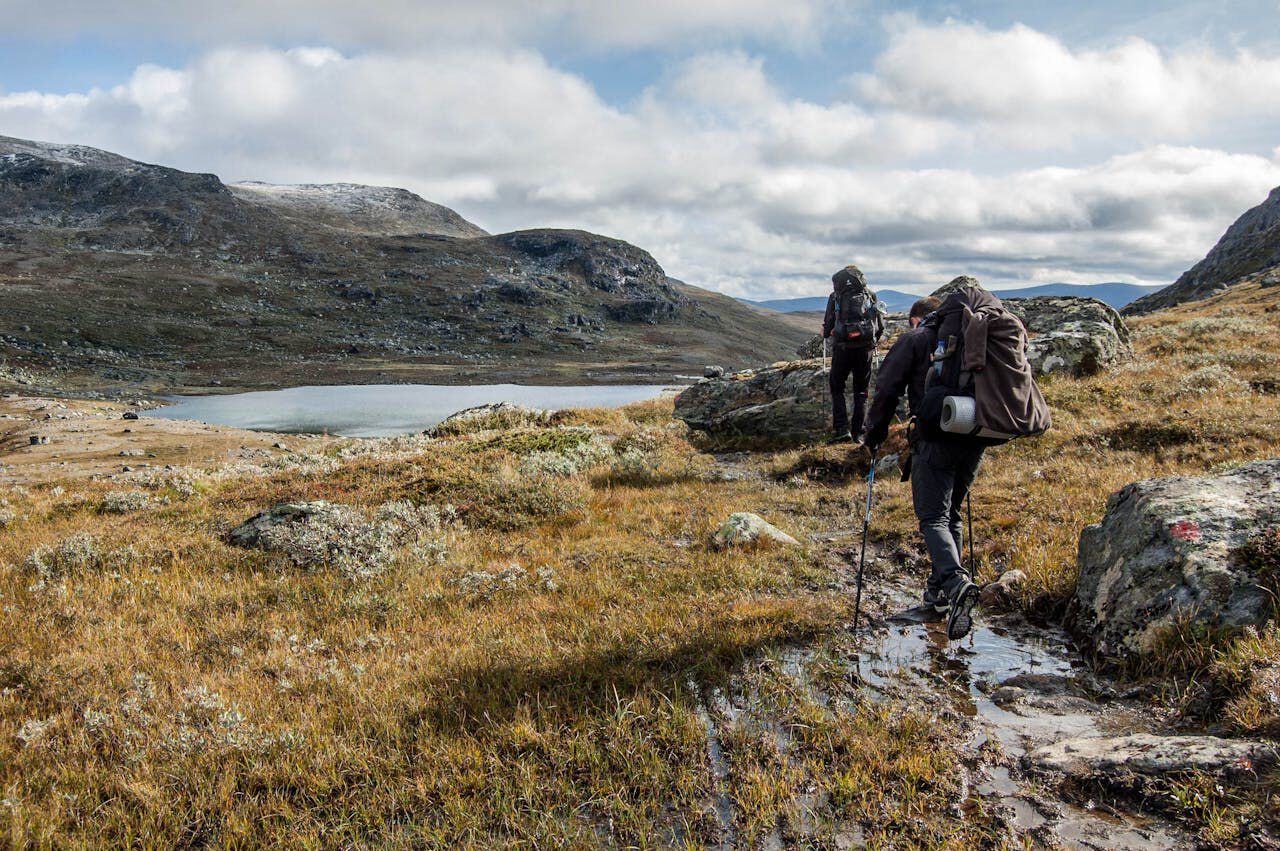
Throughout the year, students will also go on bike rides. They'll venture into kayaks. They'll paddle canoes. They'll hike through woods and fields. They'll become familiar with high mountains, mountain lakes and streams. And they'll be outside in both autumn and winter, regardless of the weather.
In addition to being in a canoe, students should also be in the water. Swimming is a given. Having a course or competence in lifesaving is recommended.
"This is undoubtedly a physically demanding course. Many trips were challenging even for able-bodied students. For example, students spent several days in the high mountains. They planned the trip, set up tents and dug snow caves," says Laxdal.
Adaptation for the student, but not of the programme
The visually impaired student received a programme tailored for her. Other students found it enriching that she was involved. So did the teachers. They were satisfied that she completed the course.
But Laxdal wasn't entirely pleased with that response.
"It's fine that they adapted the trips for the visually impaired by having students assist her along the way. She was exempted from various activities during the trips, but this wasn't always necessary," says Laxdal.
Laxdal explains that she was, for instance, excluded from birdwatching.
"It's hard to look for birds when you're visually impaired. But the key to finding birds is listening for where they are. In that area, the visually impaired had more training than the others."
Laxdal believes this was an unnecessary exclusion. In the study, he calls it a narrow view on adaptation.
"A broader perspective on adaptation could have led the teachers to find an alternative activity that still ensured she achieved the same academic goals as the other students," he says.
Real outdoor recreation doesn't have to be daring
Laxdal points out that outdoor subjects are often based on a somewhat extreme view of nature: Trips and sleeping outdoors should preferably be a bit challenging to be called outdoor recreation.
"Students will eventually enter jobs where they'll teach others how to navigate woods and nature. They must learn that meaningful experiences of nature can be made accessible for everyone," he says.
The study reveals that teachers patched up the existing programme instead of making larger changes to the teaching.
"You don't have to arrange trips in difficult terrain. Real outdoor recreation doesn't have to be daring and challenging to be meaningful," says Laxdal.
He believes the subject has much to gain from normalising challenges.
"We conclude that adaptative teaching shouldn't focus too narrowly on the individual. A broader perspective means that students should be able to choose from multiple activities to learn what they need," says Laxdal.
The visually impaired student was qualified
It's worth noting that the visually impaired student was qualified for the course. She was physically fit and could both swim and ski before she started the course.
"The visually impaired student succeeded as a student. She became part of the group and completed the course. But I think teachers in outdoor recreation need to consider more how they can adapt courses and activities for more people," says Laxdal.
Reference:
Aron Laxdal, Thomas Birkedal Stenqvist and Erik Aasland: