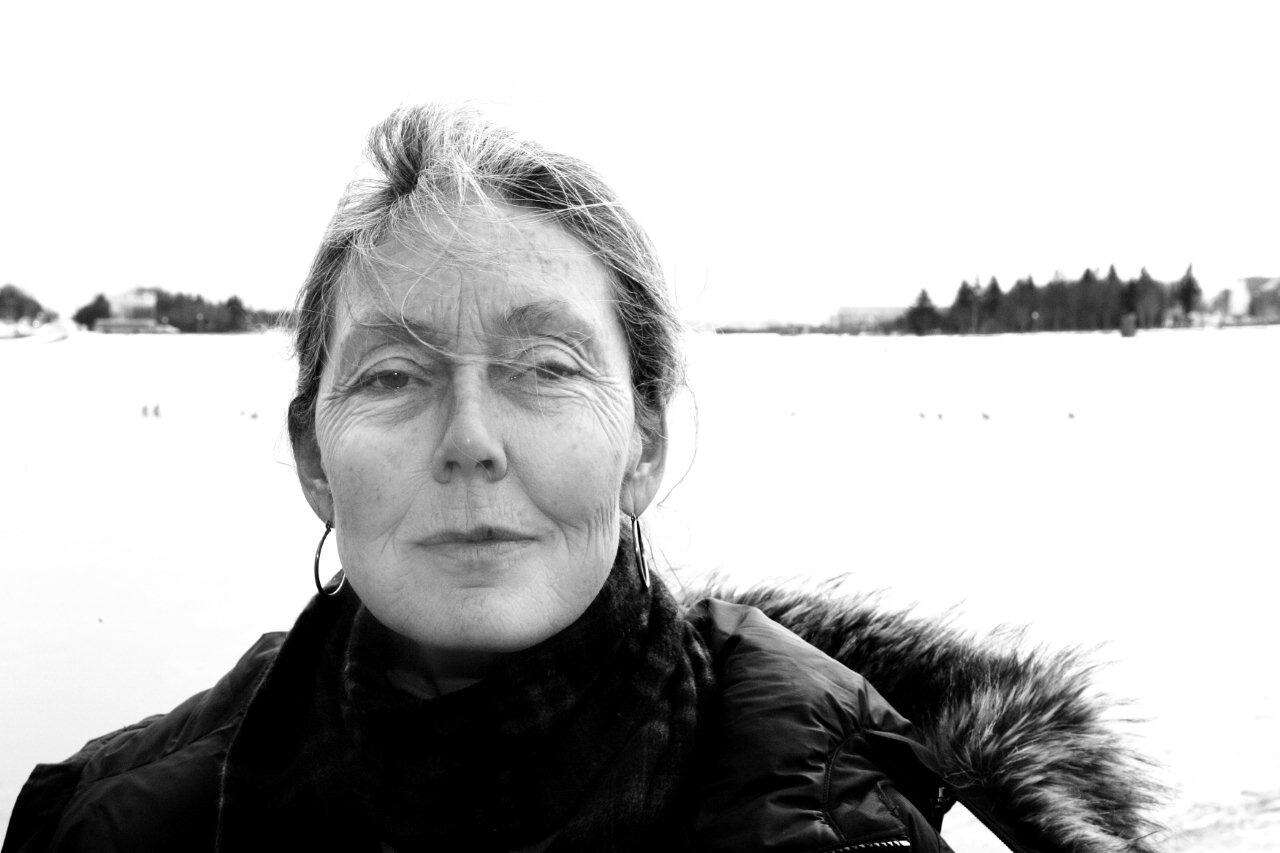
Anna Fürstenberg at the University of Agder (UiA) is working on a doctoral thesis on the poet Anne Carson. She is not surprised that the prestigious Nobel Prize in Literature has gone to the Canadian.
"It would have surprised me if she’d won the prize when I first started reading her 10 years ago, but not now. In recent years, she has become hugely popular. Many people read her work and have nominated her for the Nobel Prize on several occasions,” says Fürstenberg.
She adds that Carson is well deserving of the prize. In this respect, she is on a par with Jon Fosse, who himself won the Nobel Prize in Literature in 2023. He told *Morgenbladet* that the prize is well deserved and not unexpected.
Available in Norwegian
Several of Anne Carson’s books have already been published in the Scandinavian languages. In Norway, the poet Tone Hødnebø has translated several of her books, and is set to publish another this autumn.
Fürstenberg points out that Carson also has an academic career, with a doctoral thesis on classical literature on her CV.
"She is trained in classical antiquity and, in her own books, engages in a dialogue with Greek myths and characters. Carson often takes her starting point from classical literature which she herself has translated from Greek into English", says Fürstenberg.

Her dialogue with classical literature allows Carson to move freely between the past and the present. In the same way, she moves freely between different genres and literary forms.
“One and the same book by Carson can contain essays, poems, translations and Greek mythology. This bold and boundary-crossing style is a hallmark of her writing,” says Fürstenberg.
Breakthrough with an autobiography
The researcher recommends that new readers start with the novel Autobiography of Red (1998). The novel is written in verse, making it yet another of Carson’s genre-blending books. The Norwegian title is Rød Selvbiografi, translated into verse by Tone Hødnebø.
“This was the book that brought Anne Carson to a wider audience. Despite its unusual form, it also became very popular among younger readers,” says the researcher.
The book contains essays, translations, several appendices, the novel itself and a concluding fictional interview with an ancient poet.
“Along the way, Carson transforms the mythological material into a kind of modern bildungsroman,” says Fürstenberg.
A scholarly and playful writer
“Rød Selvbiografi is a good introduction to her entire body of work. Here, Carson demonstrates her playful approach to writing and makes use of the encounter between the ancient and the modern. In addition, she writes what I think is an incredibly moving portrayal of love,” says Fürstenberg.
She also recommends Nox (2010) as a good starting point for new readers of Carson. Nox is a book about grief, dedicated to Carson’s late brother, Michael. Like other books by Carson, it consists of poetry, translations and short quotations from various sources.
“Nox is a collage of images, photographs, letters and handwritten texts, which Carson weaves together with a translation of the Roman poet Catullus,” says Fürstenberg.
Several of Anne Carson’s books have been translated into Norwegian, including versions rendered into verse:
- Flyte, 2026
- Albertine-økt. Poem, 2026
- Korte foredrag. Poem, 2024
- Rød selvbiografi. Verse translation, 2021
- Glass, ironi og Gud. Verse translation, 2014