
“Over the past 200 years, Norway's prosperity has increased significantly, but it has come at an environmental cost. If we're going to create a sustainable economy for future generations, we need to take action," says Professor Steen Koekebakker.
Together with Professor John A. Hunnes from UiA and Associate Professor Are Severin Ingulfsvann at Nord University, he has written the book Etikk og bærekraft for økonomer (Ethics and sustainability for economists). Here, they address three major challenges for the future: climate change, economic inequality and growth.
Learn more about the book on the publisher's pages by following this link (in Norwegian).
Growing inequalities
“We have a good economic system in Norway, but we cannot ignore that it also creates inequalities. While prosperity increases, so do inequalities. It's important to maintain a critical perspective on this,” says Koekebakker.
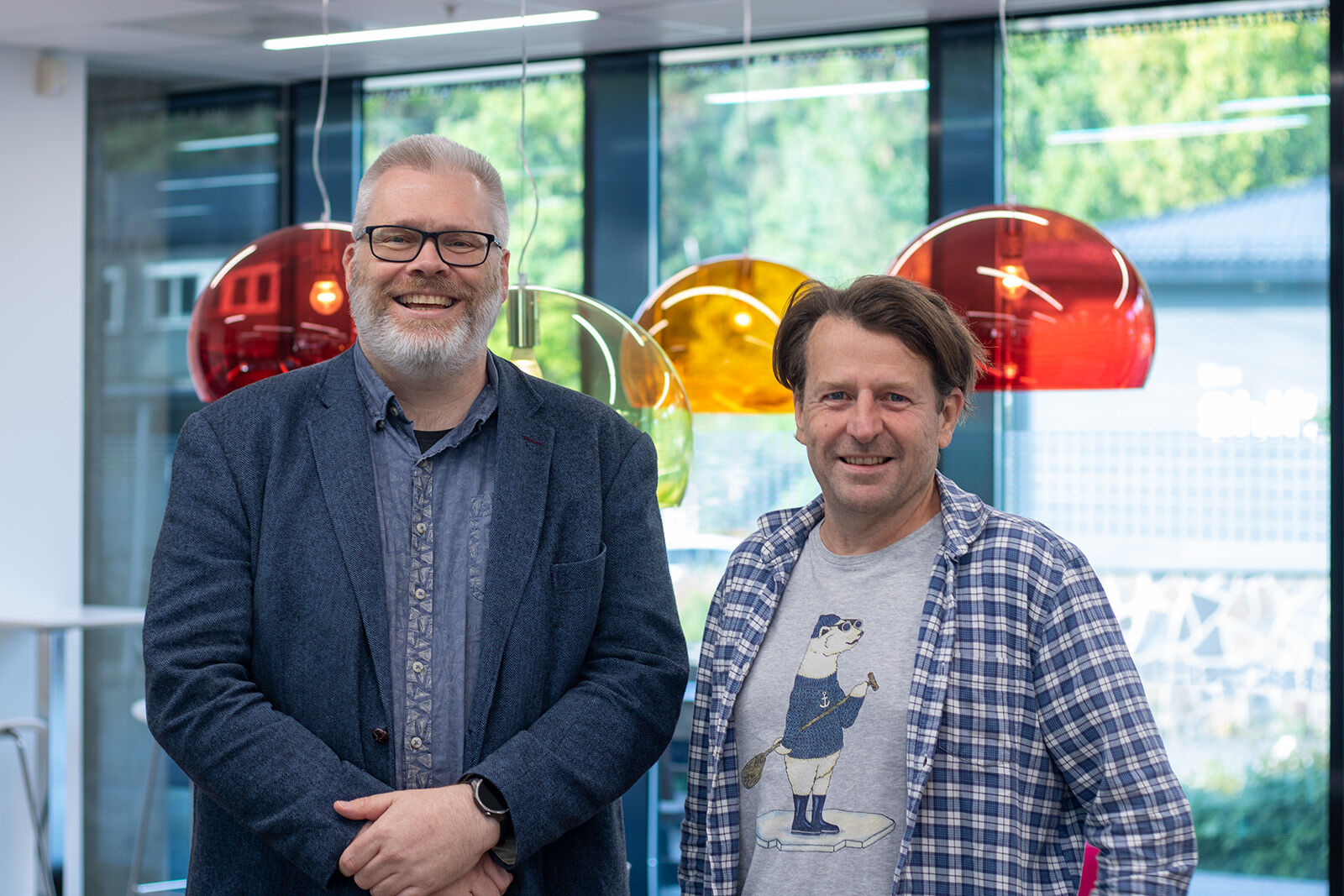
Professor Hunnes was previously appointed as a distinguished lecturer at UiA, partly because of his ethics teaching to economics students. This instruction begins as early as the first semester of the bachelor's programme, to give students an ethical framework that accompanies them throughout their studies.
“There's nothing in capitalism that guarantees a fair distribution of resources. It's important for economics students to understand this. Better distribution results from active decisions, not from the system itself,” says Hunnes.
Ethics in practice
Economics and ethics have received considerable media attention this autumn. The Norwegian Oil Fund's investments in Israeli companies have sparked much debate, making these interesting times for those working in the field.
“If you're going to make investments based on ethical regulations, you will face challenges. The Oil Fund was quickly accused of politicising its operations, but that's exactly how the ethical regulations are meant to work. It shows that taking ethical stances comes at a cost, both economically and politically,” says Hunnes.
The book was published by Cappelen Damm Akademisk before the summer and is part of the curriculum in the bachelor's degree programme in business administration at UiA.