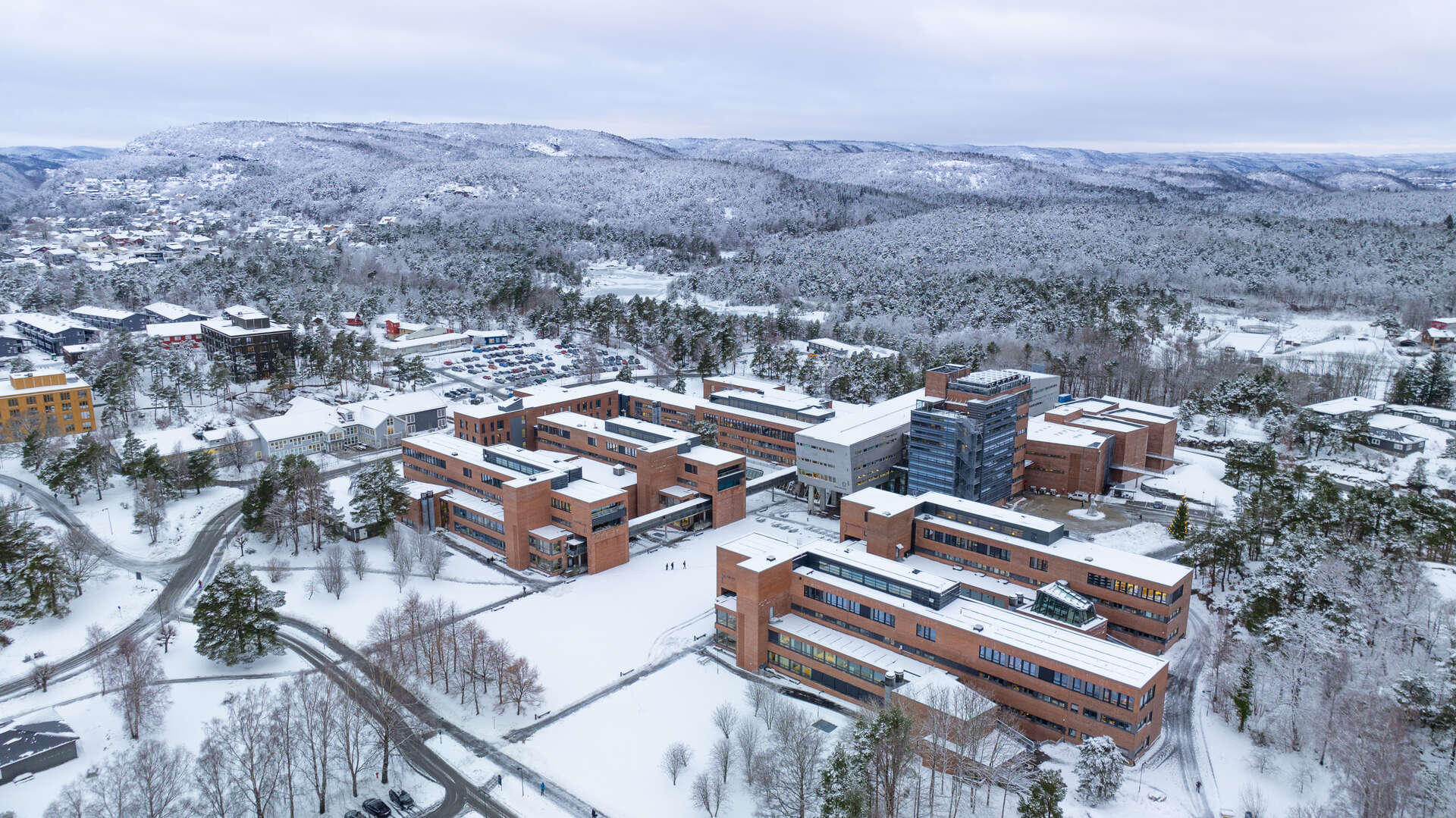
STAR research group (Syntax: Theoretical and Applied Research) invites participants to an international workshop that explores the application of linguistic theories in foreign language teaching. STAR aims to combine theoretical and applied approaches in the study of language structure from a formal perspective, and there is growing interest in integrating formal linguistics into language education both nationally and internationally. Language teaching informed by linguistic theory can improve students’ language skills, while also strengthening their metalinguistic awareness and challenging narrow conceptions of standard language. However, studies show that knowledge of language structure among teachers and students is often limited. With this workshop, we aim to foster a discussion on how knowledge of language as a system and awareness of relationships between different languages can enhance language teaching in schools and higher education.
The workshop is funded by the Faculty of Humanities and Education, UiA, and the European Second Language Association (EuroSLA).
About the conference
“Other things being equal, good linguists make better teachers.” (Kreyer, 2023, p. 17)
There is a heightened and growing interest in integrating (formal) linguistics into the language classroom (Trotzke & Kupisch, 2020), as evidenced by the recent launch of the journal Pedagogical Linguistics in 2020 (Hudson, 2020; Trotzke, 2023; Widdowson, 2020) and large-scale pedagogical projects like Sheehan and colleagues’ Modern Foreign Languages in the UK (Sheehan et al., 2021, 2024). The claim is that appropriate adaptation of theoretical linguistic concepts and knowledge for the classroom can benefit learners not only in terms of improved language skills, but also in terms of metalinguistic awareness and general knowledge about language, including challenging the standard language ideology (Milroy & Milroy, 2012) and problems that come with it (i.e. overly prescriptive language views, linguistic discrimination, etc.). Sheehan et al. (2021, 2024), for example, have shown how this might be implemented successfully in an L2 secondary school classroom, but whether their methods also lead to improvements in language skills remains to be seen.
At the same time, developments in L2 and L3 acquisition research have refined our understanding of how languages in the multilingual mind interact, for example, in terms of a learner’s starting hypotheses about their Ln, the sources of facilitative and nonfacilitative transfer, and differences in metalinguistic awareness between L2 and Ln acquisition (among others, Cabrelli et al., 2023). Angelovska & Hahn (2023) argue that such findings should feed into instruction in the language classroom, and doing so requires adequate linguistic training for teachers. Despite what is often referred to as the multilingual turn in language education and an increased focus on the importance of metalinguistic awareness in the L2/Ln classroom (Krulatz et al., 2018; Šurkalović, 2014), studies show that knowledge of language structure among language teachers, teacher students, and presumably also pupils is still low (Borg, 2005; Brøseth & Nygård, 2023).
Baryam & Rothman (2020) point out that findings from linguistic research, including work on acquisition and theoretical linguistics, rarely feed into classroom practices. Their integration has, to a degree, been hindered by the generative distinction between language acquisition and language learning, which predicts that explicit grammatical knowledge, or metalinguistic awareness, cannot be transformed into automatized implicit knowledge. The strength of this position has been weakened with new theoretical advancements, and several other scholars (e.g. Angelovska & Hahn, 2023; Rankin & Whong, 2020) also argue that language teaching should be informed by contemporary research in both language acquisition and theoretical linguistics. While some suggestions for theory-specific or theory-neutral approaches to the integration of linguistics in language education have been made (e.g. Nygård & Børseth, 2025; Rankin & Whong, 2020; van Rijt & Coppen, 2017; Part I of Whong et al., 2013), this field and its empirical applicability are still being tested (see e.g. contributions in Part II of Whong et al., 2013, submissions to Pedagogical Linguistics).
This workshop aims to bring together researchers in formal linguistics, multilingualism, pedagogical linguistics, and Ln acquisition, as a means to explore how these lines of research can inform each other and feed into practices in the language classroom. We invite contributions which address the following or related research questions:
• How can different traditions within linguistics inform classroom practices, teacher education, or language education policies?
• Which linguistic concepts are most appropriate for the language classroom and at what level of detail?
• What role do proficiency level, learner type (e.g. child, adolescent, adult), and type of language classroom (L2, L3) play in the integration of linguistics in the classroom?
• What are the major goals of integrating linguistics in the classroom, and how can we motivate its inclusion for practitioners, textbook publishers, and policy makers?
• How can advances in language acquisition, multilingualism, and formal theoretical linguistics advance language classroom pedagogy (including teacher training, classroom learning materials, and language education policies), both individually and together?
• What role does metalinguistic awareness play in successful (instructed) language acquisition, and how can it best be utilized to support language acquisition in the classroom?
• What are potential issues that arise in integrating linguistics in the classroom, and how can they be mitigated? Both success stories and failure stories are welcome.
Abstract submission
We invite submissions of anonymous abstracts (Times New Roman 12, single-spaced, 2 pages max., references and examples included) for presentations. Oral presentations will be held in English and last 20 minutes with an additional 10 minutes for discussion. Reports on work in progress with preliminary results are also welcome. The number of submissions is limited to one single-authored plus one co-authored abstract per author (or two co-authored ones). By submitting an abstract, you agree to be contacted to be a reviewer for the workshop (up to two papers).
Please submit your anonymous abstract via Oxford Abstracts here
Important dates
• Submission deadline: August 15
• Notification of acceptance / Registration opens: September 15
• Registration closes: November 9
Program
Download a book of abstracts here
Invited speakers
- Michelle Sheehan (Newcastle University)
- Tanja Angelovska (University of Kassel)
- Andreas Trotzke (University of Zurich)
- Rolf Kreyer (Marburg University)
Program:
Monday, Nov. 23rd
| Time | Location | Program | Title |
|---|---|---|---|
| 8:30-9:00 | Vrimlehallen (CU 008) | Registration & coffee | |
| 9:00-10:00 | B1 007 | Andreas Trotzke | Rethinking focus on form in the language classroom |
| 10:00-10:30 | B1 007 | Coffee break | |
| 10:30-11:00 | B1 007 | Elisa Di Domenico, Gloria Cocchi, Tania Stortini, & Maria Laura Restivo | Formal linguistics as a helping tool in adult L2 acquisition |
| 11:00-11:30 | B1 007 | Maud Pélissier | The Role of Explicit Metalinguistic Knowledge in Learning Difficult L2 Grammar |
| 11:30-12:00 | B1 007 | Tania Stortini, Gloria Cocchi & Cristina Pierantozzi | Code-Switching as a Tool for English L2 Vocabulary Acquisition Across Proficiency Levels |
| 12:00-12:30 | B1 007 | Jing Lin | A pilot intervention study in evaluating the effectiveness of two innovative gamified trainings of phonological working memory: the case of Dutch |
| 12:30-13:30 | Lunch | ||
| 13:30-14:00 | B1 007 | Mari Karoline Wilhelmsen | Metalinguistic awareness and English L2 proficiency in Norwegian adolescents |
| 14:00-14:30 | B1 007 | Carmen Kraft | Multilingualism and target-like use of the present progressive: Implications for language education |
| 14:30-15:00 | B1 007 | Renata Shamsutdinova | Can MADE Generate Actionable Positive Beliefs about Multilingualism in the Classroom? A Case Study of In-Service and Pre-Service Teachers in Continuing Professional Development and Primary Teacher Education |
| 15:00-15:30 | B1 007 | Coffee break | |
| 15:30-16:30 | B1 007 | Tanja Angelovska | From the multilingual mind to the language classroom: What acquisition research can tell us about teaching |
| 19:00-21:00 | Workshop dinner |
Tuesday, Nov. 24th
| Time | Location | Program | Title |
|---|---|---|---|
| 9:00-10:00 | 46 216 | Rolf Kreyer | Why good linguists are better teachers |
| 10:00-10:15 | 46 216 | Coffee break | |
| 10:15-10:45 | 46 216 | Julia Edeleva | From Linguistic Knowledge to Diagnostic Competence: Probing Theories of Orthographic Development into Pre-Service Teachers |
| 10:45-11:15 | 46 216 | Shaoyan Qi & Xiaole Shan | Assessing Input with CARE in L2 Classroom |
| 11:15-11:45 | 46 216 | Viola Fatić & Marta García García | Bridging Linguistics and Language Didactics in Spanish Teacher Education: The SpLinDid Way. |
| 11:45-12:00 | 46 216 | Coffee break | |
| 12:00-13:00 | 46 215 | Michelle Sheehan | Pupil reactions to linguistics in the languages classroom: evidence from the UK |
| 13:00-13:30 | Lunch |
Practical information
Kristiansand can be reached by
Plane
From abroad, Kristiansand's airport "Kjevik" (KRS) can be reached by direct flights from Amsterdam and Copenhagen. Within Norway, Kjevik is connected to Bergen, Stavanger, Trondheim, and Oslo via direct flights. Unfortunately, Kristiansand has no airport bus. You can take the city bus nr. 35/36 from Kjevik airport or a taxi (fixed price to/from airport: Agder Taxi, Taxisør, or Ridel).
Boat
Two companies offer daily ferry services connecting Kristiansand and Hirtshals in Denmark. The respective ferry schedules are provided on the webpages of Color Line and Fjord Line.
Train
Norwegian State Railways (Vy) offers direct train connections between Oslo and Kristiansand (3-4 hours). For updated timetables, prices, and online booking of tickets, inspect GoAhead.
Bus
Several companies offer long distance bus services connecting Kristiansand to other Norwegian cities. For scheduling, prices, and booking see ENTUR or NOR•WAY.
Accommodation & travel to campus
Kristiansand offers a selection of hotels in different price classes. The campus can be reached by bus from the city center in 10 minutes. Alternatively, one can walk (approx. 40 minutes) or rent a scooter from Voi or Ryde. See bus schedules and ticket information here. It is recommended to use the Akt Billett app to purchase tickets, as they are significantly cheaper than paying on board.
Registration
Workshop registration is now open. Please register by filling out the form below (both speakers and participants without a paper should register). The workshop registration fee is 400 Norwegian crowns (paid at registration). In addition, you can sign up for the workshop dinner on Monday night (approx. 800 NOK, paid at the restaurant). Lunches and coffee breaks are included for registered participants. If you are a PhD student and would like to attend the workshop, please contact Lenka Garshol to ask for a registration fee waiver.
Kontaktperson:

- lenka.garshol@uia.no
- Phone
- +47 38 14 10 78