PhD thesis
Technology Supported Guidance Model to Stimulate Critical Thinking Among Undergraduate Nursing Students
Subtitle
Development and Feasibility testing
Title of trial lecture
'Cognitive load, clinical judgement, and technology: What helps and what hinders nurses’ critical thinking development?'
- Trial lecture starts at 10:15
- Public defence starts at 12:30
Read the thesis in Nasjonalt VitenArkiv (NVA)
Disputation chair: Head of Department Dag Tomas Sagen Johannesen, Department of Health and Nursing Science, UiA
Assessment committee:
- First opponent: Professor Kristina Mikkonen, University of Oulu (Finland)
- Second opponent: Associate Professor Rui Marques Vieira, University of Aveiro (Portugal)
- Chair of the assessment committee: Associate Professor Kristin Jeppestøl, UiA
Supervisors in the doctoral work:
- Main supervisor: Professor Andréa Aparecida Goncalves Nes, Department of Caring and Ethics, UiS
- Co-supervisor: Professor Mariann Fossum, Department of Health and Nursing Science, UiA
Summary of thesis
Critical thinking is an important competency in nursing. It is therefore essential that nursing students develop critical thinking in order to be able to provide high-quality patient care.
The overall aim of this thesis was to gain knowledge on how to develop and stimulate nursing students’ critical thinking in clinical practice, through a technology-supported guidance model.
In this thesis, we integrated evidence of knowledge of earlier guidance models that used technology, and aimed to support the development of critical thinking. Building on this, we have developed an intervention, the Technology Supported Guidance Model (TSGM) with an adjacent guidance and assessment application, the Technology Optimized Practice Process in Nursing (TOPP-N) in order to meet the challenges in the nursing profession and education. We have also conducted a feasibility study of TSGM intervention during clinical practice for undergraduate nursing students, nurse preceptors, and nurse educators.
Findings from this thesis show that previous research identified various strategies that can be implemented to improve critical thinking, such as students checking information, viewing others’ assignments, comparing one’s own learning strategies with others, posting and reading comments in a web-based environment, and observing patients’ states. When technological tools are used, they are always combined with suitable pedagogical methods. Students mostly perceive technological tools as beneficial; however, stress related to use of technological tools can occur.
The TOPP-N application includes a guidance and assessment module. The guidance module allows students to systematically organize their learning during clinical practice, while nurse preceptors get the possibility to give feedback on student`s learning directly within the application. Nurse educators could follow students learning and feedback given by nurse preceptors and intervene when necessary.
The TSGM intervention was tested in a feasibility study in four nursing homes, with 24 participants, including nursing students, nurse preceptors, and nurse educators. The intervention was feasible and acceptable. Contributing factors towards the interventions feasibility were clearly defined roles in the intervention and user friendliness of the TOPP-N application. Factors, that challenged the intervention were time usage, application limitations, frustration, and stress.
We have concluded that the TSGM intervention, including the TOPP-N application, has a potential to improve nursing education by supporting the development of critical thinking skills, improved support in clinical practice, assessment of students’ performance and cooperation between nursing students, nurse preceptors, and nurse educators. The intervention works in a real-life context because it integrates a clear definition of critical thinking, a theoretical foundation (metacognition, and constructive alignment), and it involves users. The technological tool was tailored for the context of clinical practice, which contributed to its feasibility.
To successfully implement and subsequently utilize the intervention in clinical practice, particularly within the context of nursing homes, necessitates careful planning, provision of adequate resources, and systematic follow-up.
About the candidate
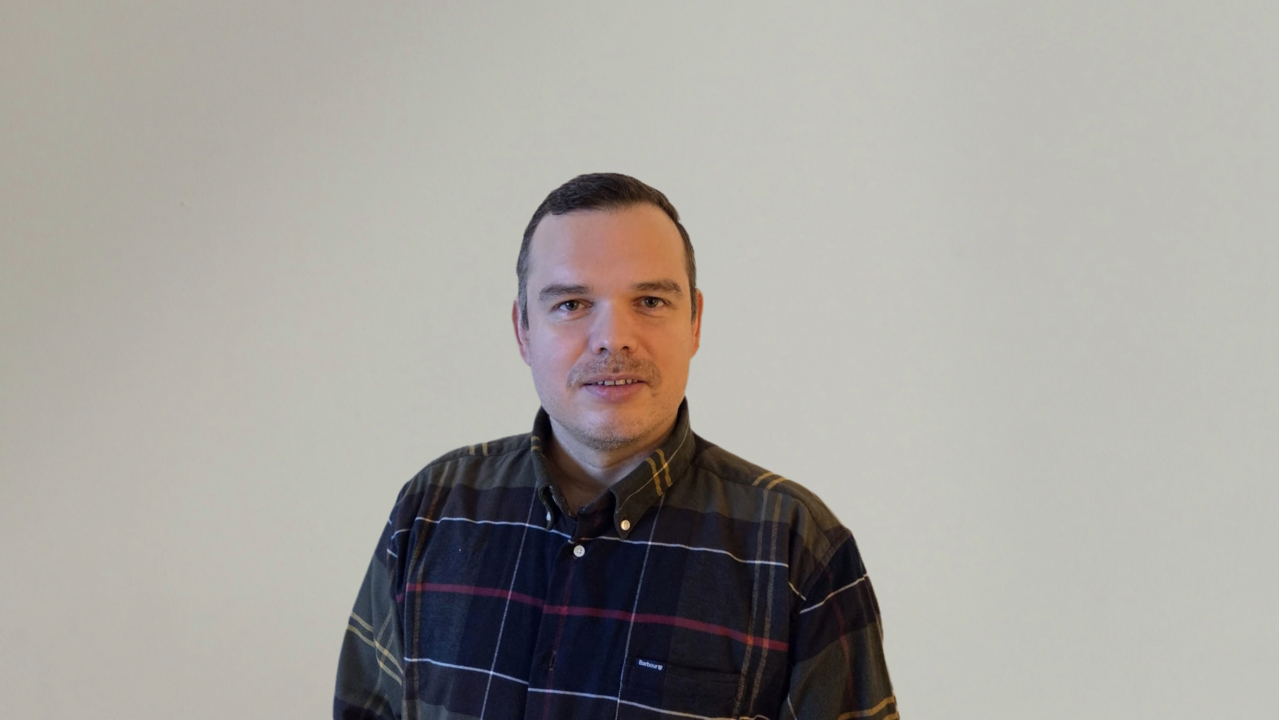
Jaroslav Zlamal (b. 1982) has been a PhD candidate at the Faculty of Health and Sports Sciences during the period 2020–2026.
Zlamal previously completed a bachelor’s degree in nursing at Vestfold University College (2003–2006) and a master’s degree in health promotion at Buskerud and Vestfold University College (2013–2015).
After completing his master’s degree, Zlamal worked as a university lecturer at Lovisenberg Diaconal University College, where he was involved in teaching, supervision, and academic development.
His doctoral project has been funded by the Norwegian Directorate for Higher Education and Skills (HK-dir) and Lovisenberg Diaconal University College.
What to do as an online audience member
The disputation is open to the public. To follow the trial lecture and the public defence online, register on Zoom.
We ask online audience members to join no earlier than 10 minutes in advance. After these times, you can leave and rejoin the meeting at any time.
Opponent ex auditorio:
Deadline for the public to pose questions is during the break between the two opponents. Questions ex auditorio can be submitted to disputation chair dag.t.johannesen@uia.no, cc to PhD adm emma.e.horneman@uia.no.