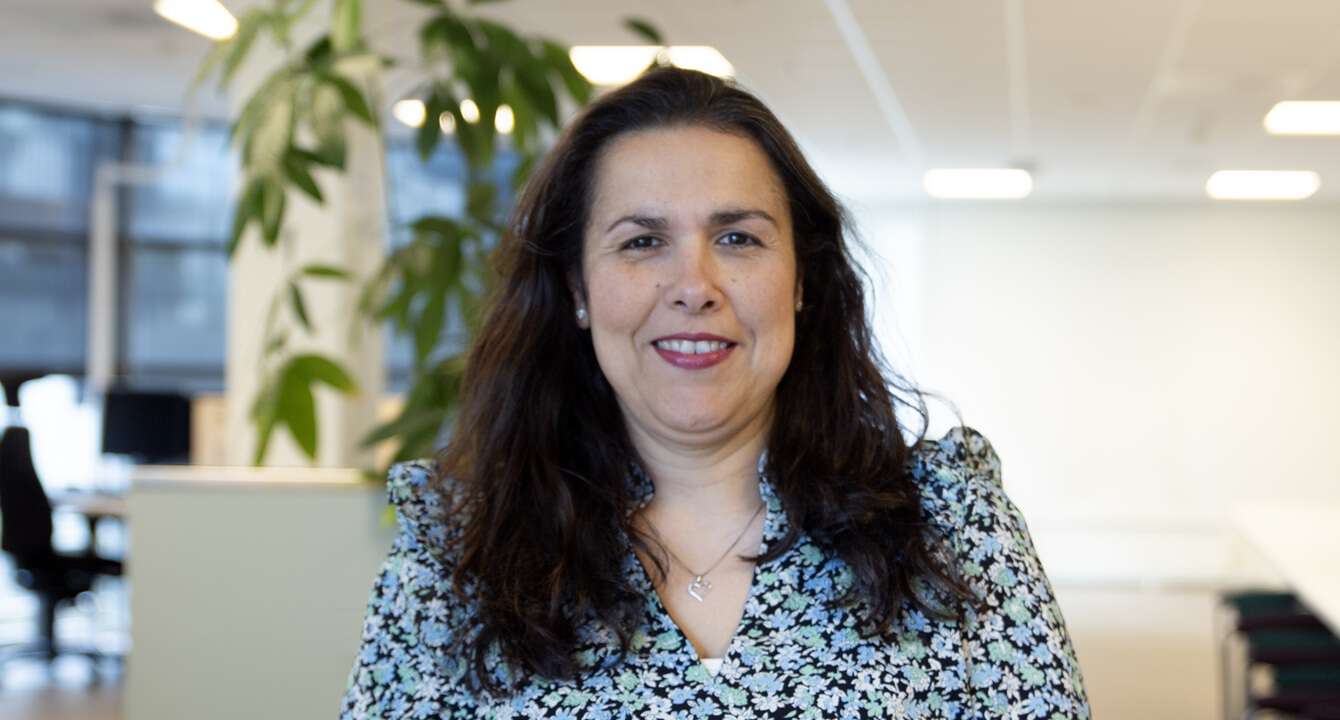
PhD thesis
Negative Experiences in Healthcare Services: A Qualitative Exploration of Patient and Next-of-Kin Complaints
Title of trial lecture
‘Betydningen av kommunikasjon i møter i helsetjenesten – tillit, pasientsikkerhet og tjenestekvalitet’
- Trial lecture starts at 10:15
- Public defence starts at 12:30
Read the thesis in Nasjonalt VitenArkiv (NVA)
Disputation chair: Head of Department Dag Tomas Sagen Johannesen
The defence will be conducted in Norwegian.
Assessment committee:
- First opponent: Professor Lisa Skär, Högskolan Kristianstad
- Second opponent: Professor Anne Kari Tolo Heggestad, UiO
- Head of assessment committee: Associate Professor Trygve Johannes Lereim Sævareid, UiA
Supervisors in the doctoral work:
- Main supervisor: Professor Inger Beate Larsen, Department of Psychosocial Health, UiA
- Co-supervisor: Professor Terje Emil Fredwall, Department of Health and Nursing Science, UiA
Summary of thesis
Background: In recent years, patient complaints have gained global recognition as a valuable resource for enhancing patient safety and driving quality improvement in healthcare. Patients, and sometimes their next of kin, are uniquely positioned to identify errors or shortcomings in care, as they experience the entire care pathway in ways that healthcare professionals may overlook.
Previous research has focused on developing effective tools to systematize complaints, making it easier to extract meaningful insights. However, some studies indicate that healthcare services still struggle to utilize patient complaints effectively. A key challenge is that complaints are often addressed in isolation, limiting learning opportunities to those directly involved.
Narrative medicine suggests that personal stories have a profound impact on individuals. In this context, qualitative research that explores negative experiences can encourage healthcare professionals and students to reflect on and improve their practices. While there are some qualitative studies on patient complaints, there is a need to synthesize their findings, to create a deeper understanding of the issues they highlight. Additionally, research on patient complaints specifically related to the primary care context as a whole – beyond individual components such as general practice – has been limited, particularly in the Norwegian setting. Understanding negative experiences within the Norwegian primary healthcare system can provide insights into areas for improvement and inform strategies for enhancing patient care.
Aim: The overall aim of this thesis is to enhance understanding of patients’ and next-of-kin’s negative experiences in healthcare, as expressed in complaints, and to gain insights that can inform quality improvements, with particular attention to Norwegian primary care settings.
Methods: An explorative descriptive qualitative design was employed in this PhD project that was carried out between January 2021 and December 2025. The project consisted of three sub studies. Sub study 1 was a qualitative metasynthesis that aimed to synthesize evidence from qualitative primary studies on patients’ negative experiences with different healthcare settings and to obtain a detailed picture of what patients find problematic while receiving healthcare. A qualitative metasynthesis incorporating findings from 24 reports was conducted, drawing inspiration from Sandelowski and Barroso. Sub study 2, a qualitative study, aimed to provide an understanding of negative experiences with primary care in Norway, as expressed in complaints to the Health and Social Services Ombudsman (Ombudsman). 221 complaints written by patients, next-of-kin and/or Ombudsman employees were analysed via reflexive thematic analysis. Sub study 3, aimed to explore how broader discourses on health, illness and healthcare services, construct individuals’ expectations of healthcare services. Critical discursive psychology (CDP) was used to analyse 130 complaints written by patients or next-of-kin in 2013, 2016, and 2019, to the Ombudsman in Norway.
Findings: Across the three studies, this thesis identified patterns in patients’ and next-of-kin’s negative experiences with healthcare. At the empirical level, findings from international and Norwegian contexts showed that patients reported similar problems across settings: difficulties accessing timely care, poor communication and unprofessional behaviour, concerns about quality, and fragmented coordination and continuity. At the actual level, the studies revealed how these problems produced consequences for patients and next of kin. Delayed or inadequate care contributed to worsening physical and mental health, feelings of insecurity and loss of trust, and less patient involvement. Next of kin – especially those supporting patients with complex needs – assumed responsibilities that adversely affected their health, employment and social lives. At the real, Sub study 3 illuminated underlying mechanisms shaping why patients and next of kin hold strong expectations for Norwegian primary care. Broader political and societal discourses – emphasizing universalism, public entitlement to high-quality care, and Norway’s capacity to provide it – reinforce these expectations even amid resource constraints.
Conclusion: This PhD thesis provides insights into patient complaints from both international and Norwegian contexts with special focus on primary healthcare contexts. The findings shed light on challenges at the micro, meso, and macro levels of care. At the micro level, complaints reflected negative patient-provider interactions, including poor communication, limited involvement in decisions, and a perceived lack of empathy – indicating persistent gaps in patient-centred care. At the meso level, delays in access to services and discontinuity of care were major concerns. These issues often placed a significant burden on next of kin, especially when caring for family members with complex needs. At the macro level, patients and next of kin, maintained expectations of universal, comprehensive care, despite policy shifts encouraging greater contributions from families and voluntary organisations. A possible explanation for these challenges is that resource limitations create temporal desynchronization – between patients and professionals and between care needs and service capacity – which may contribute to unmet needs and erode universalism.
About the candidate
Alison Axisa Eriksen (b. 1978) was a PhD research fellow at the Department of Health and Nursing Science at the University of Agder from 2021 to 2025. The project was affiliated with the Centre for Care Research, South. Alison is a trained nurse and holds a master’s degree in health promotion.
Alison has clinical experience from surgical wards and an orthopedic outpatient clinic at Sykehuset i Vestfold HF. Before starting her PhD, she worked at the Learning and Mastery Centre with patient and family education, a role she continued in parallel with the research project.
In January 2024, she assumed the position of enterprise coordinator for children as next of kin, where she works to strengthen support for children as relatives at the system level within the health trust.
What to do as an online audience member
The disputation is open to the public. To follow the trial lecture and the public defence online, register on Zoom.
We ask online audience members to join no earlier than 10 minutes in advance. After these times, you can leave and rejoin the meeting at any time.
Opponent ex auditorio:
Deadline for the public to pose questions is during the break between the two opponents. Questions ex auditorio can be submitted to disputation chair xxx xxx, cc to PhD adm emma.e.horneman@uia.no.